Fujimori's Coalition: Peru's Governance Dilem
Exploring the challenges of Fujimori's presidency in Peru
Model Diplomat5 min readLatin America
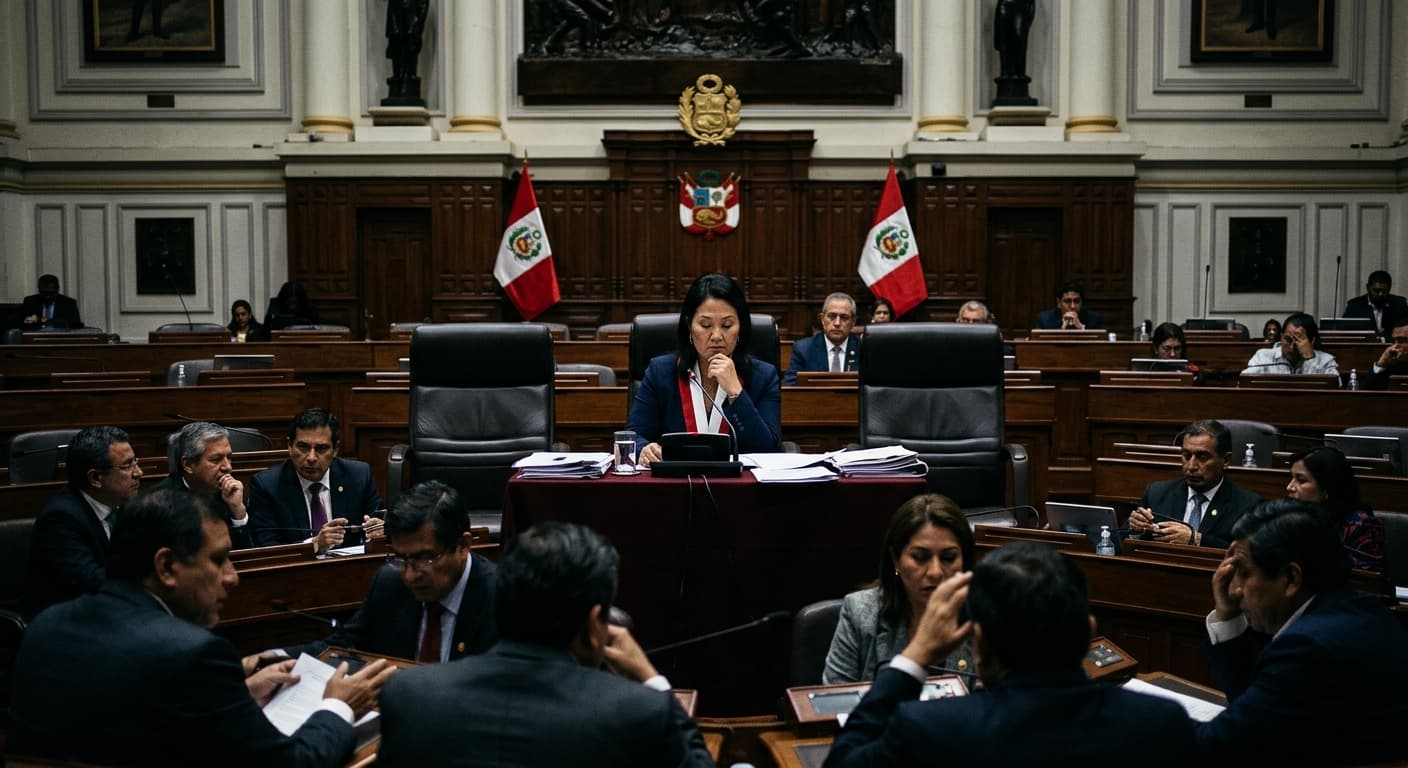
The Congress she needs is the Congress that broke Peru
Fujimori's Fuerza Popular does not command a majority in the new legislature, but her party sits at the center of the coalition that has functionally governed Peru since 2022. That matters because the same bloc she now depends on has spent four years dismantling the institutions any elected president would need to actually deliver on her platform.
The Council on Foreign Relations, in an analysis by Will Freeman, described the "authoritarian coalition" in Congress as pursuing three interlocking goals since Pedro Castillo's fall: neutering judicial oversight of political corruption, hobbling law enforcement against organized crime, and concentrating power in the legislature at the expense of the other branches.
Human Rights Watch documented the mechanics — a June 2024 constitutional amendment that would let Congress hire and fire electoral authorities, a narrowed definition of "organized crime" that guts extortion prosecutions, and the removal of a top prosecutor investigating lawmakers.
The Atlantic Council calculates that Peru has churned through more than 170 ministers since 2021 and that U.S. foreign direct investment fell 73% between the 2003–2015 and 2016–2025 windows, according to its pre-election dispatch. Freedom House's
2025 country report captured the pattern in a single line: Peru's institutions have been "eroded" by a Congress in which roughly half of members were under criminal investigation.
The uncomfortable fact for Fujimori's foreign backers is that Fuerza Popular is the largest single bloc inside that coalition. As the Atlantic Council's Martin Cassinelli wrote after Dina Boluarte's October 2025 impeachment, it was Fujimori and Rafael López Aliaga who greenlit her removal once she became an electoral liability — the same procedural machinery, invoked from the same benches, that produced eight presidents in ten years. Fujimori will govern with the coalition that made Peru ungovernable, and that is her structural problem, not a rhetorical one.
What Washington gets — and what it is willing to overlook
The Trump administration's interest in this transition is not ideological affinity. It is geography and minerals. Peru sits on the world's second-largest copper reserves, is the region's largest gold exporter, and hosts the $1.3 billion Chinese-built deepwater port at Chancay that the U.S. State Department in February 2025 called a "cautionary tale" of "cheap Chinese money" costing sovereignty. Representative María Elvira Salazar told a House committee in April 2026 that "the new Peruvian government, which will be elected next June, must take it back."
Fujimori has been carefully non-committal. Her published platform, analyzed by Al Jazeera, bases foreign policy "exclusively on national interest" and avoids any mention of Trump — a lesson drawn from the collapse of López Aliaga, who wrapped himself in the Trump brand and finished third. China is Peru's largest trading partner. Cutting Chancay off is not on offer.
What is on offer is security cooperation. Fujimori campaigned on a 60-day state of emergency, deploying the military against extortion gangs, Bukele-style mega-prisons, anonymous "faceless judges," and expulsion of foreign nationals who commit crimes — a platform the BBC summarized as an explicit revival of her father's mano dura. That maps directly onto Trump's "Shield of the Americas" initiative against transnational criminal organizations. It also maps onto the $3.5 billion F-16 purchase that interim President José María Balcázar punted to the incoming administration in April 2026 after two ministers resigned in protest, as
Reuters reported. Twenty-four Lockheed Martin fighters — that decision now sits on Fujimori's desk on day one.
The regional-security angle in the El Heraldo write-up, in other words, is not diplomatic garnish. It is the substantive bargain: a Peruvian president prepared to hard-align with U.S. counter-narcotics and counter-China posture in exchange for political cover against the human-rights blowback her security architecture will generate.
The Inter-American Court is the tripwire
Which brings us to what to watch first. Fujimori has pledged to withdraw Peru from the contentious jurisdiction of the Inter-American Court of Human Rights (IACtHR), the body that has repeatedly ordered Lima to reverse pardons for her father and to halt a 2025 amnesty law shielding military officers from prosecution for abuses during the 1980s–2000s conflict. Human Rights Watch documented that the Boluarte government defied a July 2025 IACtHR order not to enact the amnesty; Congress passed it anyway. In March 2026, the same court
ordered Peru to pay $340,000 in reparations over Celia Ramos, a victim of the forced-sterilization campaign that sterilized an estimated 314,000 women under Alberto Fujimori.
A Cambridge academic study, Parting ways or lashing back?, classifies Peru's 1999 attempted withdrawal — engineered by Alberto Fujimori after adverse rulings — as one of only four such episodes in the Court's history. A second Peruvian withdrawal, on Keiko's watch, would place Lima alongside Venezuela and Nicaragua in the hemisphere's authoritarian withdrawal club. That is the moment at which the Trump administration's tolerance for democratic backsliding by security partners becomes a test rather than a hypothesis.
Diplomat View
Fujimori's presidency will not restore Peruvian democracy; it will formalize the constitutional order the last Congress has already built — a legislature-dominant, judicially-neutered, security-heavy state with a strong hand against organized crime and a weaker one against corruption of its own coalition. The forecast: within eighteen months, Fujimori signs the F-16 deal, launches a Bukele-style prison program, and floats withdrawal from the Inter-American Court's contentious jurisdiction, all with U.S. political cover. What would falsify this call: a genuine cabinet of technocrats independent of Fuerza Popular's congressional bloc, a decision to keep the amnesty law under judicial review rather than defend it, and preservation of the National Board of Justice's autonomy. If any two of those three happen in her first hundred days, the "restoration" reading holds. If none do, the coalition wins and Fujimori is its face — not its counterweight.
What to watch next
- July 28, 2026 — Inauguration and first cabinet. Watch the interior, defense, foreign affairs and justice portfolios: technocrat or Fuerza Popular loyalist tells you which Fujimori won.
- First 90 days — Decision on the $3.5 billion Lockheed Martin F-16 contract; a state-of-emergency decree; and any executive proposal on the American Convention on Human Rights.
- October 2026 — First scheduled IACtHR compliance hearing on the 2025 amnesty law under the new government. A Peruvian refusal to appear is the clearest signal of withdrawal to come.

The Bottom Line
The bottom line: Peru's transition to Keiko Fujimori is being read abroad as a right-wing restoration, but the mechanics point the other way — she inherits, and depends on, the same congressional coalition that hollowed Peru's judiciary, courts and electoral authority over the past four years. If Fujimori delivers what Washington wants on security and China without breaking with that coalition, this will be remembered not as democratic renewal in Latin America but as the moment the region's most institutionally damaged democracy locked in its damage under a legitimizing electoral seal.
Discover more
US Politics
Congress Targets AI Chatbot Access for Terror
The House passed the Generative AI Terrorism Risk Assessment Act, focusing on AI's role in terrorism and potential surveillance implications.
India
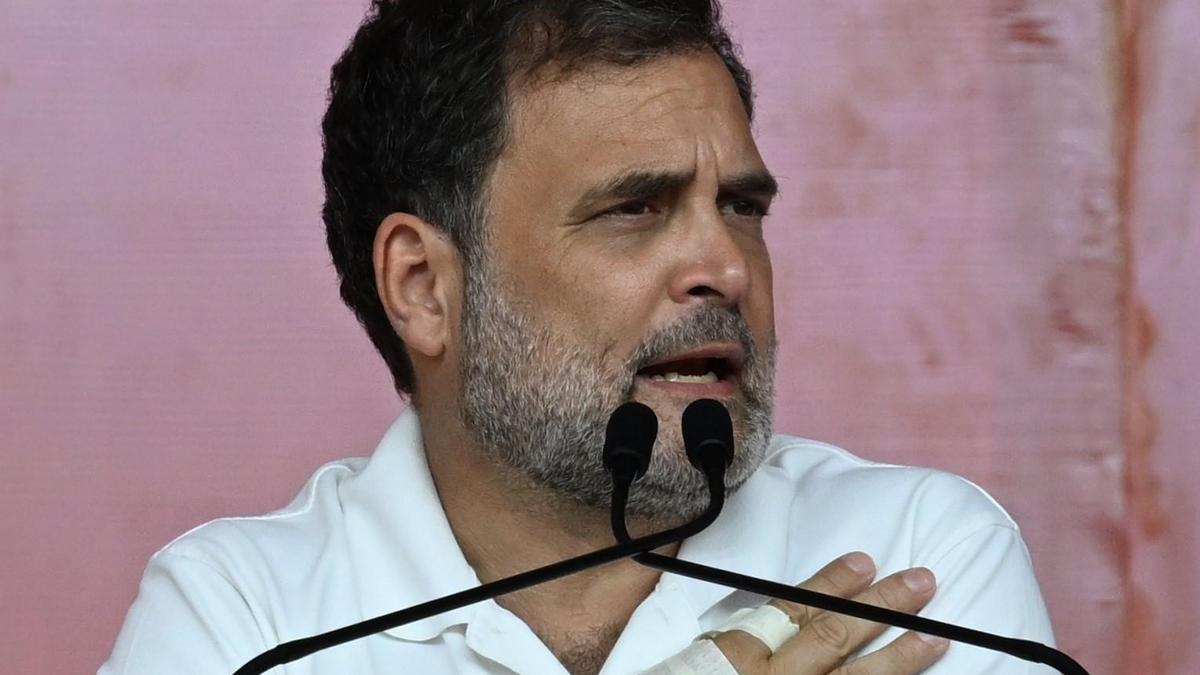
Rajnath Singh's Durga Squad for 2026 Polls
Rajnath Singh's Durga Squad promised women's safety in Bengal but has since disappeared from the agenda, revealing BJP's true priorities.
US Politics
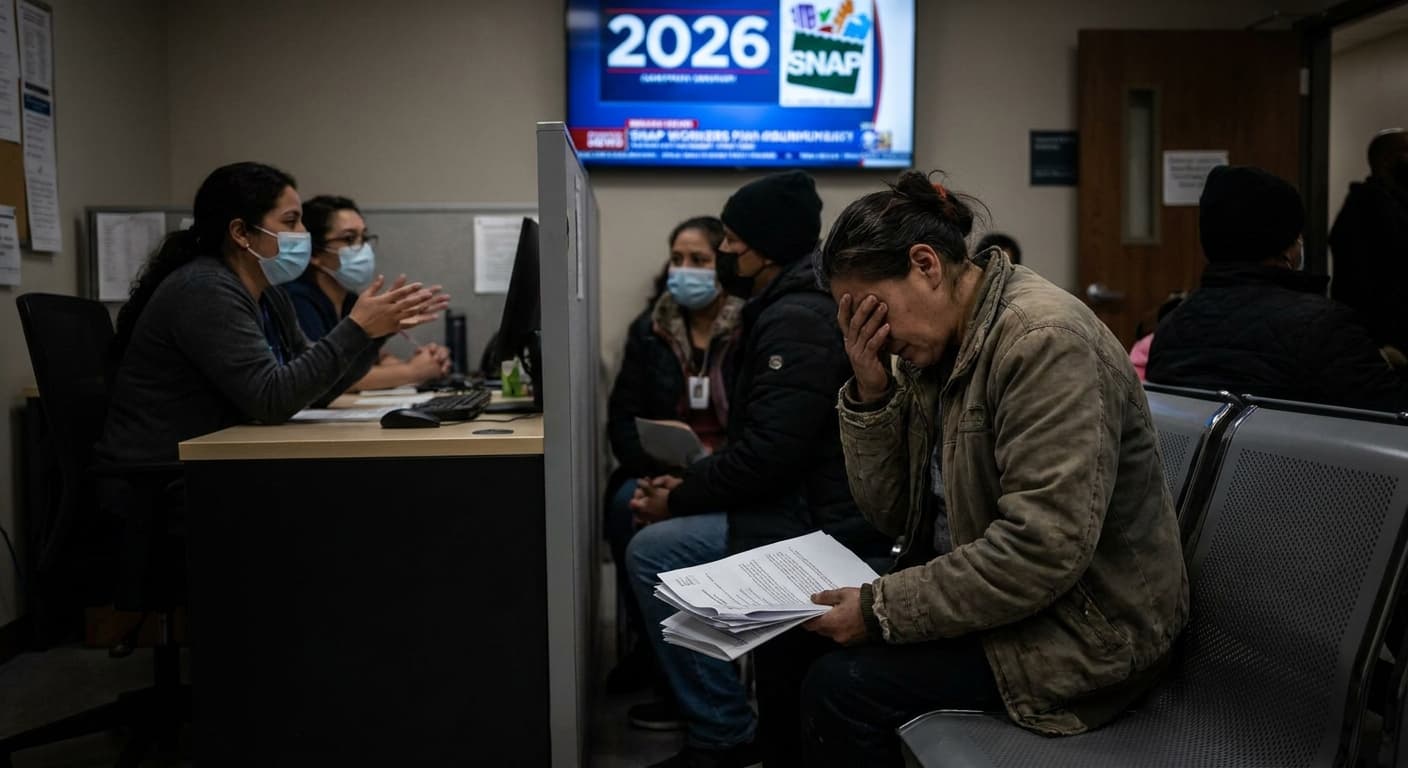
SNAP Food Assistance Faces Legal Challenges
In 2026, SNAP faces stricter eligibility rules and mounting legal challenges, threatening food assistance for the millions of Americans who rely on the program.

Economics
Fed's Amex AML order puts correspondent banking on notice
Federal Reserve's Amex AML order requires board-level controls and a 90-day plan; OCC fined the bank $350 million over enterprise-wide deficiencies.