Fujimori Wins Peru by 50,000 Votes
A fragile mandate amid political instability
Model Diplomat7 min readLatin America
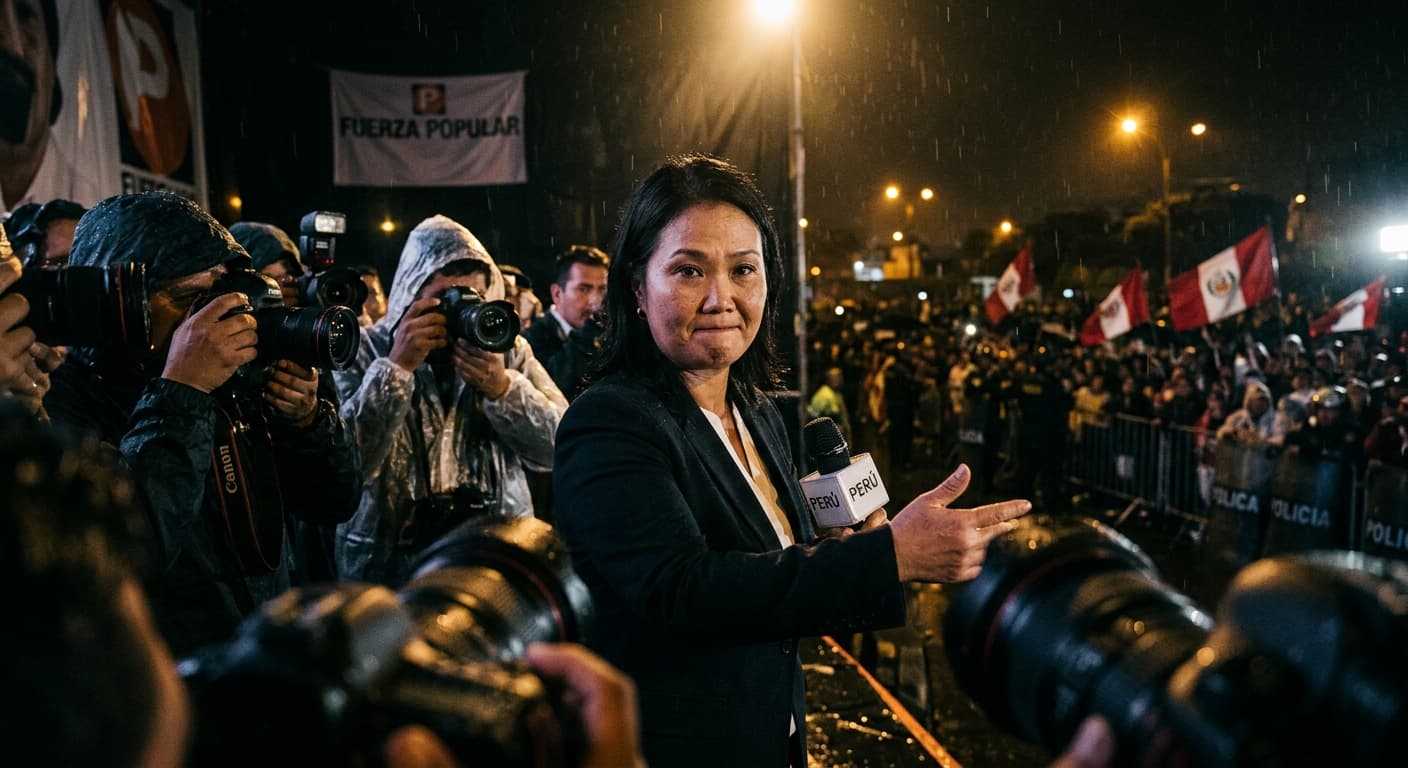
Fujimori Wins Peru by 50,000 Votes — And a Fragile Mandate
Keiko Fujimori's razor-thin 2026 victory ends left-right deadlock but inherits nine-president instability, contested legitimacy, and a US$62 billion mining economy in limbo.
Keiko Fujimori will be sworn in on July 28, 2026, as Peru's ninth president in a decade — and her 50.135%-to-49.865% victory over leftist Roberto Sánchez, a margin of roughly 50,000 votes out of 18 million cast, is less a mandate than a reprieve for a country whose democratic institutions have spent five years being hollowed out from inside. Fujimori inherits a functioning market economy, an eviscerated state, and a Congress her own party spent a decade weaponising against sitting presidents. The story of her win is not the return of the right in Latin America. It is whether the region's most institutionally exhausted democracy can be governed at all — by anyone.
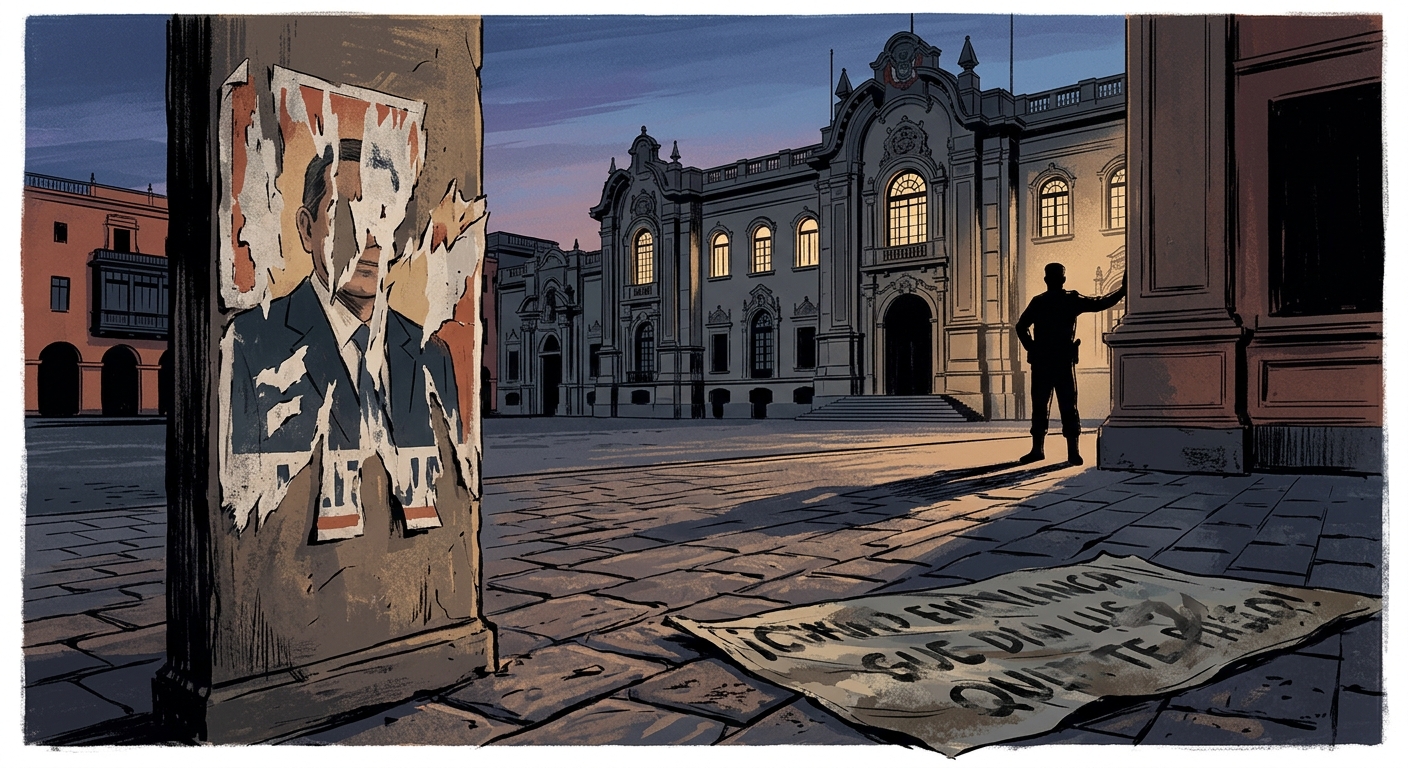
The narrowest of wins, the widest of shadows
Peru's National Jury of Elections (JNE) proclaimed Fujimori president-elect on July 3, 2026, nearly a month after the June 7 runoff, following weeks of appeals, recounts and street protests. The BBC reported that Fujimori — the 51-year-old daughter of the late authoritarian president Alberto Fujimori — carried the ballot by fewer than 50,000 votes, promising to assume the office "with responsibility, humility and a deep sense of duty." The JNE's own certification documents, filed under the electoral timetable set by
Decreto Supremo 039-2025-PCM, show the result was produced through a distributed, 60-panel review of contested tally sheets — the same procedure that survived a comparable challenge in 2021.
The runner-up is not conceding. Sánchez, a former trade minister in Pedro Castillo's cabinet, told Al Jazeera he "will not recognise" a Fujimori government, alleging that overseas ballots — which broke heavily for her — were manipulated. His party has filed for nullification of results at 119 consular polling sites. There is a symmetry here that will not be lost on Peruvians: after her 2021 defeat, Fujimori herself spent weeks alleging fraud against Castillo without producing evidence. The
EU election-observation mission stated in April that observers had "not found objective elements to support the narrative of fraud" — the same finding it issued in 2021.
What the market wanted, and what it got
Fujimori's victory is being sold in Lima's business districts and in Washington as a restoration of the "Peruvian model" — the free-market constitution written under her father in 1993 that has, according to the Atlantic Council, delivered three decades of macroeconomic stability through nine presidents and roughly the same number of political crises. She won the coast and Lima; Sánchez swept the Andes. Sánchez had campaigned on rewriting the constitution, raising mining royalties, and reviewing extraction contracts — a platform the BBC noted
rattled financial markets throughout the campaign.
The stakes are literal: mining accounts for roughly 10% of Peruvian GDP, and the World Bank noted in March 2026 that the country's mining exports hit US$61.85 billion in 2025 — a figure that makes Peru the world's second-largest copper producer and a linchpin of any Western critical-mineral strategy that hopes to reduce dependence on Chinese processing. The Bank approved a US$200 million project the same month to modernise Peru's permitting system, explicitly citing "regulatory bottlenecks, permitting delays, and governance challenges" that had slowed investment.
Those bottlenecks are Fujimori's real inheritance. The Atlantic Council calculates that average annual US foreign direct investment in Peru fell 73% — from US$919 million between 2003 and 2015 to just US$241 million between 2016 and 2025 — as political instability rose. Since 2021 alone, Peru has cycled through 173 ministers. Investors are not fleeing the model. They are fleeing the state's inability to sign a contract that will still be honoured in two years.
The Fujimorista Congress problem
Here is the part of the story that markets are underpricing: Fujimori's Popular Force (Fuerza Popular) party is the largest bloc in Peru's new Congress — the country's first bicameral legislature since her father dissolved the old Senate in a 1992 self-coup. But "largest bloc" is not a majority. The Konrad-Adenauer-Stiftung noted after the first round that no single party approaches 20% support. Fujimori will govern with a coalition she must rebuild every quarter.
That matters because Congress, not the presidency, has been the driver of Peru's democratic backsliding. Human Rights Watch documented in June 2024 that Peru's Congress had moved constitutional amendments to abolish the National Board of Justice, weaken organised-crime investigations, and place electoral authorities under legislative control — steps the Inter-American Commission on Human Rights warned could put "the rule of law in critical danger." Popular Force lawmakers voted for most of them.
Freedom House's 2026 report scored Peru at 66/100 — Partly Free — and marked a further decline this year, noting that "modifications to the law on forfeiture of assets has weakened accountability measures, and the congressional majority's efforts to assert control over the attorney general's office has hindered the fight against corruption." Peru appears in the
regional trends chapter alongside El Salvador and Paraguay as countries that in 2025 tightened supervision of NGOs receiving foreign funding. The trajectory is the same whether the executive is Boluarte, Balcázar or Fujimori — because it runs through the legislature.
The regional frame: not a wave, a pattern
Fujimori's win is being folded into a "right-wing wave" narrative — Milei in Argentina, Bukele in El Salvador, an ascendant conservative bloc across the region. That framing flatters everyone and clarifies nothing. Peru is not Argentina. Fujimori did not win on a rupture platform; she won by ~50,000 votes on the platform of the status quo ante. Her 60-day state-of-emergency proposal against extortion, reported by Al Jazeera, is closer to Bukele's mano dura than to any economic revolution.
The regional signal to watch is different: it is that in the second consecutive Peruvian runoff decided by under 50,000 votes, both losers refused to concede and both alleged fraud without evidence. Peru is developing a permanent culture of contested legitimacy — the same syndrome now visible in Honduras's November 2025 vote and, Freedom House notes, throughout a region where "12 countries registered score declines" against just six improvements in 2025. Democratic backsliding in Latin America is no longer led by strongmen dissolving legislatures. It is led by legislatures dissolving the credibility of everyone else.
Fujimori's own coalition has already championed amnesty legislation for police and military personnel implicated in crimes committed during her father's rule. Political scientist Mauricio Zavaleta told Al Jazeera bluntly that Fujimori is "the only one with enough power to finish her term" — because her party controls the impeachment machine that ended the last four presidencies. That is stability of a kind. It is not the kind investors, or the OAS, are accustomed to calling democratic health.
The Trump variable
Washington has been careful. The Atlantic Council observed that the Trump administration held off on an explicit endorsement despite Fujimori being the clear US-preferred candidate — a discipline it did not exercise in Colombia or Honduras. The State Department congratulated her on July 4, 2026, but with unusually neutral language. The reason is strategic: Peru is central to US critical-mineral supply-chain diversification, and Fujimori — while pro-business — declined to pick sides between Washington and Beijing during the campaign. China is Peru's largest trading partner and controls the Chancay mega-port that opened in November 2024.
What Washington will offer is targeted: Global Magnitsky sanctions against officials implicated in illegal gold mining, which the Atlantic Council estimates accounted for US$4.8 billion — roughly 44% — of Peru's 2024 gold exports. That is the leverage. Whether Fujimori uses it against a Congress her own party helps run is the first real test of her presidency.
What to watch
- July 28, 2026 — Inauguration in Lima. Watch Fujimori's cabinet, particularly the finance and interior ministries; a Belaúnde or IMF-linked technocrat at MEF would signal continuity, an FP loyalist would signal consolidation.
- August–September 2026 — JNE ruling on Sánchez's consular-vote nullification appeal. A dismissal keeps the transition clean; a partial admission opens years of legitimacy litigation.
- First 100 days — The 60-day state-of-emergency decree against extortion. Whether it is targeted or Bukele-style mass detention will define international posture, particularly the Inter-American Commission's.
- 2027 budget cycle — First test of the new bicameral Congress. A Senate that acts as a check would validate the 2024 reform; a Senate captured by Popular Force would confirm that bicameralism was a Fujimorista power-preservation project all along.
Diplomat View
Fujimori's presidency is the least destabilising outcome available from the 2026 election, and it is still bad news for Peruvian democracy — not because she will govern authoritatively, but because she likely cannot govern at all. The evidence points to a five-year term of tactical accommodation with a Congress that has spent a decade dismantling accountability institutions, with an economy anchored by mining rents and hollowed out by ministerial churn, and with a political culture in which the losing side of every close race now defaults to fraud allegations. The forecast: mining investment ticks up modestly in 2027 as regulatory certainty returns; democratic-quality scores continue to slide; Peru avoids the impeachment carousel through 2028 because Popular Force controls it, not despite that fact. Revision conditions: a Fujimori move against the National Board of Justice or the attorney general would signal active backsliding, not drift; a genuine coalition cabinet with centrist economists at MEF would signal she has read her mandate correctly as narrow. Neither is the base case.
Read today's full |
Discover more
US Politics
Congress Targets AI Chatbot Access for Terror
The House passed the Generative AI Terrorism Risk Assessment Act, focusing on AI's role in terrorism and potential surveillance implications.
India
Rajnath Singh's Durga Squad for 2026 Polls
Rajnath Singh's Durga Squad promised women's safety in Bengal but has since disappeared from the agenda, revealing BJP's true priorities.
Global Politics
Trump's Conflicting Messages on Iran War
Trump's mixed messages on Iran reflect a strategy of audience management, benefiting Tehran amid a complex geopolitical landscape.

Economics
Fed's Amex AML order puts correspondent banking on notice
Federal Reserve's Amex AML order requires board-level controls and a 90-day plan; OCC fined the bank $350 million over enterprise-wide deficiencies.