Federal Court Blocks Trump's Asylum Rules
A federal court ruling challenges Trump's immigration agenda.
Model Diplomat3 min readUnited States

Federal Court Deals Trump Another Asylum Blow
A federal appeals court has blocked Trump's asylum restrictions, the latest judicial check on an immigration agenda facing sustained legal erosion.
A federal appeals court has struck down Trump's asylum restrictions, continuing a pattern of judicial intervention that has repeatedly stalled the administration's immigration agenda since January 2025. The ruling marks at least the second major appellate-level block on asylum access — building on a July 2025 district court order by U.S. District Judge Randolph Moss, who found that Trump's executive order suspending southern border asylum was unlawful, ruling there was "no constitutional or statutory support" for denying the right to apply for asylum entirely, per The Washington Post.
The Structural Battle Behind the Ruling
This isn't an isolated setback — it's part of a coordinated, multi-front legal war. The ACLU, which brought the 2025 district-court challenge, has consistently argued that no executive order can override the statutory right to seek asylum under the Immigration and Nationality Act. The courts have largely agreed. Lower courts have uniformly blocked Trump's attempt to redefine birthright citizenship; the Supreme Court is now weighing that case after April 2026 oral arguments. TPS terminations for roughly 350,000 Haitians and 6,000 Syrians are also before the Court, per CNN.
The administration's response to judicial resistance has been to reshape the institutions themselves. Since January 2025, the DOJ has fired or removed 100+ immigration judges, replacing them with temporary, executive-aligned appointees on six-month terms, per USA Today. That strategy works inside immigration courts — an executive-branch venue — but carries no weight in Article III federal courts, where today's ruling landed.
Who Wins, Who Loses
Winners: Asylum seekers at the southern border regain the legal right to make their claims — at least temporarily. The ACLU and allied immigration legal organizations secure another precedent brick in their wall against executive overreach. Democratic-aligned state AGs, who have filed parallel suits, get additional courtroom momentum.
Losers: The Trump administration's core enforcement posture. Stephen Miller, the primary architect of the immigration agenda, now faces a durable legal ceiling: federal statute cannot be suspended by proclamation alone. The ruling also undermines the political messaging value of a "sealed border," regardless of what physical enforcement achieves on the ground.
The administration will appeal — almost certainly seeking an emergency stay pending Supreme Court review. That is the play from the 2025 playbook, and it bought months of enforcement window before the prior block took effect.
What to Watch
The critical next move: whether the administration requests and receives an emergency stay from the Supreme Court, which has shown a willingness to grant such stays on immigration matters even against lower-court precedent. Watch for a stay application within days, not weeks. If the Court's 6-3 conservative majority declines, the restrictions collapse entirely while appeal proceeds — a significant operational blow. If the stay is granted, enforcement resumes and the case joins the growing stack of immigration questions the Court will resolve, likely by late June 2026.
The deeper question is whether the administration can thread the needle: winning enough stays to enforce policy while the Supreme Court — still unpredictable on statutory (versus constitutional) immigration questions — ultimately rules on the scope of executive asylum power.
Follow the full US Politics picture and broader
International migration trends at Diplomat Briefing.
Discover more

US Politics
SNAP Food Assistance Faces Legal Challenges
In 2026, SNAP faces stricter eligibility rules and mounting legal challenges, threatening food assistance for the millions of Americans who rely on the program.

Conflict & Security
Drone Warfare Killing Aid Workers at Unprec
Over 1,000 humanitarian workers killed in three years as cheap armed drones collapse legal protections. Gaza, Sudan, Ukraine, and DRC see deliberate targeting of aid convoys and hospitals with zero prosecutions.

Global
World Normalises Taliban as Afghan Women Eras
UN data shows Afghan women erased from public life as Russia recognises the Taliban, EU hosts officials in Brussels, and ICC warrants for gender persecution go unenforced.
Conflict & Security
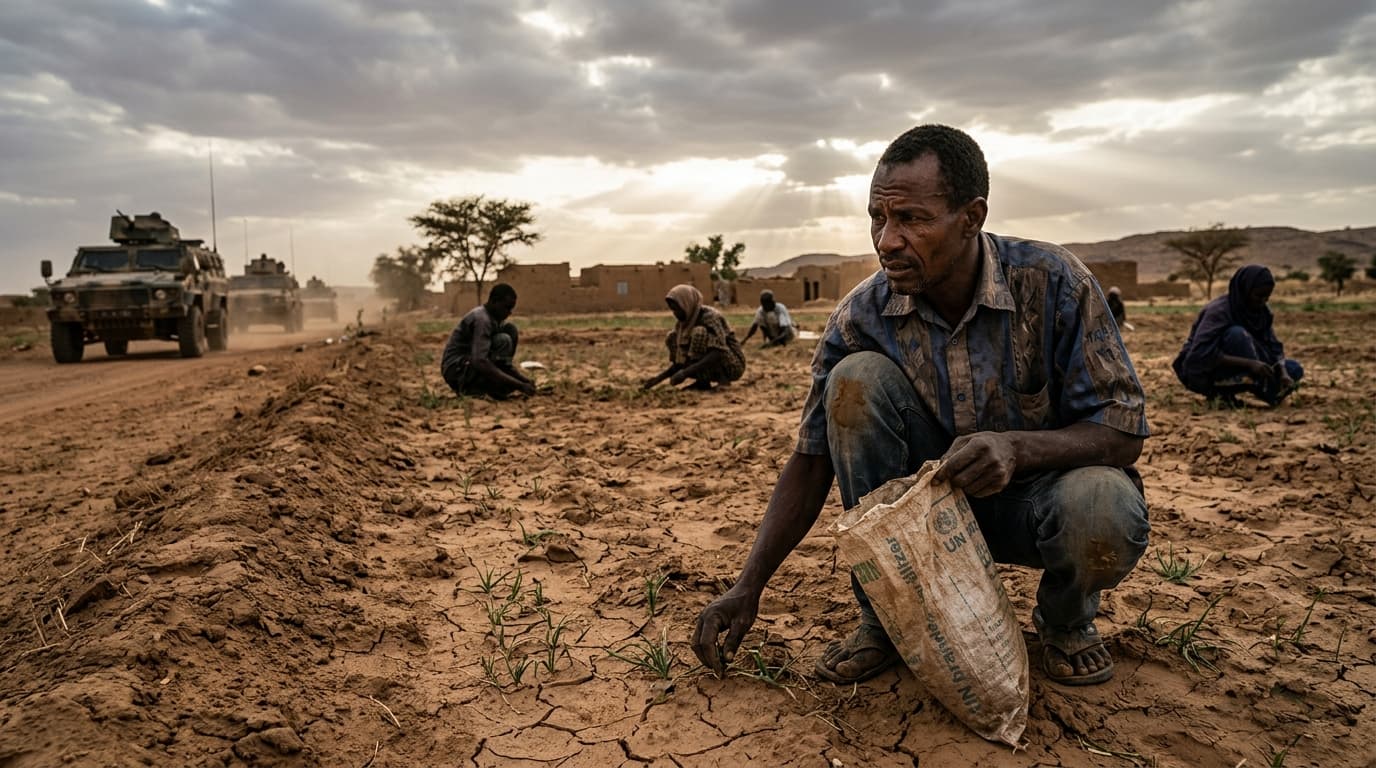
West Africa Food Crisis: Three Shocks in 2026
Conflict, climate extremes, and the Strait of Hormuz closure drive a severe food crisis in West and Central Africa, with fertilizer prices surging 80% and millions displaced.