BJP's 2026 Bengal Assembly Challenge
BJP aims for 100+ seats in Bengal, but history suggests otherwise.
Model Diplomat3 min readWest Bengal
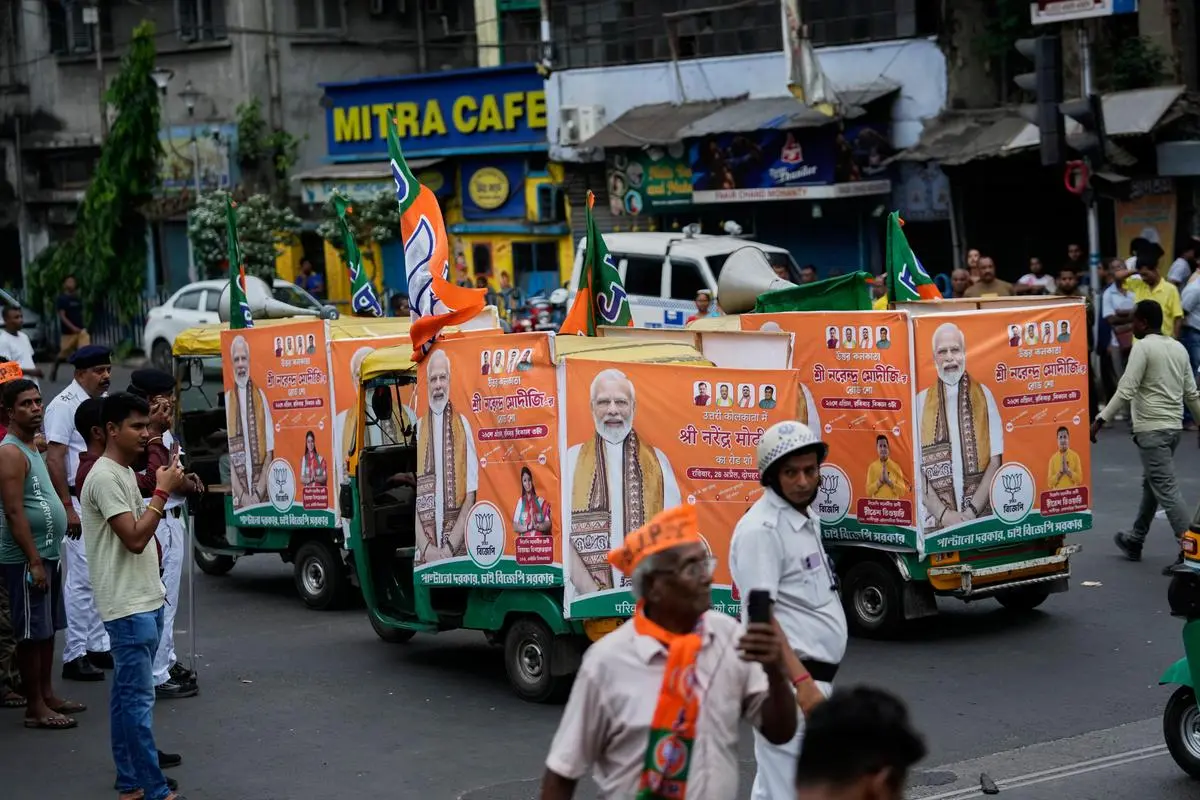
BJP's Bengal 100-Seat Test: History Says No
Voting is underway in West Bengal's 294-seat assembly. BJP needs 100+ seats to stay relevant — the historical odds are stacked against it.
First phase polling began April 23, covering 152 seats across 16 districts. The BJP's declared target of dislodging Mamata Banerjee's TMC after 15 years in power rests on a number it has never come close to: 100 assembly seats. The evidence suggests it won't clear that bar this cycle either.
The Lok Sabha Rule Bengal Keeps
West Bengal has a consistent electoral pattern: no opposition party has won 100+ assembly seats without first demonstrating Lok Sabha dominance in the state. BJP failed that test in June 2024, when TMC won 29 of 42 Lok Sabha seats to BJP's 12 — a sharp reversal from BJP's 18-seat haul in 2019. The Lok Sabha result was a direct leading indicator of assembly-level organizational strength, and BJP's regression in 2024 has not been reversed.
In the 2021 assembly election, BJP peaked at 77 seats with a 38% vote share — its best-ever Bengal performance — yet still fell far short of 100. That campaign had genuine momentum: post-COVID welfare fatigue, Suvendu Adhikari's defection bringing ground-level networks, and a full-throttle PM Modi-led push. None of those structural advantages exist in 2026 at the same intensity.
What BJP Is Betting On
Opposition Leader Suvendu Adhikari has publicly claimed BJP will win 177 seats — a number almost no independent analyst credits. The party's manifesto, released April 10, pitches ₹3,000/month for unemployed youth (doubling TMC's Lakshmir Bhandar rates) and a Uniform Civil Code for Bengal. The welfare outbidding is a direct attempt to peel Mamata's core women voters; the UCC is a consolidation play for the Hindu nationalist base.
PM Modi's rallies have hammered TMC on corruption — specifically the teacher recruitment scam and alleged MGNREGA fund diversion. These are real grievances, documented in court proceedings. But grievance-based campaigns have failed BJP in Bengal before when TMC's patronage machine and hyper-local booth-level organisation hold.
The personal duel at Bhabanipur — Adhikari challenging Mamata in her own constituency — adds symbolic stakes but is unlikely to move aggregate seat math significantly. India's electoral dynamics consistently show that high-profile constituency battles generate heat without shifting statewide outcomes.
Who Holds the Leverage
Mamata Banerjee enters this election structurally advantaged: incumbency welfare infrastructure (Lakshmir Bhandar covers ~24 million women), a unified party apparatus without serious defection risk, and an opposition split between BJP, Congress, and the Left Front that dilutes anti-TMC vote consolidation. The Left-Congress alliance, while ideologically distinct from BJP, competes for overlapping protest votes — particularly in Murshidabad and Malda — that BJP needs to convert.
BJP's realistic ceiling, absent a dramatic event, sits between 80 and 95 seats — enough to remain Bengal's principal opposition, not enough to matter for government formation.
What to Watch
Results are expected in late May or early June 2026. The North Bengal districts — Cooch Behar, Jalpaiguri, Alipurduar — voting in Phase 1 are BJP's strongest terrain and will set the early tone. If BJP underperforms there, the 100-seat target collapses entirely. Watch the margin data in seats BJP held in 2021: a compression in margins signals the 2024 Lok Sabha erosion has deepened. If Adhikari loses Bhabanipur, the broader India political landscape gets a clear signal that BJP's Bengal project has structurally stalled.
Sources: The Hindu — WB 2021 recap ·
Frontline — BJP's 100-seat barrier ·
The Hindu — Phase 1 campaigning ·
The Hindu — BJP manifesto
Discover more
India
Rajnath Singh's Durga Squad for 2026 Polls
Rajnath Singh's Durga Squad promised women's safety in Bengal but has since disappeared from the agenda, revealing BJP's true priorities.

Conflict & Security
Drone Warfare Killing Aid Workers at Unprec
Over 1,000 humanitarian workers killed in three years as cheap armed drones collapse legal protections. Gaza, Sudan, Ukraine, and DRC see deliberate targeting of aid convoys and hospitals with zero prosecutions.

Global
World Normalises Taliban as Afghan Women Eras
UN data shows Afghan women erased from public life as Russia recognises the Taliban, EU hosts officials in Brussels, and ICC warrants for gender persecution go unenforced.
Conflict & Security
West Africa Food Crisis: Three Shocks in 2026
Conflict, climate extremes, and the Strait of Hormuz closure drive a severe food crisis in West and Central Africa, with fertilizer prices surging 80% and millions displaced.