Bihar's $500M World Bank Loan and AI Plans
Bihar government seeks modernization amid debt criticism.
Model Diplomat2 min readAsia
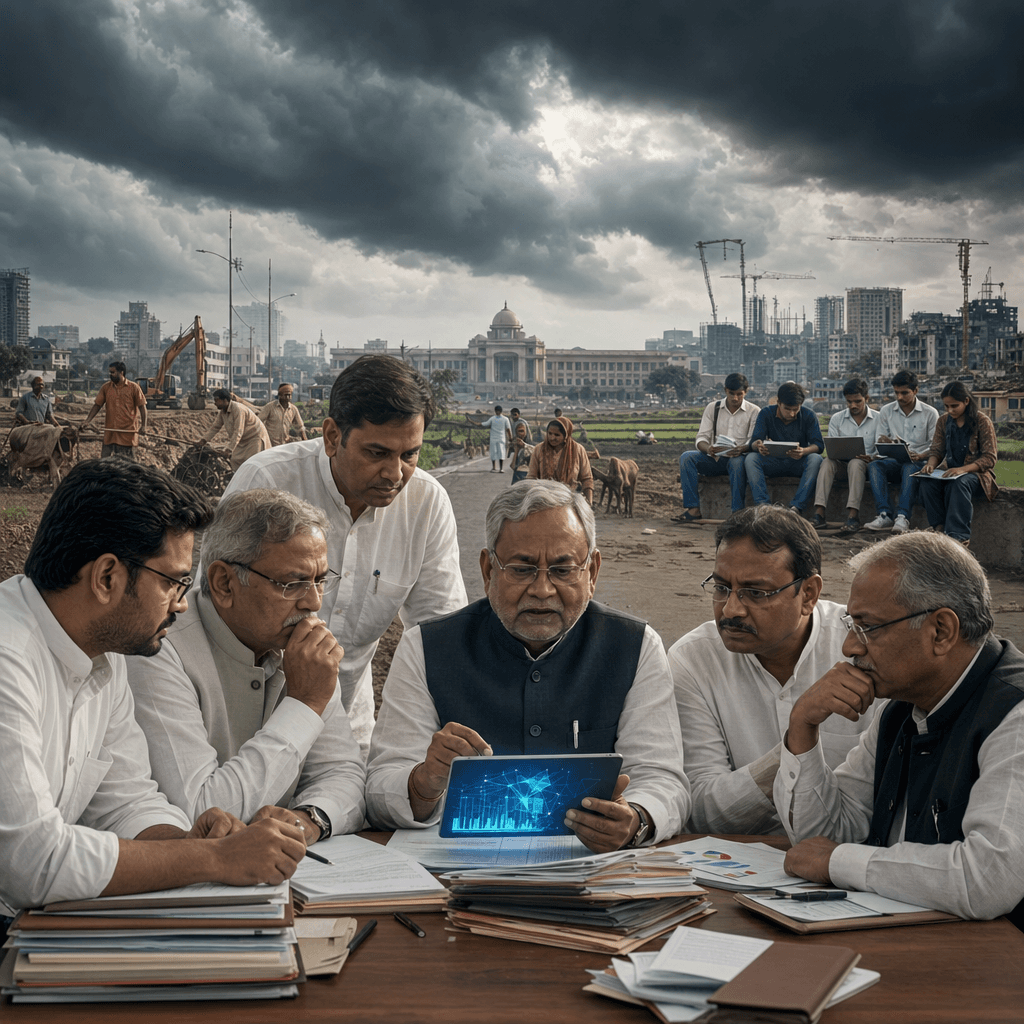
Bihar Bets on Loans and AI as Debt Politics Heats Up
Patna cleared a $500 million World Bank loan, e-voting and AI training, while Tejashwi Yadav pressed debt and arrears attacks.
Bihar’s cabinet is trying to do two things at once: show it can still spend, and show it can modernize. On Monday, the government cleared in-principle approval for a $500 million World Bank loan, approved e-voting for the 2026 municipal polls, and ordered AI training for legislators and officials, even as RJD leader Tejashwi Yadav accused it of running a treasury burdened by more than Rs 4 lakh crore in debt and delaying pensions, student credits and salaries (The Indian Express).
Fiscal squeeze, political signal
The power dynamic is clear: the NDA government is using external borrowing and technology projects to project competence, while Tejashwi is trying to turn fiscal stress into a political liability. A World Bank loan is not a routine state borrowing decision; it gives Bihar cheaper long-term capital for urban economic zones and planned growth, but it also commits the state to tighter project execution and repayment discipline. That matters in a state where opposition attacks on unpaid bills and weak cash flow can land hard (The Indian Express).
The cabinet’s other approvals reinforce the same message. It cleared AI-governance training for lawmakers and staff, a Ganga erosion-control package worth Rs 174 crore, and salary- or pension-backed loan access for government employees and pensioners through banks and financial institutions (The New Indian Express,
ETV Bharat). The employees-and-pensioners move is politically useful because it targets a constituency that notices cash stress first and votes accordingly.
Who benefits, who gets boxed in
The immediate beneficiaries are urban local bodies, state employees, pensioners, and the contractors who will bid on infrastructure, erosion control and digital-governance work. The AI push also gives the government a low-cost reform narrative: training programs and “data-driven” administration are easier to announce than to deliver, but they help Bihar claim it is not stuck in subsidy politics (The New Indian Express).
The bigger loser, for now, is the opposition’s argument that the state is fiscally frozen. Tejashwi’s claim of delayed payments is potent because it is concrete; the government’s response is a menu of announcements that can be read as either confidence or deflection. If the treasury is truly tight, these schemes will need clean financing and visible implementation. If they move quickly, the NDA gets to say Bihar can borrow and build at the same time. If they stall, Tejashwi’s debt narrative gets stronger.
What to watch next
Watch for the World Bank loan terms and any follow-up on the alleged payment delays. The next political test is not the announcement but whether Bihar can show real disbursement, especially before the 2026 municipal election cycle. If the government cannot, the debt story will keep crowding out the AI story — and India will have one more case where fiscal politics, not policy design, sets the agenda.
*
Discover more

India
India-South Korea $50B Trade Expansion Plan
India and South Korea target $50 billion in bilateral trade by 2030, focusing on industrial cooperation and strategic alignment amid US pressures.
India
BJP Congress Clash Over MP Bill Defeat
The BJP's defeat of the women's quota amendment sparks a political narrative war with Congress, impacting future elections.

Conflict & Security
Drone Warfare Killing Aid Workers at Unprec
Over 1,000 humanitarian workers killed in three years as cheap armed drones collapse legal protections. Gaza, Sudan, Ukraine, and DRC see deliberate targeting of aid convoys and hospitals with zero prosecutions.
Global
World Normalises Taliban as Afghan Women Eras
UN data shows Afghan women erased from public life as Russia recognises the Taliban, EU hosts officials in Brussels, and ICC warrants for gender persecution go unenforced.