Benin's 94% Mandate Masks Power Struggle
Wadagni inherits a challenging political landscape post-election.
Model Diplomat3 min readafrica
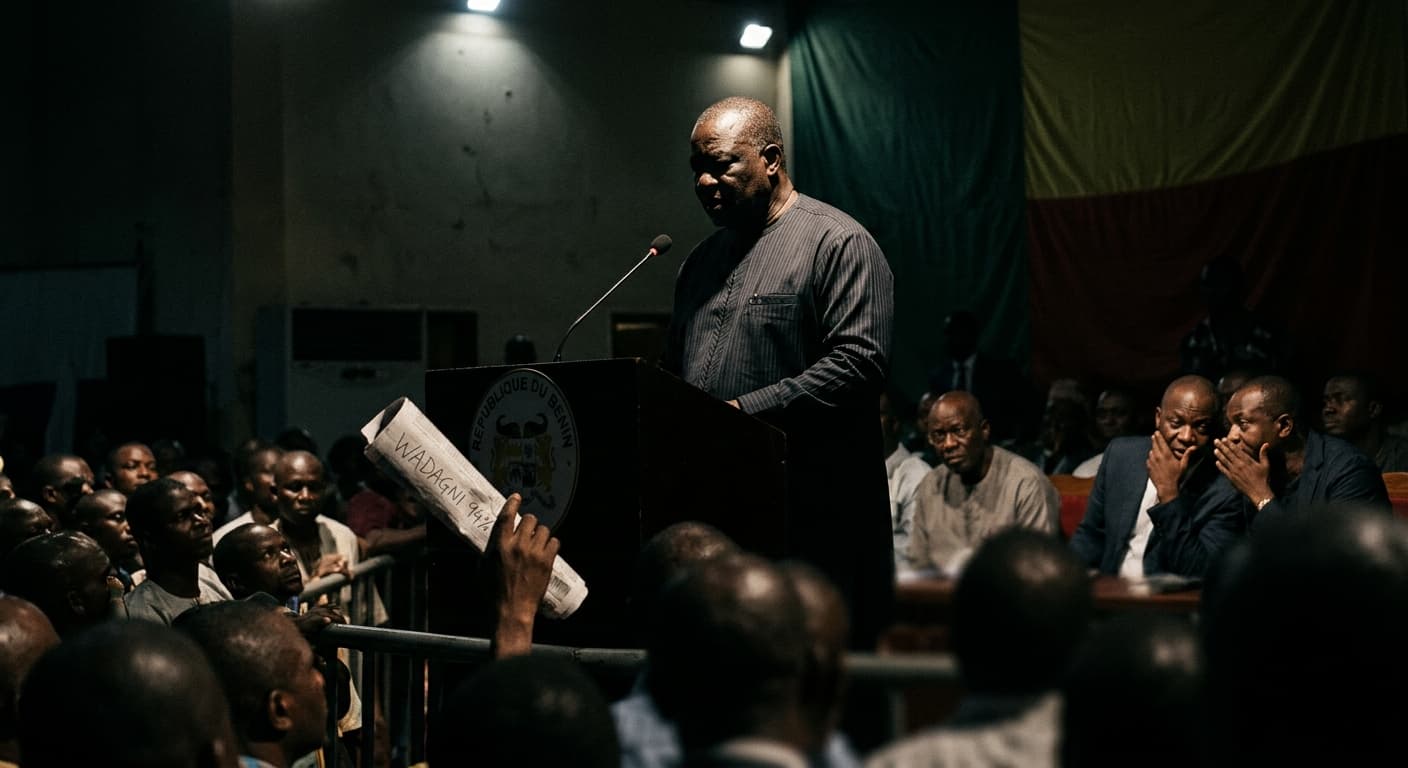
Benin's 94% Mandate Masks the Real Power Struggle — Talon Isn't Leaving
Wadagni inherits an 8% growth economy, a 40% poverty rate, and a patron who may run the Senate. The landslide was never the story.
Romuald Wadagni won Benin's April 12 presidential election with 94.27% of the vote, a margin that tells you more about who wasn't on the ballot than who was. The main opposition party, Les Démocrates, failed to get its candidate onto the ticket after falling short of the parliamentary sponsorship threshold required by Benin's electoral code. Its only challenger, Paul Hounkpè, secured just 4.78% of the legislative vote in January 2026 and posed no real contest. The Constitutional Court confirmed turnout at 63.57%, up from 50.17% in 2021 — respectable, but in a race with one viable candidate, hardly a ringing democratic endorsement.
BBC News called it what it was: "In the absence of a credible opposition, many viewed the election as a formality."
The headlines will frame this as Benin's fifth peaceful democratic transition since 1990 and a rebuke to West Africa's coup contagion. Outgoing president Patrice Talon respected his two-term limit, and that is genuinely significant in a region where term-limit violations have triggered destabilization from Guinea to Burkina Faso. But the democratic ledger is far thinner than the stability narrative suggests.
The governing coalition holds every single seat in the National Assembly after the Democrats failed to clear the 20% threshold in January's legislative elections, winning roughly 16%. Al Jazeera noted that without reform to sponsorship rules, the opposition could be locked out until the 2040 presidential cycle. Benin is not a one-party state by constitution, but it is one by architecture.
Wadagni, 49, arrives with real economic credentials. As finance minister for a decade, he oversaw GDP growth surging from 1.8% in 2015 to roughly 8% by 2025 — the product of two government action programs totaling 21 trillion CFA francs that poured investment into infrastructure, agricultural diversification, and the business climate. Bantu Gazette reported that his swearing-in address pledged expanded access to financing for women, mechanized support for farmers, and deeper diaspora engagement.
Here is the mandate's central tension: 40.1% of Benin's population still lives below the poverty line, per the ISS Today analysis. Growth concentrated in Cotonou's port, cotton exports, and state-led construction has not translated downward. Wadagni's own governance program for 2026–33 identifies "social wellbeing for all" as its first pillar. He now has to deliver it with an economy Talon built and a legislature Talon's coalition controls.
Then there is the security crisis. JNIM, Al-Qaeda's Sahelian affiliate, killed 54 Beninese soldiers in an attack last April and 15 more last month. The December 7 coup attempt — thwarted with Nigerian air support — was itself partly motivated by military frustration over the state's inability to secure the north. Wadagni struck a conciliatory tone toward Niger and Burkina Faso during his campaign, acknowledging that unilateral border defense is unsustainable. But relations with Ouagadougou and Niamey remain strained, and the W-Arly-Pendjari Complex continues to serve as a rear base for militant groups.
The most consequential variable, however, is Patrice Talon. The November 2025 constitution created a Senate with broad powers — including the ability to review and delay National Assembly legislation — and Talon is widely expected to assume its presidency. That would institutionalize what the ISS Today piece calls a "dual executive," raising the risk of institutional friction between a president who campaigned on his own mandate and a predecessor positioned to veto it. Talon himself told reporters after voting that "it is illusory to think that one can fade into the background."
What to watch: Wadagni's first 100 days. Will his cabinet include independent figures or remain a Talon-aligned roster? Does he launch the national dialogue on contentious reforms that his program promises — particularly the sponsorship rules that have structurally excluded the opposition? And does Talon's Senate confirmation become a flashpoint between the old guard and the new? Wadagni won the election. Whether he wins the presidency is a different question.
Discover more
Global Politics
Xi Jinping Calls China-Russia Ties 'Precious'
Xi Jinping's description of China-Russia ties as 'precious' reflects a strategic imbalance, with Beijing dictating terms in the partnership.
US Politics
Washington's Scrutiny of Iran War Prediction
The Iran war prediction market scandal exposes political ties and regulatory challenges in Washington, as insider trading concerns rise.

US Politics
US Launches $166B Tariff Refund Portal
The US is launching a $166 billion tariff refund portal to aid importers hit by Trump-era tariffs, with major implications for trade and supply costs.

Conflict & Security
Drone Warfare Killing Aid Workers at Unprec
Over 1,000 humanitarian workers killed in three years as cheap armed drones collapse legal protections. Gaza, Sudan, Ukraine, and DRC see deliberate targeting of aid convoys and hospitals with zero prosecutions.