AU Peacekeepers' Casualty Data Crisis
AU peacekeepers face funding and transparency issues.
Model Diplomat8 min readAfrica
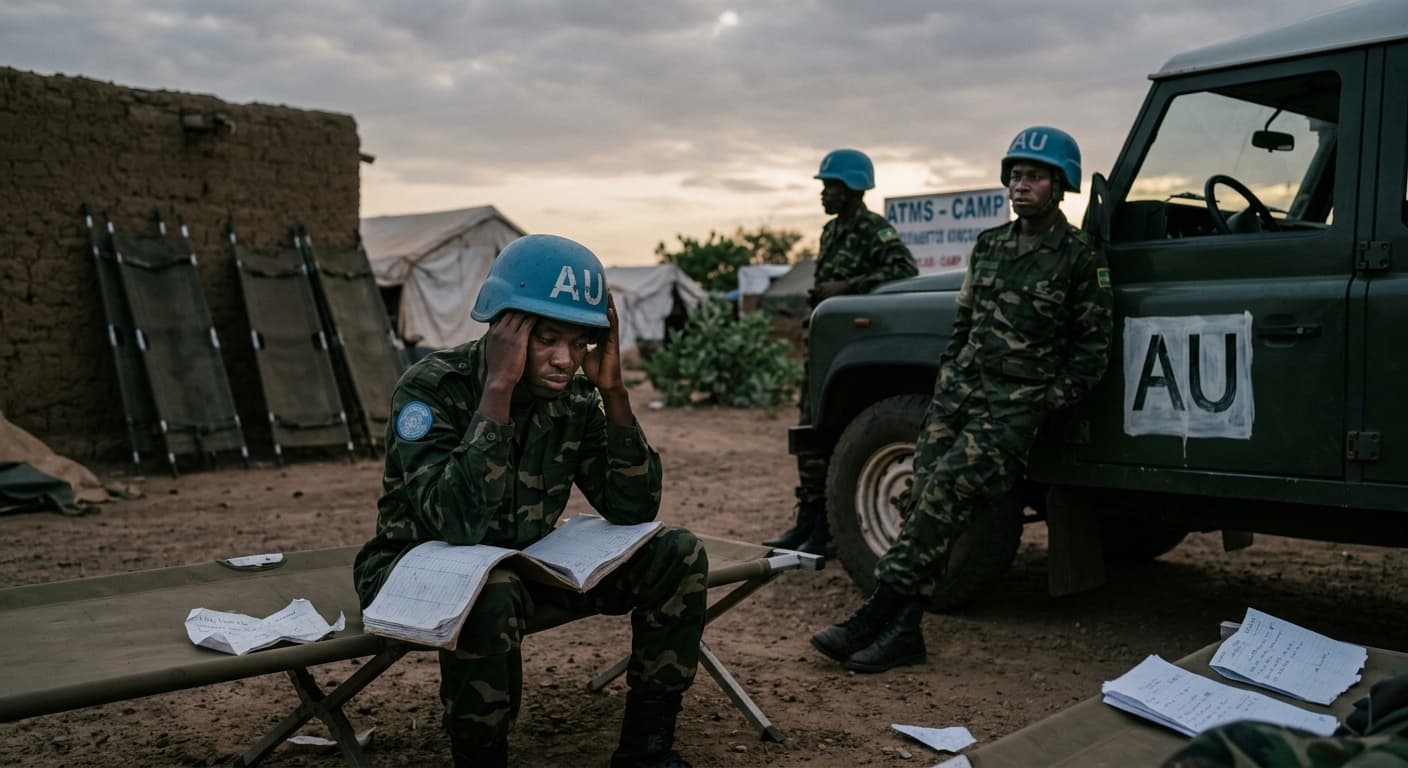
AU peacekeepers die uncounted while Addis loses the funding fight
The AU pays fallen peacekeepers $20,000 less than the UN, has never published casualty data, and lost its 2025 bid for UN-assessed funding — as al-Shabaab and Sudan grind on.
The African Union has deployed hundreds of thousands of troops to some 22 peace support operations since 2003 and has never once published a public casualty figure — even as one senior AU official privately estimated 8,000 dead in Somalia alone, more than every UN peacekeeper killed worldwide since 1948. That silence, laid out in an Institute for Security Studies PSC Report published on 6 July 2026, is not a data problem. It is a leverage problem: the AU cannot credibly demand fair compensation, safer deployment protocols or predictable financing from the UN Security Council and Western donors when it will not itself account for the price its troop-contributing countries have already paid. In a year in which Washington blocked the hybrid funding mechanism for AUSSOM and Sudan's war grinds through its third year, that gap has stopped being a moral question and become a strategic one.
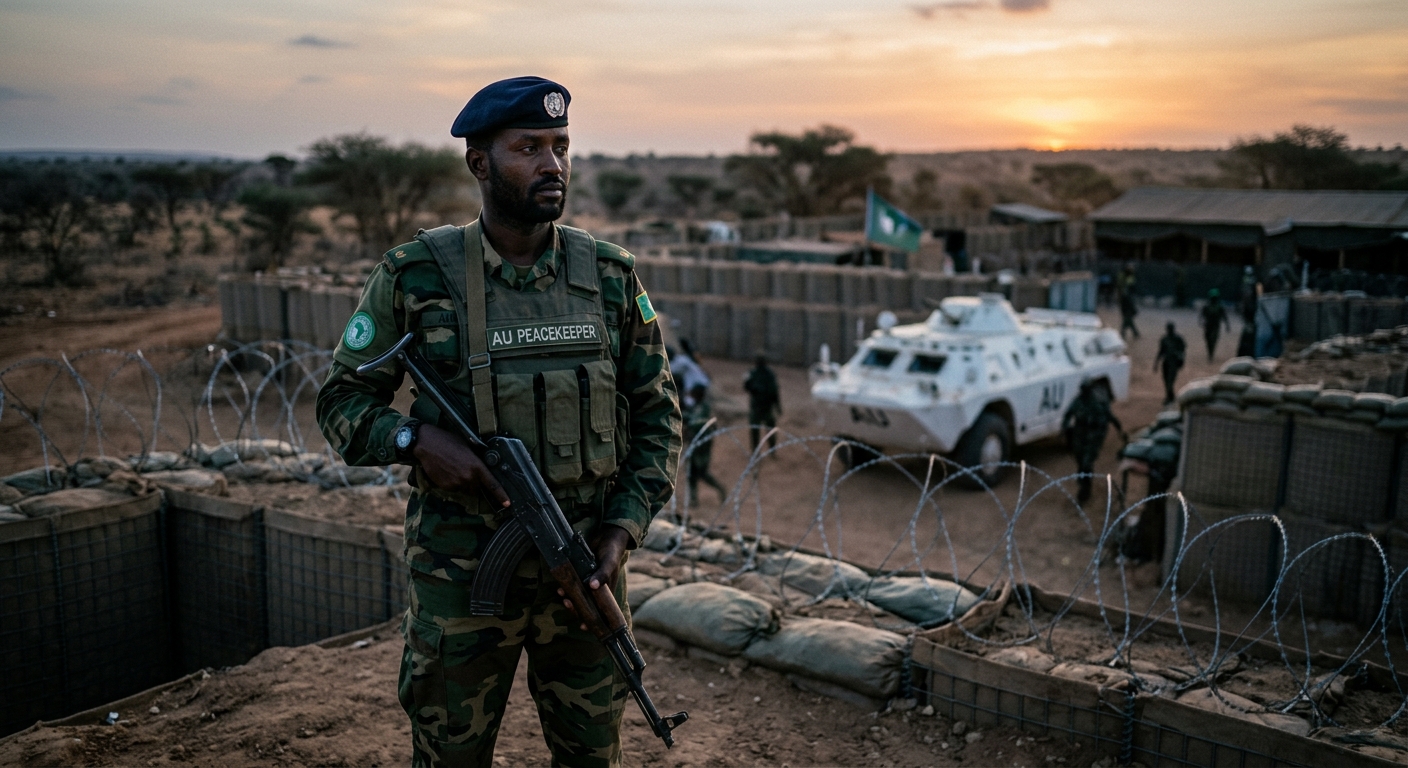
The numbers the AU will not publish
The publicly cited toll — roughly 3,500 AU personnel killed in Somalia since 2007 — comes from a single 2023 interview given by Mohamed El-Amine Souef, then head of the AU Transition Mission in Somalia, to Al Jazeera. It has never been confirmed by the AU Commission. A closed-door ISS briefing this year put the true figure closer to 8,000. A peer-reviewed study by George Washington University's Paul D. Williams in
Studies in Conflict & Terrorism identified more than 450 peacekeepers killed in six al-Shabaab mass attacks on forward operating bases between June 2015 and January 2017 alone — one narrow slice of one conflict.
For comparison, the UN Secretary-General's office marked the International Day of UN Peacekeepers on 5 June 2026 by naming each of the 59 blue-helmet fatalities recorded in 2025, laying a wreath at the Peacekeepers Memorial in New York, and awarding the Dag Hammarskjöld Medal posthumously. The AU inaugurated a memorial wall at the Julius Nyerere Peace and Security Building in Addis Ababa on 25 May 2019 — and, per the ISS, has held no commemoration since.
The gap is not academic. Under UN General Assembly Resolution 64/269 of June 2010, families of UN uniformed personnel killed in service receive a standard death-and-disability payment of US$70,000. Anonymous AU sources told ISS that the AU pays a maximum of $50,000 — and Souef has said some families received nothing at all because of "funding constraints." Meanwhile the
Uppsala Conflict Data Programme, cited in the PSC Report, recorded 28 active state-based armed conflicts in Africa in 2025, double the 14 recorded a decade earlier. The AU is deploying peacekeepers into more asymmetric warzones while paying their survivors less than the organisation whose burden it is nominally sharing.
Bulo Marer, and what corruption did to force protection
Whatever the aggregate number, the pattern is legible in the individual attacks. On 26 May 2023, al-Shabaab fighters overran the ATMIS forward operating base at Bulo Marer, 130 km southwest of Mogadishu. Uganda's President Yoweri Museveni confirmed on 3 June 2023 that 54 Ugandan soldiers had been killed. In a nationally broadcast address, Museveni blamed procurement corruption inside the Uganda People's Defence Forces for troops arriving in Somalia inadequately equipped. A Ugandan military court subsequently dismissed two majors — Zadock Abor and John Oluka — for cowardice after they abandoned the base under attack, per
BBC News on 12 November 2023.
The pattern predates 2023 and is not confined to one contingent. Al-Shabaab's mass attack on the al-Baraf base in Middle Shabelle in May 2022 killed at least 10 Burundian soldiers by Burundi's own count and possibly 30 or more, per a senior Burundian officer cited by BBC; al-Shabaab claimed more than 170. The 2016 raid on the Kenyan-held el-Adde base is widely believed to have killed up to 180 Kenya Defence Forces soldiers — Nairobi has never confirmed a figure. A 2015 pre-dawn raid on a Burundian base in Lego killed at least 70. In every case, the AU declined to release a toll, delegating the disclosure to the affected troop-contributing country. The ISS PSC Report traces this practice to a 2015 policy, never publicly documented, that missions were "not allowed to release specific casualty counts."
Even a helicopter accident illustrates the transparency problem: when an AUSSOM helicopter crashed at Mogadishu's Aden Adde International Airport on 2 July 2025, killing five, it was a Ugandan military spokesperson — not the AU Commission — who provided the casualty figures. The operational implication is uncomfortable: inadequate preparation, not just al-Shabaab's kinetic edge, is killing AU peacekeepers, and the AU has no cross-contingent framework to audit force protection standards. A
Konrad Adenauer Stiftung assessment of the ATMIS drawdown noted that Ugandan troops at Bulo Marer were "holding ground — a role meant for the SNA" — because the Somali National Army lacked capacity, blurring the mission's purpose and multiplying its exposure.
Why 2026 is the year the gap becomes strategic
Recognition and compensation are not just moral debts. They are the internal price of keeping troop-contributing countries in the field — and the AU is losing that argument at the exact moment its funding architecture is collapsing.
On 27 December 2024, the UN Security Council adopted Resolution 2767 (2024) by 14 votes in favour with the United States abstaining, according to the UN Audiovisual Library record of the meeting, authorising the AU Support and Stabilisation Mission in Somalia (AUSSOM) with up to 11,826 uniformed personnel. The resolution flagged a "hybrid implementation" of the December 2023 financing framework — Resolution 2719 — under which UN-assessed contributions would cover up to 75% of AUSSOM's budget from 1 July 2025, subject to a confirmatory Council decision by 15 May 2025. The
International Crisis Group described 2719 as the "culmination of more than fifteen years of debate" over UN funding for African-led missions.
That confirmation never came. The Trump administration, backed by a bill introduced by Senate Foreign Relations Committee Chair James Risch prohibiting US endorsement of 2719 for AUSSOM, blocked consensus, per the Danish Institute for International Studies assessment. Of AUSSOM's projected US$166.5 million 2025 budget, only US$4.5 million was confirmed at the time of the missed deadline, according to the
LSE IDEAS analysis by Partha Moman. By September 2025, an ISS assessment put AUSSOM's shortfall at
over US$92 million plus US$100 million in inherited ATMIS debt. Troop stipends alone run to roughly US$200 million a year.
The 25 September 2025 High-Level Financing Event in New York, co-convened by the UK, Somalia, the AU Commission and the UN, produced a UK pledge of £16.5 million and an AU commitment of US$20 million from the AU Peace Fund — enough to muddle through 2025, not to plan 2026. On 30 December 2025,
Resolution 2809 (2025) renewed AUSSOM through 31 December 2026 unanimously, but Sierra Leone's delegate — speaking also for Algeria, Guyana and Somalia — noted that "the financing of AUSSOM had not been a central issue throughout the negotiations despite being the core concern." China's representative, in the same session, said the funding gap facing AUSSOM was "unsustainable."
Then Washington moved. According to a diplomatic cable dated 1 July 2026 and reviewed by Reuters (as reported by BBC Somali), the United States informed the AU it will not support the UN Support Office in Somalia (UNSOS) — worth roughly US$500 million a year — beyond the end of 2026, and will oppose any UN Security Council extension bundling UNSOS logistics with AUSSOM. UNSOS provides the food, fuel, water, medevac and troop transport that AUSSOM depends on. Its withdrawal is not a budget cut. It is a strategic decapitation of the mission's logistics tail.
The 10th UN-AU communiqué — and what it doesn't say
On 13 May 2026, AU Commission Chairperson Mahmoud Ali Youssouf and UN Secretary-General António Guterres convened the Tenth AU-UN Annual Conference in Addis Ababa. Paragraph 3 of the joint communiqué underscored "the primacy of political solutions, as well as the need for predictable, sustainable, and adequate financing for AU-led peace support operations including through the implementation the UN Security Council Resolution 2719 (2023) on a case-by-case basis." What the communiqué does not do is name a compensation floor for AU peacekeepers, commit the AU Commission to publishing casualty data, or set out a force-protection audit framework across troop-contributing countries. The recognition gap the PSC Report identifies runs directly through the AU's own top-level partnership document with the UN.
That silence has second-order costs. Uganda, which lost 54 soldiers at Bulo Marer, has bilateralised much of its Somalia deployment; an April 2025 Kampala conference proposed an additional 8,000 troops be deployed bilaterally with AU endorsement, per the LSE analysis — a workaround that fragments the mission's political legitimacy in exchange for force protection under national rules. Ethiopia's troops, most of whom entered Somalia before AMISOM and remain outside its mandate, are least sensitive to AU funding shifts. The winners of a fragmented deployment architecture, in other words, are the neighbours with the strongest border-security interest — Ethiopia and Kenya — and the private and bilateral security arrangements that will fill any AU void. An ISS African Futures brief argues that shrinking UN peacekeeping funds are already pushing Africa toward "more fragmented, bilateral and private security arrangements." The loser is the AU itself as a continental security actor.
What to watch next
- 31 October 2026: UNTMIS ceases operations under Resolution 2809, ending the UN's transitional political mission in Somalia.
- 31 December 2026: AUSSOM's current mandate expires; US support for UNSOS ends the same day. Any renewal requires a new UNSC resolution and a fresh financing package.
- Q3 2026 PSC session: The Peace and Security Council is expected to consider a proposed AU compensation and casualty-reporting framework — the first substantive test of whether the 6 July 2026 PSC Report reshapes policy or joins a stack of unread recommendations.
Diplomat View
The AU's peacekeeping problem is not that its troops die. It is that it will not say how many, will not pay their families the UN rate, and will not audit the training gaps that make them die. Every one of those omissions weakens the AU's hand in New York and Brussels — because a donor asked to sustain a mission it cannot see cannot underwrite a mission the AU refuses to account for. Our forecast: without a published casualty policy, a compensation floor at the UN's US$70,000 level, and a PSC-mandated force-protection audit before the December 2026 mandate vote, AUSSOM's post-2026 renewal will be bilateralised — routed through Uganda, Ethiopia and Kenya under national mandates with AU branding, not AU control. We will revise this call if the AU PSC publishes casualty data in its Q3 2026 session, if the EU commits multi-year funding at or above the €70 million 2024 level, or if the US reverses its UNSOS position — none of which the current evidence supports.
The Bottom Line
The AU's refusal to count its own dead is what is losing it the funding fight. The compensation gap, the casualty blackout and the absent force-protection framework are not separate scandals — they are the same failure of institutional accountability that has left AUSSOM begging bilateral donors while Washington dismantles its logistics tail. If Addis Ababa wants a continental peacekeeping architecture in 2027, it starts by publishing the number on the wall. *
Discover more
US Politics
Congress Targets AI Chatbot Access for Terror
The House passed the Generative AI Terrorism Risk Assessment Act, focusing on AI's role in terrorism and potential surveillance implications.

India
Delhi CM Rekha Gupta Blasts Opposition's Delm
Delhi CM Rekha Gupta's remarks on women's quota defeat reveal BJP's strategy for the 2029 Lok Sabha elections, focusing on delimitation.
India
Rajnath Singh's Durga Squad for 2026 Polls
Rajnath Singh's Durga Squad promised women's safety in Bengal but has since disappeared from the agenda, revealing BJP's true priorities.

Conflict & Security
Drone Warfare Killing Aid Workers at Unprec
Over 1,000 humanitarian workers killed in three years as cheap armed drones collapse legal protections. Gaza, Sudan, Ukraine, and DRC see deliberate targeting of aid convoys and hospitals with zero prosecutions.