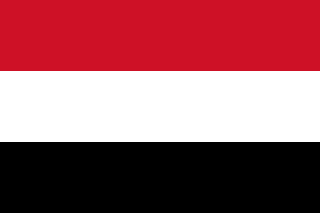
Inside Yemen’s foreign policy.
Republic of Yemen
Asia · UN voting record, treaty positions, and alliances — every claim primary-sourced.
In short
Yemen is not a unitary foreign-policy actor in practice.
Capital
Sana'aYemen's government & politics
Leadership, governance, and democratic trajectory.


Yemen's UN voting record
How Yemen votes at the UN General Assembly — ideological trajectory, voting partners, topic patterns, and key recent roll calls.
Ideological trajectory
Top voting partners
Topic-level voting
Source: Erik Voeten, “United Nations General Assembly Voting Data”, Harvard Dataverse (CC0). Aggregated by Model Diplomat. Last refresh tracked in profile freshness.
Yemen's foreign policy
Bilateral posture, key relationships, and live diplomatic statements.
Foreign Policy
Yemen does not have a single coherent foreign policy; it has competing external agendas layered onto a fractured state. The internationally recognized government led by Presidential Leadership Council chairman Rashad al-Alimi claims Yemen’s UN seat and frames its diplomacy around restoring state authority, defending territorial integrity, and securing Arab backing against the Houthis, while the de facto Houthi authorities in Sana’a run their own regional alignment centered on Iran and the “Axis of Resistance” narrative UN Digital Library member state records, Encyclopaedia Britannica, Rashad al-Alimi, International Crisis Group, The Deadly Stalemate in Yemen, Al Jazeera, Mapping who controls what in Yemen in 2026. In practice, foreign-policy decision-making is split among the PLC, Saudi and Emirati sponsors, anti-Houthi armed factions, and the Southern Transitional Council, which means Yemen’s external posture is often a product of patron balance rather than cabinet discipline European Council on Foreign Relations, Yemen’s fractured political order, Al-Monitor, Yemen’s STC announces self-determination process for south, Al Jazeera, Yemen’s Saudi-backed government retakes southern areas from STC.
The core interests pyramid is unusually clear. Survival comes first: preventing permanent partition, containing Houthi military power, and protecting Red Sea and Gulf of Aden access routes that are central to Yemen’s own economic lifelines and to the interests of its backers UN Security Council reporting on Yemen, World Bank, Yemen Overview. Regime security comes second for both major camps: the PLC needs Saudi and Emirati military, financial, and diplomatic support to remain viable, while the Houthis use external confrontation to reinforce internal control International Crisis Group, The Deadly Stalemate in Yemen, Chatham House, Yemen’s war and regional politics. Economic interests are narrower because state capacity is badly degraded, but fuel imports, humanitarian financing, port access, and oil export infrastructure remain decisive foreign-policy drivers World Bank, Yemen Overview, UNDP, Assessing the Impact of War in Yemen. Status matters last and mostly through legitimacy: holding Yemen’s UN seat, Arab League recognition, and diplomatic recognition by major powers gives the PLC an advantage the Houthis still lack UN Digital Library member state records, League of Arab States.
Yemen’s key bilateral relationships reflect dependence more than partnership. Saudi Arabia is the decisive external actor for the internationally recognized government, providing political sponsorship, mediation channels, and support to anti-Houthi structures, though Riyadh’s priority has increasingly been de-escalation on its own border rather than outright military victory Reuters, Saudi Arabia and Yemen coverage, International Crisis Group, The Deadly Stalemate in Yemen. The United Arab Emirates remains influential through southern proxies and security partners, especially around Aden and the southern coast, but its relationship with the PLC is qualified by its long-standing ties to the STC, whose separatist agenda cuts directly against the government’s formal commitment to Yemeni unity Al-Monitor, Yemen’s STC announces self-determination process for south, European Council on Foreign Relations, Yemen’s fractured political order. The United States backs the recognized government diplomatically and prioritizes maritime security and freedom of navigation, especially after Houthi attacks in the Red Sea linked Yemen more directly to the Gaza war and wider regional escalation U.S. Department of State, U.S. Relations With Yemen, UN Security Council reporting on Yemen. Iran’s relationship is the mirror image: Tehran does not control the Houthis, but UN and sanctions reporting has repeatedly tied Iranian weapons flows and military support networks to Houthi capabilities, making Yemen one arena of Iran-Saudi competition even when local actors retain autonomy UN Panel of Experts on Yemen, Reuters, Iran and Houthis coverage.
In multilateral terms, Yemen remains formally embedded in the Arab League, the Organisation of Islamic Cooperation, the Non-Aligned Movement, and the UN, where the recognized government still speaks for the state League of Arab States, Organisation of Islamic Cooperation, UN Digital Library member state records. Its UN alignment is broadly Arab and anti-Iranian on conflict diplomacy, but Yemen’s voting profile is less ideologically distinct than its war narrative suggests because fragile states often default to consensus positions or limited diplomatic activism UN Digital Library voting data, Security Council Report, Yemen. The sharper behavioral pattern is not in headline speeches but in how Yemen uses international forums to preserve recognition and seek sanctions, inspections, and mediation frameworks that constrain the Houthis while keeping external backing intact UN Security Council Resolution 2216, UN Special Envoy for Yemen. That gives Yemen a more procedural than programmatic multilateral diplomacy: legitimacy first, bargaining second, norm entrepreneurship rarely.
The most analytically useful divergence is that Yemen often breaks from its own nominal bloc


Yemen's treaties & memberships
UN multilateral treaty positions and IGO memberships.
International Organizations
Society & economy
Macro-economic snapshot and demographic context.
GDP (nominal)
$21.6B
#127/250GDP per capita
$633.887
#204/250Currency
—
HDI
0.46
#185/250GDP (nominal USD)
GDP per capita (USD)
Top trading partners


In the news
Stories surfacing across Yemen’s authoritative outlets, plus headline events and the diplomatic calendar.
Headlines
Mapping who controls what in Yemen in 2026 | Maps News | Al Jazeera
Summary: - The internationally recognized Yemeni government, the Presidential Leadership Council (PLC), says its forces recaptured two southern provinces (Hadramout and al-Mahra) from the UAE-backed Southern Transitional Council (STC), which had seized them in December 2025. - The PLC, based in Aden, leads Yemen’s political, security, and military affairs during a transitional period and aims for a permanent ceasefire negotiations. Its alliance with the STC collapsed on Janua
Yemen’s STC announces self-determination process for south: What to know - AL-MONITOR: The Middle Eastʼs leading independent news source since 2012
Summary: - Yemen’s Southern Transitional Council (STC), UAE-backed, announced a two-year transitional phase toward self-determination and a potential independence referendum for the south, with a constitutional declaration proposing a State of South Arabia based on the former Yemen Arab Republic borders and Aden as capital. - STC leader Aidarous al-Zoubaidi spoke from Aden, calling for dialogue between northern and southern actors and a popular referendum on self-determinatio
141 UN States Vote on ICJ Climate Resolution
UN member states endorse ICJ climate resolution, raising legal duties for states to act on climate change, with significant implications.
Explore Yemen in depth
Frequently asked questions about Yemen
Quick answers to the most common questions about Yemen.
What type of government does Yemen have?
Yemen is governed as a presidential republic (disputed; civil war), with its capital at Sana'a.
Who is the head of state of Yemen?
Rashad al-Alimi is the head of state of Yemen, in office since 2022-04-07.
Who leads the government of Yemen?
Salem Saleh bin Braik serves as the head of government of Yemen, since 2025-05-03.
What is the population of Yemen?
Yemen has a population of approximately 40.6 million people, making it the 38th most populous country.
What is the economy of Yemen like?
Yemen has a nominal GDP of about $22 billion, or roughly $634 per capita.
What languages are spoken in Yemen?
The official language of Yemen is Arabic.
When did Yemen join the United Nations?
Yemen has been a member of the United Nations since 1947.
Who are Yemen's closest allies?
Yemen's key allies include Saudi Arabia, United Arab Emirates, and United States.
More about Yemen
Yemen is not a unitary foreign-policy actor in practice. The internationally recognized Republic of Yemen is formally led by the eight-member Presidential Leadership Council chaired by Rashad al-Alimi, while Prime Minister Salem صالح بن بريك heads the cabinet, but coercive power is split among the PLC, the Southern Transitional Council, locally based armed formations, and the Houthi movement that still controls Sana’a and much of the north [Encyclopaedia Britannica](https://www.britannica.com/place/Yemen), [Al Jazeera](https://www.aljazeera.com/news/2026/6/9/mapping-who-controls-what-in-yemen-in-2026), [Saba News Agency](https://www.sabanew.net/). Yemen’s political system is best described as a disputed presidential republic operating under conditions of territorial fragmentation and prolonged civil war [Encyclopaedia Britannica](https://www.britannica.com/place/Yemen), [Al Jazeera](https://www.aljazeera.com/news/2026/6/9/mapping-who-controls-what-in-yemen-in-2026). The recognized government is not a normal ruling party administration. Executive authority was transferred in 2022 from President Abdrabbuh Mansur Hadi to the Presidential Leadership Council under a Gulf-backed arrangement, and the coalition behind it is an anti-Houthi umbrella rather than a cohesive party machine, with Saudi Arabia and the United Arab Emirates remaining its key external backers [Reuters](https://www.reuters.com/world/middle-east/yemens-president-transfers-powers-new-presidential-council-2022-04-07/), [Arab Center Washington DC](https://arabcenterdc.org/resource/the-presidential-leadership-council-and-yemens-fractured-anti-houthi-camp/), [Al Jazeera](https://www.aljazeera.com/news/2026/5/30/yemens-saudi-backed-government-retakes-southern-areas-from-stc-what-next). That matters because foreign policy, security policy, and even revenue collection are negotiated among coalition factions and sponsors, not simply issued from a single capital. The STC’s renewed push for southern self-determination in 2026 shows that the government’s internal cohesion remains as serious a problem as the war with the Houthis [Al-Monitor](https://www.al-monitor.com/originals/2026/06/yemens-stc-announces-self-determination-process-south-what-know), [Al Jazeera](https://www.aljazeera.com/news/2026/5/30/yemens-saudi-backed-government-retakes-southern-areas-from-stc-what-next). In the world today, Yemen sits at the intersection of Red Sea security, Gulf rivalry, and humanitarian crisis. Its geography gives it outsized strategic relevance because the Bab el-Mandeb links the Red Sea to the Gulf of Aden and onward to the Suez route, making instability in Yemen a direct concern for global shipping and for Saudi, Emirati, US, and Iranian regional calculations [Encyclopaedia Britannica](https://www.britannica.com/place/Yemen), [Council on Foreign Relations](https://www.cfr.org/global-conflict-tracker/conflict/war-yemen). Diplomatically, the internationally recognized government remains Yemen’s UN seat holder and is embedded in the Arab League, the Organisation of Islamic Cooperation, and the Non-Aligned Movement, but its actual leverage depends heavily on Saudi and Emirati military, financial, and political support [United Nations Digital Library](https://digitallibrary.un.org/), [League of Arab States](https://www.lasportal.org/), [Council on Foreign Relations](https://www.cfr.org/global-conflict-tracker/conflict/war-yemen). Economically, Yemen is one of the weakest states in the Arab world and functions through aid, fragmented public finance, and shrinking extractive revenues. The World Bank describes Yemen’s economy as devastated by conflict, with output, service delivery, and institutional capacity severely eroded, while the IMF has repeatedly tied recovery prospects to conflict de-escalation and restoration of state capacity [World Bank](https://www.worldbank.org/en/country/yemen/overview), [IMF](https://www.imf.org/en/Countries/YEM). Before and during the war, hydrocarbons were central to government revenue and exports, but damage to infrastructure, insecurity, and territorial division have made oil and gas earnings unreliable; remittances and humanitarian inflows now play an unusually large stabilizing role for households [World Bank](https://www.worldbank.org/en/country/yemen/overview), [UNDP](https://www.undp.org/yemen/publications). The country profile remains defined less by productive growth than by food insecurity, currency fragmentation, and dependence on external financing and import corridors [World Food Programme](https://www.wfp.org/countries/yemen), [World Bank](https://www.worldbank.org/en/country/yemen/overview). Three issues define Yemen’s current trajectory. First is territorial and institutional fragmentation: who governs the south, who controls ports, and whether the PLC can prevent anti-Houthi forces from splintering further [Al Jazeera](https://www.aljazeera.com/news/2026/6/9/mapping-who-controls-what-in-yemen-in-2026), [Al-Monitor](https://www.al-monitor.com/originals/2026/06/yemens-stc-announces-self-determination-process-south-what-know). Second is the unresolved war with the Houthis, which remains the central survival issue for the recognized government and the main channel for Saudi-Iranian competition inside Yemen [Council on Foreign Relations](https://www.cfr.org/global-conflict-tracker/conflict/war-yemen), [Reuters](https://www.reuters.com/world/middle-east/yemens-president-transfers-powers-new-presidential-council-2022-04-07/). Third is economic collapse: even where front lines shift, any durable stabilization depends on salaries, currency management, port access, and basic imports more than on battlefield gains alone [IMF](https://www.imf.org/en/Countries/YEM), [World Bank](https://www.worldbank.org/en/country/yemen/overview), [World Food Programme](https://www.wfp.org/countries/yemen). Yemen’s immediate trajectory is therefore set by whether anti-Houthi actors can centralize authority faster than separatist and patronage politics pull them apart.