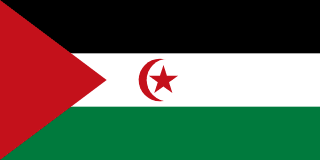
Inside Western Sahara’s foreign policy.
Sahrawi Arab Democratic Republic (disputed)
Africa · UN voting record, treaty positions, and alliances — every claim primary-sourced.
In short
Western Sahara is not a sovereign state in normal diplomatic practice; it is a disputed territory whose internationally recognized status remains unresolved, with most of the territory administered by Morocco and the self-proclaimed Sahrawi Arab Democratic Republic, led by the Polisario Front, controlling a smaller inland zone east of the Moroccan berm [United Nations Peacekeeping MINURSO](https://minurso. unmissions.
Capital
El Aaiún
Government
Disputed territory; pa…
Western Sahara's government & politics
Leadership, governance, and democratic trajectory.
Western Sahara's UN voting record
How Western Sahara votes at the UN General Assembly — ideological trajectory, voting partners, topic patterns, and key recent roll calls.
Source: Erik Voeten, “United Nations General Assembly Voting Data”, Harvard Dataverse (CC0). Aggregated by Model Diplomat. Last refresh tracked in profile freshness.
Western Sahara's foreign policy
Bilateral posture, key relationships, and live diplomatic statements.
Foreign Policy
Western Sahara does not have a conventional foreign policy in the way a fully recognized UN member does; the Sahrawi Arab Democratic Republic, proclaimed by the Polisario Front in 1976, operates a diplomacy centered on one overriding survival interest: international recognition of Sahrawi self-determination and a referendum on the territory’s final status under UN auspices Polisario Front, United Nations Peacekeeping MINURSO. That doctrine is consistent across its official messaging, African Union diplomacy, and legal arguments: Morocco is treated as an occupying power, the 1991 ceasefire is treated as conditional on a decolonization process, and external relations are judged by whether they advance recognition, humanitarian support for refugees, or pressure on Rabat African Union, UN Digital Library Security Council reports on Western Sahara.
Its decision structure is unusually centralized. The Polisario Front is both the liberation movement and the governing authority of the SADR institutions operating largely from the Tindouf refugee camps in Algeria, and the same leadership circle controls military, diplomatic, and negotiating files Encyclopaedia Britannica, International Crisis Group. Brahim Ghali has served as both President of the SADR and Secretary-General of the Polisario Front, which means regime security and national claims are effectively fused rather than balanced by separate state institutions Saharawi Arab Democratic Republic Presidency. That structure makes behavior relatively predictable: the movement can show tactical flexibility on process, envoy language, or confidence-building measures, but not on the hierarchy of interests. Territorial self-determination is the survival tier; preserving the Polisario’s claim to sole representation of the Sahrawi people is the regime-security tier; humanitarian access and donor support for the camps form the economic tier; and African and legal recognition supply the status tier UN General Assembly decolonization materials, UNHCR Algeria operation.
Its most important bilateral relationship is with Algeria, which hosts Sahrawi refugees, supports Polisario diplomatically, and backs the principle of self-determination in regional and UN forums Algerian Ministry of Foreign Affairs, International Crisis Group. Spain remains politically salient because it is the former administering power under international legal history, but Madrid’s 2022 endorsement of Morocco’s autonomy plan created a sharp break with Polisario expectations and triggered a deterioration in relations with the movement and with Algeria Government of Spain, Reuters. The SADR also invests heavily in ties with South Africa and other states that frame the dispute through anti-colonial and self-determination law, while treating Morocco’s normalisation gains with Gulf monarchies, the United States, and parts of Europe as a strategic threat to its recognition campaign South African Government, U.S. Department of State. Morocco’s 2020 recognition by the United States of Moroccan sovereignty over Western Sahara remains the single most damaging diplomatic setback to the SADR position, even though Washington still supports the UN-led political process and MINURSO remains in place White House Proclamation 10126, U.S. Department of State.
Multilaterally, the SADR’s main institutional foothold is the African Union, where it is a member state; that is the core reason the AU remains more structurally receptive to Sahrawi claims than the UN system, where the SADR is not a UN member and cannot vote in the General Assembly African Union, United Nations Member States. In the UN framework, Western Sahara remains on the UN list of Non-Self-Governing Territories and is handled through decolonization mechanisms, MINURSO, and periodic Security Council renewals rather than through direct SADR participation as a sovereign equal UN Decolonization, MINURSO. That institutional asymmetry explains a key pattern often missed by delegates: Sahrawi diplomacy is less about formal UN voting alignment than about coalition-building through Algeria, South Africa, Namibia, and supportive Latin American or African states that can table language, resist pro-Morocco formulae, or defend referendum language in multilateral settings Namibia Ministry of International Relations and Cooperation, South African Government.
The most analytically useful divergence is that the SADR’s strongest bloc, the African Union and the wider self-determination camp, is not internally unified on the method for resolving the conflict. The AU admits the SADR as a member, but many African and Arab states have simultaneously deepened ties with Morocco, opened consular representations in territory controlled by Rabat, or backed autonomy language short of independence, which weakens the bloc discipline the Polisario would prefer African Union, Morocco [blocked]
Society & economy
Macro-economic snapshot and demographic context.
GDP (nominal)
—
GDP per capita
—
Currency
—
HDI
—
In the news
Stories surfacing across Western Sahara’s authoritative outlets, plus headline events and the diplomatic calendar.
Headlines
Morocco’s Foreign Policy and Its Role in the Moroccan Sahara Dispute - Modern Diplomacy
Summary: The article analyzes how Morocco’s foreign policy toward the Western Sahara dispute has evolved over the past two decades. Key shifts include moving beyond purely legal and territorial arguments to a comprehensive strategy that combines diplomacy, economic development, governance, security cooperation, and coalition-building. The Western Sahara issue has become central to Morocco’s national identity and its regional stance, shaping relations with Algeria, Africa, and
Morocco Country Report - Stimson Center
Summary: - Western Sahara and diplomacy: The Morocco-focused policy landscape centers on Western Sahara, where U.S. recognition of Moroccan sovereignty (Dec 2020) and the UN Security Council’s Oct 2025 Resolution 2797 backing Morocco’s autonomy plan have been pivotal. These moves have intensified Rabat’s diplomatic leverage with the U.S., EU, and many African states, while Algeria remains a primary regional obstacle to a lasting settlement. - Geopolitical positioning: Moroc
Nova Exclusive: UN negotiations near final agreement on Western Sahara, first signs of agreement
Summary: - The UN-led Western Sahara negotiations are entering a potentially decisive phase, with aims to reach an agreement in principle by fall to guide renewal of MINURSO’s mandate. - A new negotiation framework, anchored in the 2007 Moroccan autonomy proposal, was adopted via UN Security Council Resolution 2797 (Oct 31), shifting from technical to political momentum and enabling broader involvement, including direct U.S. engagement. - Recent months saw renewed inter-minis
Explore Western Sahara in depth
Frequently asked questions about Western Sahara
Quick answers to the most common questions about Western Sahara.
What type of government does Western Sahara have?
Western Sahara is governed as a disputed territory; partially recognized state, with its capital at El Aaiún.
What is the population of Western Sahara?
Western Sahara has a population of approximately 601 thousand people, making it the 172nd most populous country.
What languages are spoken in Western Sahara?
The official languages of Western Sahara are Berber, Hassaniya, and Spanish.