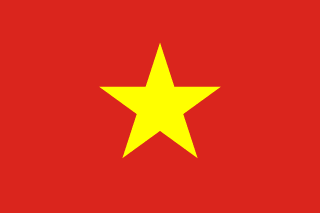
Inside Vietnam’s foreign policy.
Socialist Republic of Viet Nam
Asia · UN voting record, treaty positions, and alliances — every claim primary-sourced.
In short
Vietnam is a one-party socialist republic run by the Communist Party of Vietnam, and that fact explains most of its foreign policy: Hanoi is pragmatic abroad, tightly controlled at home, and focused on preserving regime stability while expanding economic space…
Capital
HanoiGovernment
Unitary one-party socialist republicVietnam's government & politics
Leadership, governance, and democratic trajectory.


Head of government
Phạm Minh Chính
Head of Government
Vietnam's UN voting record
How Vietnam votes at the UN General Assembly — ideological trajectory, voting partners, topic patterns, and key recent roll calls.
Ideological trajectory
Top voting partners
Topic-level voting
Source: Erik Voeten, “United Nations General Assembly Voting Data”, Harvard Dataverse (CC0). Aggregated by Model Diplomat. Last refresh tracked in profile freshness.
Vietnam's foreign policy
Bilateral posture, key relationships, and live diplomatic statements.
Foreign Policy
Vietnam’s foreign policy is built on autonomy first, alignment second. The operative doctrine is the Communist Party’s “independence, self-reliance, diversification and multilateralization” line, paired with the “Four No’s” defense policy: no military alliances, no siding with one country against another, no foreign military bases or use of Vietnamese territory against others, and no use or threat of force in international relations Ministry of National Defence of Vietnam, 2019 National Defence White Paper. That doctrine reflects an interests pyramid in which survival means preventing coercion in the South China Sea, regime security means preserving Communist Party control, economic interest means keeping export markets and investment flows open, and status means being treated as a middle power with diplomatic room between China and the United States Vietnam Government Portal, 13th Party Congress documents CSIS Asia Maritime Transparency Initiative World Bank Vietnam Overview. Leadership matters because foreign policy is party-led, not purely ministry-led: the Politburo and Party General Secretary set the line, the government executes it, and the foreign ministry manages tactical balance; after the 2024 political reshuffle, Tô Lâm became state president and later party chief while Phạm Minh Chính remained prime minister, concentrating even more weight in the party-security nexus Reuters, Aug. 3 2024 Government of Vietnam.
That structure explains Vietnam’s bilateral map. China is simultaneously Vietnam’s largest strategic problem and one of its most important economic relationships: Hanoi contests Beijing’s expansive South China Sea claims, has repeatedly protested Chinese maritime activity around the Paracels and Spratlys, and relies on UNCLOS language to defend its position, yet China remains a top trade partner and an unavoidable neighbor Permanent Mission of Vietnam to the UN, statement on UNCLOS and the East Sea Reuters, June 19 2024 OEC Vietnam profile. The United States has become Vietnam’s key external balancer without becoming an ally; the relationship was upgraded to a Comprehensive Strategic Partnership in 2023, with cooperation centered on semiconductors, supply chains, maritime capacity, and war-legacy issues rather than treaty commitments The White House, Joint Leaders’ Statement, Sept. 10 2023 U.S. Department of State. Russia remains important for legacy arms ties and energy cooperation, but that relationship now sits under sanctions pressure and is less central to Vietnam’s diversification strategy than ties with Japan, India, South Korea, the EU, and ASEAN partners SIPRI Arms Transfers Database European Commission, EU-Vietnam relations Ministry of Foreign Affairs of India, India-Vietnam relations.
Regionally, Vietnam uses ASEAN as both shield and amplifier. It is an ASEAN member, part of APEC and the Non-Aligned Movement, and frames ASEAN centrality as the preferred mechanism for managing major-power competition in Southeast Asia ASEAN, Vietnam member state page APEC, Viet Nam economy profile Non-Aligned Movement. But Hanoi is more willing than some ASEAN peers to harden language on maritime law and external coercion when its own sovereignty claims are at stake. That is where Vietnam often breaks from its bloc: it supports consensus diplomacy in public, but pushes for stronger references to UNCLOS, freedom of navigation, and restraint in the South China Sea than Cambodia or Laos usually tolerate ASEAN Chairman’s Statements archive International Crisis Group, Vietnam and the South China Sea. The same pattern appeared in its network of “comprehensive strategic partnerships,” which now spans both China and the United States, as well as Russia, India, Japan, South Korea, Australia, and, recently, the EU context noted in current reporting; the point is not ideological consistency but maximum optionality Vietnam Ministry of Foreign Affairs Reuters, Sept. 10 2023.
At the UN, Vietnam’s voting profile is pragmatic, sovereignty-heavy, and more cautious than the rhetoric of some U.S. partners would suggest. Vietnam served as an elected member of the Security Council in 2020–2021 and emphasized the UN Charter, peaceful settlement of disputes, and protection of civilians, consistent with its preference for legal framing over bloc politics UN Security Council, Viet Nam profile Vietnam Ministry of Foreign Affairs. On Ukraine, Vietnam’s most revealing divergence is that it has often abstained on major


Rivals

Vietnam's treaties & memberships
UN multilateral treaty positions and IGO memberships.
International Organizations
Society & economy
Macro-economic snapshot and demographic context.
GDP (nominal)
$476.4B
#32/250GDP per capita
$4,717.29
#134/250Currency
—
HDI
0.73
#102/250GDP (nominal USD)
GDP per capita (USD)
Top trading partners


In the news
Stories surfacing across Vietnam’s authoritative outlets, plus headline events and the diplomatic calendar.
Headlines
Joint statement on upgrading Việt Nam–EU ties to Comprehensive Strategic Partnership
Summary: - Vietnam and the European Union upgraded their relationship to a Comprehensive Strategic Partnership, announced during President of the European Council António Costa’s official visit to Vietnam (Jan 28–29, 2026). - The partnership emphasizes a rules-based international order, shared peace and security values, and mutual interests in political cooperation, senior-level dialogue, diplomacy, and people-to-people exchanges. - Economic and trade ties are a core focus.
Hormuz Shock Is Wiring Globe to Chinese Clean
Closure of the Strait of Hormuz accelerates global renewables, increasing reliance on Chinese supply chains for clean energy components.
Vietnam's top leader pledges to help build safer, more resilient and prosperous Asia-Pacific - VnExpress International
Vietnamese leader outlines a proactive, policy-driven approach to Asia-Pacific security and development. Key points: - Vietnam sees current global instability as three interlinked crises (international order, development models, strategic trust) converging in the Asia-Pacific, and calls for it to be a region where solutions emerge. - Emphasizes ASEAN centrality and the need for an open, inclusive regional architecture maintained by unity, strategic autonomy, and a common age
Explore Vietnam in depth
Frequently asked questions about Vietnam
Quick answers to the most common questions about Vietnam.
What type of government does Vietnam have?
Vietnam is governed as a unitary one-party socialist republic, with its capital at Hanoi.
Who is the head of state of Vietnam?
Tô Lâm is the head of state of Vietnam, in office since 2024-05-22.
Who leads the government of Vietnam?
Phạm Minh Chính serves as the head of government of Vietnam, since 2021-04-05.
What is the population of Vietnam?
Vietnam has a population of approximately 101.0 million people, making it the 16th most populous country.
What is the economy of Vietnam like?
Vietnam has a nominal GDP of about $476 billion, or roughly $4,717 per capita.
What languages are spoken in Vietnam?
The official language of Vietnam is Vietnamese.
When did Vietnam join the United Nations?
Vietnam has been a member of the United Nations since 1977.
Who are Vietnam's closest allies?
Vietnam's key allies include Russia, India, Japan, and South Korea.
More about Vietnam
Vietnam is a one-party socialist republic run by the Communist Party of Vietnam, and that fact explains most of its foreign policy: Hanoi is pragmatic abroad, tightly controlled at home, and focused on preserving regime stability while expanding economic space [Constitution of the Socialist Republic of Vietnam](https://english.luatvietnam.vn/constitution/the-constitution-of-the-socialist-republic-of-vietnam-2013-78440-d1.html) [Government of Vietnam](https://en.baochinhphu.vn/) [CIA World Factbook – Vietnam](https://www.cia.gov/the-world-factbook/countries/vietnam/). Tô Lâm serves as state president after being elected by the National Assembly in May 2024, while Phạm Minh Chính remains prime minister, and the ruling Communist Party retains the decisive authority over state appointments and strategic direction through its Politburo and party apparatus [National Assembly of Vietnam](https://quochoi.vn/) [Reuters](https://www.reuters.com/world/asia-pacific/vietnams-parliament-elects-public-security-minister-state-president-2024-05-22/) [Communist Party of Vietnam Online Newspaper](https://en.dangcongsan.vn/). Vietnam’s place in the world is larger than its formal power would suggest because it has become a swing state in Asia’s balance-of-power politics and a manufacturing hub in global supply-chain diversification [CSIS](https://www.csis.org/analysis/vietnams-bamboo-diplomacy) [World Bank – Vietnam Overview](https://www.worldbank.org/en/country/vietnam/overview). Hanoi’s core external strategy is usually described by Vietnamese officials as independence, self-reliance, diversification, and multilateralization, which in practice means deepening ties simultaneously with the United States, China, Russia, Japan, India, South Korea, the EU, and ASEAN while avoiding formal alignment [Ministry of Foreign Affairs of Vietnam](https://www.mofa.gov.vn/en) [Vietnam’s 2019 National Defence White Paper](https://mod.gov.vn/en/detail?articleId=318676&categoryId=487). That balancing act has intensified as maritime disputes with China remain Vietnam’s main long-term security problem, even while China is also Vietnam’s largest trading partner [U.S. Department of State](https://www.state.gov/u-s-relations-with-vietnam/) [OEC – Vietnam](https://oec.world/en/profile/country/vnm). Economically, Vietnam is now one of Asia’s fastest-rising middle-income manufacturing economies, with nominal GDP around $476 billion and population around 101 million in the country context provided, and with exports centered on electronics, machinery, textiles, footwear, and phones [World Bank Data – Vietnam](https://data.worldbank.org/country/vietnam) [OEC – Vietnam](https://oec.world/en/profile/country/vnm). Its growth model depends on export manufacturing, foreign direct investment, and integration into high-volume trade networks through ASEAN, APEC, and major free trade agreements including the CPTPP and the EU-Vietnam Free Trade Agreement [World Trade Organization – Viet Nam](https://www.wto.org/english/thewto_e/countries_e/vietnam_e.htm) [European Commission – EU-Vietnam trade relations](https://policy.trade.ec.europa.eu/eu-trade-relationships-country-and-region/countries-and-regions/vietnam_en). Samsung, Intel, Apple suppliers, and other multinational firms have treated Vietnam as a key “China plus one” production base, giving Hanoi leverage but also exposing it to shocks in global demand and technology controls [World Bank – Vietnam Overview](https://www.worldbank.org/en/country/vietnam/overview) [Reuters](https://www.reuters.com/world/asia-pacific/). Three issues define Vietnam’s current trajectory. First is strategic hedging against China: Hanoi wants stable party-to-party ties with Beijing and manageable maritime friction, but it is steadily widening security and political links with other powers to avoid dependence [Ministry of Foreign Affairs of Vietnam](https://www.mofa.gov.vn/en) [CSIS](https://www.csis.org/analysis/vietnams-bamboo-diplomacy). Second is economic upgrading: the government wants to move from labor-cost competitiveness toward semiconductors, higher-value manufacturing, energy transition, and digital infrastructure, but that requires grid reform, better logistics, and cleaner governance [World Bank – Vietnam Overview](https://www.worldbank.org/en/country/vietnam/overview) [IMF Article IV Consultation – Vietnam](https://www.imf.org/en/Countries/VNM). Third is political control during elite transition: the anti-corruption campaign has reached senior levels, removing major officials and reshaping the leadership bench, which strengthens party discipline but can also slow administrative decision-making and investor execution [Reuters](https://www.reuters.com/world/asia-pacific/) [ISEAS – Yusof Ishak Institute](https://www.iseas.edu.sg/). The result is a state that is more confident internationally than a decade ago but still cautious in every domain where sovereignty, party control, or strategic autonomy are at stake [Vietnam’s 2019 National Defence White Paper](https://mod.gov.vn/en/detail?articleId=318676&categoryId=487) [Ministry of Foreign Affairs of Vietnam](https://www.mofa.gov.vn/en). Vietnam will usually cooperate before it aligns, diversify before it chooses sides, and frame almost every major external decision through two higher-order priorities: protecting regime continuity and preventing overdependence on any single great power [CSIS](https://www.csis.org/analysis/vietnams-bamboo-diplomacy) [Communist Party of Vietnam Online Newspaper](https://en.dangcongsan.vn/). For MUN delegates, the key read is simple: Vietnam is pro-trade, sovereignty-first, suspicious of coercion, open to many partnerships, and unlikely to support any agenda that narrows its room to maneuver [U.S. Department of State](https://www.state.gov/u-s-relations-with-vietnam/) [Ministry of Foreign Affairs of Vietnam](https://www.mofa.gov.vn/en).