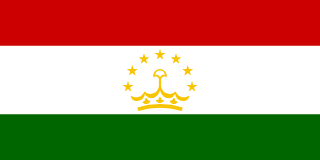
Inside Tajikistan’s foreign policy.
Republic of Tajikistan
Asia · UN voting record, treaty positions, and alliances — every claim primary-sourced.
In short
Tajikistan is a highly centralized presidential republic where President Emomali Rahmon remains the decisive actor in both domestic and foreign policy, while Prime Minister Kokhir Rasulzoda runs government under a system dominated by the ruling People’s Democratic Party of Tajikistan…
Capital
DushanbeGovernment
Presidential republicTajikistan's government & politics
Leadership, governance, and democratic trajectory.


Head of government
Kokhir Rasulzoda
Head of Government
Tajikistan's UN voting record
How Tajikistan votes at the UN General Assembly — ideological trajectory, voting partners, topic patterns, and key recent roll calls.
Ideological trajectory
Top voting partners
Topic-level voting
Source: Erik Voeten, “United Nations General Assembly Voting Data”, Harvard Dataverse (CC0). Aggregated by Model Diplomat. Last refresh tracked in profile freshness.
Tajikistan's foreign policy
Bilateral posture, key relationships, and live diplomatic statements.
Foreign Policy
Tajikistan’s foreign policy is regime-preserving, security-first, and deliberately multi-vector. The updated foreign policy concept approved in May 2025 defines priorities around sovereignty, border security, regional stability, economic development, water and climate diplomacy, and a balanced approach to major powers rather than formal alignment with any single patron Concept of the Foreign Policy of the Republic of Tajikistan. In practice, President Emomali Rahmon remains the decisive foreign-policy actor in a strongly presidential system, while the Ministry of Foreign Affairs executes rather than sets grand strategy BTI 2026 Country Report: Tajikistan. Survival and regime security sit at the top of Tajikistan’s interests pyramid because it shares a long border with Afghanistan and treats militant spillover, narcotics trafficking, and border instability as the main external threats Concept of the Foreign Policy of the Republic of Tajikistan CSTO on Tajikistan-Afghanistan security cooperation.
Russia remains Tajikistan’s principal hard-security partner, but China has become its most consequential economic and infrastructure partner. Tajikistan is a member of the Collective Security Treaty Organization and hosts Russia’s 201st military base, which Moscow describes as its largest military facility abroad and a key element of regional defense cooperation Ministry of Foreign Affairs of Russia: Russian military base in Tajikistan. At the same time, China is deeply embedded through trade, transport, mining, and lending; the World Bank’s 2026 country material still identifies remittances, connectivity, and external-financing dependence as structural features of Tajikistan’s economy, which helps explain Dushanbe’s preference for stable ties with Beijing as well as Moscow World Bank in Tajikistan. Iran matters too, but more as a selectively revived political and cultural partner than as a security guarantor; bilateral ties improved after years of strain, with both governments publicly emphasizing transport, energy, and cultural cooperation Ministry of Foreign Affairs of the Republic of Tajikistan Ministry of Foreign Affairs of the Islamic Republic of Iran.
Regionally, Tajikistan uses overlapping institutions to avoid overdependence on any one bloc. It is active in the SCO, CSTO, UN, and OIC, which lets it speak in several diplomatic registers at once: counterterrorism and border control in the CSTO and SCO, development and water diplomacy at the UN, and broader political solidarity in the OIC Shanghai Cooperation Organisation: Member States United Nations Digital Library: Tajikistan membership Organisation of Islamic Cooperation: Member States. Water is the clearest status issue in Tajik diplomacy. Dushanbe consistently pushes glacier protection, sustainable development, and water cooperation as areas where a small, aid-dependent state can exercise agenda-setting influence well beyond its material weight United Nations: International Conference on Glaciers’ Preservation Concept of the Foreign Policy of the Republic of Tajikistan.
At the UN, Tajikistan usually aligns with sovereignty-protective positions and avoids confrontations with Russia and China, but it is not a simple proxy voter. UN General Assembly voting data show Tajikistan often votes with or near the post-Soviet and non-Western mainstream on territorial-integrity, sanctions, and human-rights resolutions, while also favoring development, climate, and water-related resolutions that carry little bloc cost UN Digital Library Voting Data UN General Assembly. The analytically useful break is that Tajikistan’s behavior is driven less by ideological solidarity than by exposure management: it does not want to antagonize Moscow, depends heavily on Chinese financing and trade, and still needs broad UN legitimacy and donor support. That produces selective caution rather than automatic bloc discipline BTI 2026 Country Report: Tajikistan World Bank in Tajikistan.
The biggest divergence from its formal bloc is with Kyrgyzstan, not with the West. Even though both states belong to the CSTO and SCO, their border disputes repeatedly exposed the limits of alliance solidarity, because these organizations did not and realistically could not override core sovereignty interests on delimitation, local security, and access to roads and water International Crisis Group: Kyrgyzstan/Tajikistan border conflict Shanghai Cooperation Organisation: Member States CSTO. The non-obvious point is that Tajikistan’s most important foreign-policy hedge is institutional duplication: it keeps Russia for immediate security, China for economic ballast, Iran and the Islamic world for diplomatic diversification, and the UN for developmental legitimacy. That is not indecision. For Dushanbe, it is the operating model for protecting regime continuity in a vulnerable neighborhood Concept of the Foreign Policy of the Republic of Tajikistan BTI 2026 Country Report: Tajikistan.


Rivals

Tajikistan's treaties & memberships
UN multilateral treaty positions and IGO memberships.
International Organizations
Society & economy
Macro-economic snapshot and demographic context.
GDP (nominal)
$14.2B
#145/250GDP per capita
$1,341.202
#180/250Currency
—
HDI
0.68
#124/250GDP (nominal USD)
GDP per capita (USD)
Top trading partners


In the news
Stories surfacing across Tajikistan’s authoritative outlets, plus headline events and the diplomatic calendar.
Headlines
World Bank Document
Summary tailored to your query: - Economy and policy: Tajikistan has shown accelerated growth driven by remittances and private demand. Authorities’ fiscal policy is broadly appropriate, with efforts to maintain external buffers and strengthen investment climate. Structural reforms and energy projects (notably Rogun HPP) are aimed at boosting growth, reducing budget pressure, and improving energy security. - Trade and digital transformation: The document highlights digital tr
Concept of the Foreign Policy of the Republic of Tajikistan
Summary: - The Concept of Tajikistan’s foreign policy outlines its core principles, objectives, and priority directions for international engagement in the 21st century. - Goals include adapting to globalization and regionalization, strengthening national security, and creating favorable conditions for economic, social, and cultural development. - Policy is pragmatic and objective, anchored in Tajikistan’s geopolitical position, natural and demographic resources, and its econ
Recipient, activist, protector: three modes of Tajikistan's foreign policy
Summary: The article argues that Tajikistan conducts its foreign policy through three distinct modes, shaped by economics, security, and political consolidation after the Tajik Civil War. These modes are: - Silent recipient: prioritizing economic needs and balancing relations with major partners (Russia, China, the US, and the EU) without overt activism. - Noble activist: engaging more actively to advance its interests while maintaining cooperation with international partner
Diplomatic calendar
Upcoming key dates
- Jan 1, 2027Electionin 3mo
2027 Tajik presidential election
Explore Tajikistan in depth
Frequently asked questions about Tajikistan
Quick answers to the most common questions about Tajikistan.
What type of government does Tajikistan have?
Tajikistan is governed as a presidential republic, with its capital at Dushanbe.
Who is the head of state of Tajikistan?
Emomali Rahmon is the head of state of Tajikistan.
Who leads the government of Tajikistan?
Kokhir Rasulzoda serves as the head of government of Tajikistan, since 2013-11-23.
What is the population of Tajikistan?
Tajikistan has a population of approximately 10.6 million people, making it the 91st most populous country.
What is the economy of Tajikistan like?
Tajikistan has a nominal GDP of about $14 billion, or roughly $1,341 per capita.
What languages are spoken in Tajikistan?
The official languages of Tajikistan are Russian and Tajik.
When did Tajikistan join the United Nations?
Tajikistan has been a member of the United Nations since 1992.
Who are Tajikistan's closest allies?
Tajikistan's key allies include Russia, China, and Iran.
More about Tajikistan
Tajikistan is a highly centralized presidential republic where President Emomali Rahmon remains the decisive actor in both domestic and foreign policy, while Prime Minister Kokhir Rasulzoda runs government under a system dominated by the ruling People’s Democratic Party of Tajikistan [BTI Country Report 2026: Tajikistan](https://bti-project.org/en/reports/country-report/TJK) [CIA World Factbook: Tajikistan](https://www.cia.gov/the-world-factbook/countries/tajikistan/) [Concept of the Foreign Policy of the Republic of Tajikistan](https://mfa.tj/en/main/view/15431/concept-of-the-foreign-policy-of-the-republic-of-tajikistan). The state is formally republican but functionally personalist: Rahmon has held power since 1992, and constitutional changes and party control have left little meaningful political competition [BTI Country Report 2026: Tajikistan](https://bti-project.org/en/reports/country-report/TJK) [Freedom House: Tajikistan](https://freedomhouse.org/country/tajikistan/freedom-world/2024). For a delegate, the short version is simple: Tajikistan is security-first, sovereignty-conscious, economically fragile, and externally dependent on a careful balance between Russia, China, and regional neighbors [Concept of the Foreign Policy of the Republic of Tajikistan](https://mfa.tj/en/main/view/15431/concept-of-the-foreign-policy-of-the-republic-of-tajikistan) [World Bank Tajikistan Overview](https://www.worldbank.org/en/country/tajikistan/overview). The current government’s main political fact is continuity, not turnover. Rahmon remains president, Rasulzoda remains prime minister, and the People’s Democratic Party continues to anchor the system after the 2025 parliamentary cycle, with opposition space tightly constrained and key institutions aligned with the presidency [BTI Country Report 2026: Tajikistan](https://bti-project.org/en/reports/country-report/TJK) [OSCE/ODIHR Election Observation Mission Final Report, Parliamentary Elections, Tajikistan, 2 March 2025](https://www.osce.org/odihr/elections/tajikistan) [Freedom House: Tajikistan](https://freedomhouse.org/country/tajikistan/freedom-world/2024). In practice, foreign-policy decisions are set at the presidential level and then executed through the foreign ministry and security apparatus, which matters because Tajikistan’s international posture is less ideological than regime-protective [Concept of the Foreign Policy of the Republic of Tajikistan](https://mfa.tj/en/main/view/15431/concept-of-the-foreign-policy-of-the-republic-of-tajikistan) [BTI Country Report 2026: Tajikistan](https://bti-project.org/en/reports/country-report/TJK). Tajikistan’s place in the world is that of a small but strategically exposed Central Asian state bordering Afghanistan, tied to Russian security structures, increasingly linked to Chinese finance and infrastructure, and determined to avoid overdependence on any single patron [Concept of the Foreign Policy of the Republic of Tajikistan](https://mfa.tj/en/main/view/15431/concept-of-the-foreign-policy-of-the-republic-of-tajikistan) [CSTO: Member States](https://en.odkb-csto.org/countries/) [Shanghai Cooperation Organisation: Member States](https://eng.sectsco.org/about_sco/). Its 2025–2026 foreign policy concept stresses sovereignty, non-interference, border security, water and climate diplomacy, and pragmatic multivector engagement, which fits its real constraints: limited hard power, high exposure to external shocks, and strong need for outside capital and transit access [Concept of the Foreign Policy of the Republic of Tajikistan](https://mfa.tj/en/main/view/15431/concept-of-the-foreign-policy-of-the-republic-of-tajikistan) [Recipient, activist, protector: three modes of Tajikistan's foreign policy](https://www.swp-berlin.org/en/publication/recipient-activist-protector-three-modes-of-tajikistans-foreign-policy). Tajikistan is not a swing power, but it is a state other actors must account for because it sits on a sensitive security frontier and controls important upstream water resources in Central Asia [World Bank Tajikistan Overview](https://www.worldbank.org/en/country/tajikistan/overview) [UN Water Conference side materials on Tajikistan initiatives](https://www.un.org/en/). Economically, Tajikistan remains one of the poorest economies in Central Asia, with nominal GDP around $14.2 billion and a population of about 10.6 million, while growth has been supported by remittances, consumption, construction, gold and aluminum exports, and hydropower development rather than broad industrial diversification [World Bank Data: GDP (current US$), Tajikistan](https://data.worldbank.org/indicator/NY.GDP.MKTP.CD?locations=TJ) [World Bank Data: Population, total, Tajikistan](https://data.worldbank.org/indicator/SP.POP.TOTL?locations=TJ) [World Bank Tajikistan Overview](https://www.worldbank.org/en/country/tajikistan/overview). The World Bank notes that remittances remain unusually large relative to the economy and that poverty reduction is vulnerable to external shocks, especially those transmitted through Russia, where many Tajik migrants work [World Bank Tajikistan Overview](https://www.worldbank.org/en/country/tajikistan/overview) [World Bank Document, 30 May 2026](https://documents.worldbank.org/). That profile shapes policy: economic survival depends on labor migration, energy investment, and transport connectivity, so Dushanbe consistently seeks external financing while presenting hydropower, especially the Rogun project, as both a development strategy and a sovereignty instrument [World Bank Tajikistan Overview](https://www.worldbank.org/en/country/tajikistan/overview) [Concept of the Foreign Policy of the Republic of Tajikistan](https://mfa.tj/en/main/view/15431/concept-of-the-foreign-policy-of-the-republic-of-tajikistan). Three issues define Tajikistan’s current trajectory. First is regime and border security, above all spillover risk from Afghanistan, counterextremism, and control of the long southern frontier; this is the top-tier interest and the reason security cooperation with Russia and regional organizations remains central despite talk of balanced diplomacy [Concept of the Foreign Policy of the Republic of