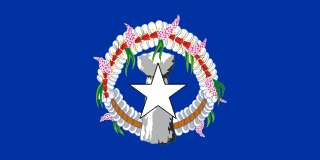
Inside Northern Mariana Islands’ foreign policy.
Commonwealth of the Northern Mariana Islands
Oceania · UN voting record, treaty positions, and alliances — every claim primary-sourced.
In short
The Northern Mariana Islands are not a sovereign state but a U.S. commonwealth whose foreign-policy relevance comes from one fact: Washington controls defense and external affairs, while local politics are increasingly shaped by whether the United States is willing to keep the islands economically viable and strateg…
Capital
Saipan
Government
Commonwealth in politi…
Northern Mariana Islands's government & politics
Leadership, governance, and democratic trajectory.
Northern Mariana Islands's UN voting record
How Northern Mariana Islands votes at the UN General Assembly — ideological trajectory, voting partners, topic patterns, and key recent roll calls.
Source: Erik Voeten, “United Nations General Assembly Voting Data”, Harvard Dataverse (CC0). Aggregated by Model Diplomat. Last refresh tracked in profile freshness.
Northern Mariana Islands's foreign policy
Bilateral posture, key relationships, and live diplomatic statements.
Foreign Policy
The Northern Mariana Islands does not run an independent foreign policy; Washington does. Under the Covenant establishing the Commonwealth, the United States has complete responsibility and authority for foreign affairs and defense affecting the Northern Mariana Islands, while the Commonwealth exercises self-government in internal matters Covenant to Establish a Commonwealth of the Northern Mariana Islands in Political Union with the United States. That makes the territory’s core external interest unusually narrow and concrete: survival and economic continuity depend less on diplomacy than on keeping U.S. federal security guarantees, disaster relief, migration rules, and fiscal support intact Covenant to Establish a Commonwealth of the Northern Mariana Islands in Political Union with the United States Office of Insular Affairs, Commonwealth of the Northern Mariana Islands.
The stated line from Commonwealth leaders is therefore not non-alignment or regional balancing but tighter integration with the United States. Governor Arnold I. Palacios told the 902 Consultations with U.S. officials in May 2025 that CNMI stability and security are anchored in U.S. support, and local officials used the same forum to seek a reported $429 million bailout and federal policy changes to stabilize the economy Office of the Governor, Commonwealth of the Northern Mariana Islands Pacific Daily News, CNMI seeks a $429M bailout and federal policy changes at 902 talks. The interest pyramid is clear. Survival means physical security against typhoons and strategic uncertainty in the Western Pacific; regime security means preserving the Commonwealth’s autonomous institutions under the Covenant; economic interest means keeping tourism, federal transfers, and labor access functioning after repeated shocks; status is secondary and usually expressed as a request for greater U.S. attention rather than separate international recognition Covenant to Establish a Commonwealth of the Northern Mariana Islands in Political Union with the United States Office of Insular Affairs, Commonwealth of the Northern Mariana Islands.
Its most important bilateral relationship is the United States, full stop. Defense is controlled by Washington, and the strategic significance of the islands comes from geography: the CNMI sits in the U.S. Pacific posture alongside Guam, and federal documents treat the Marianas as part of the U.S. defense architecture in the Indo-Pacific U.S. Indo-Pacific Command Covenant to Establish a Commonwealth of the Northern Mariana Islands in Political Union with the United States. Japan, South Korea, and China matter primarily as tourism-source markets and investors rather than as security partners; that creates a pattern in which the Commonwealth seeks commercial reopening to Asian markets while politically emphasizing loyalty to Washington Office of the Governor, Commonwealth of the Northern Mariana Islands Office of Insular Affairs, Commonwealth of the Northern Mariana Islands. The analytically important point is that local elites often resist any framing that economic distress should be solved through deeper Chinese influence, because a Beijing-linked rescue would collide with the higher-tier interest of preserving U.S. strategic trust Pacific Daily News, CNMI’s stability and security anchored on US support, not Beijing influence.
In regional and multilateral terms, the CNMI is constrained by constitutional reality. It is not a UN member state, does not hold its own vote in the General Assembly, and is represented internationally through the United States United Nations Member States Covenant to Establish a Commonwealth of the Northern Mariana Islands in Political Union with the United States. It does, however, participate in Pacific regional networks through U.S.-linked and territorial channels; for example, the CNMI is listed among the members of the Pacific Community, a technical regional organization rather than a sovereign diplomatic bloc Pacific Community, Members. That means the Commonwealth’s “multilateralism” is functional, focused on fisheries, climate resilience, health, aviation, and disaster recovery, not on treaty positioning or autonomous voting coalitions Pacific Community, Members Office of Insular Affairs, Commonwealth of the Northern Mariana Islands.
Because it has no separate UN seat, the Commonwealth cannot break from the U.S. voting bloc at the UN in any formal sense; its alignment is mechanically identical to the United States’ because the United States casts the vote United Nations Member States. The real divergence is elsewhere: CNMI material interests often point toward more open labor, tourism, and transport links with Asia, while U.S. strategic competition with China pushes toward tighter screening and securitization across the Second Island Chain U.S. Indo-Pacific Command Office of the Governor, Commonwealth of the Northern Mariana Islands. That tension is the territory’s most important foreign-policy fact. The Commonwealth’s leaders can lobby, signal, and bargain, but when economic logic and strategic logic collide, Washington decides, and CNMI’s durable strategy is to prove that local recovery and stronger U.S. presence are complementary rather than competing goals Covenant to Establish a Commonwealth of the Northern Mariana Islands in Political Union with the United States Office of the Governor, Commonwealth of the Northern Mariana Islands.
Society & economy
Macro-economic snapshot and demographic context.
GDP (nominal)
$1.1B
#199/250GDP per capita
$23,785.755
#64/250Currency
—
HDI
—
GDP (nominal USD)
GDP per capita (USD)
In the news
Stories surfacing across Northern Mariana Islands’s authoritative outlets, plus headline events and the diplomatic calendar.
Headlines
Wartime-level Northern Marianas typhoon hit tests US commitment - Asia Times
Summary: - The article argues the US is stretched to protect allies in the Asia-Pacific, citing demands of conflicts like Iran, and highlights the Northern Mariana Islands (CNMI) as a strategic training and logistics hub, with rehabilitated WWII airfields on Tinian under the US Air Force’s agile combat employment concept. - It discusses local sentiment in CNMI: residents feel overlooked by Washington, with anti-US and anti-military currents amplified by China’s political warf
Politics of the Northern Mariana Islands - Wikipedia
Summary: - Governance and structure: The Northern Mariana Islands (NMI) operate as a presidential representative democracy within a Commonwealth in political union with the United States. The Governor is head of government, with a bicameral legislature (20-member House, 9-member Senate). The judiciary is independent; local government includes four regional mayors. - Constitutional framework: Covenant with the U.S. fully effective in 1986; NMI Constitution effective since 1978
CNMI's economic meltdown to hurt US presence in the Pacific, officials warn
Summary: CNMI leaders warn that the Northern Mariana Islands’ worsening economy, driven by travel restrictions and flight limits to China, jeopardizes U.S. presence and credibility in the Pacific. In letters to President Trump and U.S. Indo-Pacific Command, officials urge federal action to restore and expand air routes (including to China and under visa-waiver programs with the Philippines) and to leverage new Japan/South Korea trade deals to revive CNMI tourism and public se
Explore Northern Mariana Islands in depth
Frequently asked questions about Northern Mariana Islands
Quick answers to the most common questions about Northern Mariana Islands.
What type of government does Northern Mariana Islands have?
Northern Mariana Islands is governed as a commonwealth in political union with the united states, with its capital at Saipan.
What is the population of Northern Mariana Islands?
Northern Mariana Islands has a population of approximately 44 thousand people, making it the 214th most populous country.
What is the economy of Northern Mariana Islands like?
Northern Mariana Islands has a nominal GDP of about $1 billion, or roughly $23,786 per capita.
What languages are spoken in Northern Mariana Islands?
The official languages of Northern Mariana Islands are Carolinian, Chamorro, and English.