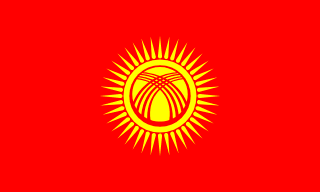
Inside Kyrgyzstan’s foreign policy.
Kyrgyz Republic
Asia · UN voting record, treaty positions, and alliances — every claim primary-sourced.
In short
Kyrgyzstan is a small but unusually exposed Central Asian state: formally a presidential republic, economically dependent on remittances, gold, trade corridors, and hydropower, and strategically pulled between Russia, China, its Turkic partnerships, and a more ambitious multilateral profile of its own…
Capital
BishkekGovernment
Presidential republicKyrgyzstan's government & politics
Leadership, governance, and democratic trajectory.


Kyrgyzstan's UN voting record
How Kyrgyzstan votes at the UN General Assembly — ideological trajectory, voting partners, topic patterns, and key recent roll calls.
Ideological trajectory
Top voting partners
Topic-level voting
Source: Erik Voeten, “United Nations General Assembly Voting Data”, Harvard Dataverse (CC0). Aggregated by Model Diplomat. Last refresh tracked in profile freshness.
Kyrgyzstan's foreign policy
Bilateral posture, key relationships, and live diplomatic statements.
Foreign Policy
Kyrgyzstan’s foreign policy is a multi-vector balancing strategy constrained by geography and regime priorities: it stays inside Russia-led security and economic structures, deepens trade and infrastructure ties with China, cultivates Turkic and Islamic platforms for status and investment, and avoids moves that would trigger retaliation from larger neighbors Ministry of Foreign Affairs of the Kyrgyz Republic, World Bank Data: Kyrgyz Republic. The decisive actors are President Sadyr Japarov and the presidential administration, not parliament; the 2021 Constitution concentrated power in the presidency, and the prime minister, now Adylbek Kasymaliev, operates within that presidential system rather than as an independent foreign-policy pole Constitution of the Kyrgyz Republic, President of the Kyrgyz Republic, Cabinet of Ministers of the Kyrgyz Republic. Kyrgyzstan’s interests rank clearly: survival means border stability, especially after repeated clashes with Tajikistan; regime security means limiting external pressure on domestic governance; economic need means preserving remittances, market access, and transit; status means showing that a small state can matter in the SCO, CSTO, EAEU, OIC, and Turkic world International Crisis Group, National Statistical Committee of the Kyrgyz Republic, Ministry of Foreign Affairs of the Kyrgyz Republic.
Its stated doctrine emphasizes sovereignty, good-neighborly relations, non-interference, economic diplomacy, and diversified partnerships rather than ideological alignment Ministry of Foreign Affairs of the Kyrgyz Republic. In practice, that means Russia remains the essential security and labor-migration partner: Kyrgyzstan is a member of the CSTO and EAEU, and remittances remain a major macroeconomic variable, with personal remittances received equal to 24.1% of GDP in 2023 according to the World Bank Collective Security Treaty Organization, Eurasian Economic Commission, World Bank indicator: Personal remittances, received (% of GDP) - Kyrgyz Republic. China is the indispensable economic counterweight: it is a leading trade partner, a major creditor through policy-bank lending, and the anchor external player for transport projects, including the China-Kyrgyzstan-Uzbekistan railway agreed in 2024 IMF Country Report No. 25/118, Kyrgyz Republic 2025 Article IV, Government of the Kyrgyz Republic on CKU railway, China’s Ministry of Foreign Affairs. Kazakhstan matters because it controls a large share of Kyrgyzstan’s practical access to the wider EAEU market, while Turkey matters less in hard-security terms than in education, business, and identity politics through the Organisation of Turkic States Eurasian Economic Commission, Organisation of Turkic States, Ministry of Foreign Affairs of the Kyrgyz Republic.
The sharpest bilateral security problem has been Tajikistan. Large-scale border fighting in 2021 and 2022 killed and displaced civilians on both sides, making delimitation and demarcation a first-order survival issue for Bishkek Human Rights Watch, International Crisis Group, United Nations Regional Centre for Preventive Diplomacy for Central Asia. The analytically important point is that Kyrgyzstan learned from those clashes that formal alliance membership does not guarantee operational backing against another post-Soviet neighbor: the CSTO did not intervene militarily on Kyrgyzstan’s behalf, which reinforced Bishkek’s habit of relying on direct bargaining, ceasefire mechanisms, and bilateral border commissions instead of expecting alliance enforcement Collective Security Treaty Organization, Radio Free Europe/Radio Liberty, International Crisis Group. That experience also explains why Kyrgyz diplomacy avoids publicly choosing sides in disputes among bigger powers: it wants security guarantees without strategic subordination, but its capabilities are limited by a small economy and a defense burden that SIPRI estimated at 1.5% of GDP in 2023 SIPRI Military Expenditure Database, World Bank Data: GDP (current US$), Kyrgyz Republic.
In multilateral politics, Kyrgyzstan uses overlapping memberships to widen room for maneuver. It is in the UN, SCO, CSTO, EAEU, OIC, and Organisation of Turkic States, and it recently converted status-seeking into a concrete gain by winning election to the UN Security Council for 2027–2028, the first time in its history United Nations Member States: Kyrgyzstan


Rivals

Kyrgyzstan's treaties & memberships
UN multilateral treaty positions and IGO memberships.
International Organizations
Society & economy
Macro-economic snapshot and demographic context.
GDP (nominal)
$17.5B
#136/250GDP per capita
$2,420.185
#163/250Currency
—
HDI
0.69
#119/250GDP (nominal USD)
GDP per capita (USD)
Top trading partners

In the news
Stories surfacing across Kyrgyzstan’s authoritative outlets, plus headline events and the diplomatic calendar.
Headlines
Kyrgyz Parliament Dissolves Itself, Early Elections on the Horizon – The Diplomat
Kyrgyz Parliament Dissolves Itself, Early Elections on the Horizon (The Diplomat) - Parliament dissolved itself on September 25 to avoid overlapping large-scale elections, with a presidential election expected in early 2027. A decree for elections is due by September 30; voting likely on November 30. - Rationale: reduce costs and instability from holding two major elections in short succession. - Political context: Kyrgyzstan has seen three protest-driven government changes
Kyrgyzstan Elected to UN Security Council For First Time In Country’s History – The Diplomat
Kyrgyzstan has been elected non-permanent member of the UN Security Council for 2027-2028, marking the country’s first time joining the body. Key points: - Election: Won 142-49 against the Philippines after four rounds of secret voting; will serve a two-year term representing the Asia-Pacific region. - Regional significance: Kyrgyzstan becomes only the second Central Asian nation on the UNSC (after Kazakhstan). The region’s support, including from Uzbekistan, Kazakhstan, Tur
Kyrgyzstan calls for more Asian, African and Latin American seats on UN Security Council | Euronews
Kyrgyzstan has announced its bid for a non-permanent seat on the UN Security Council and is pushing for reform to expand representation for Asia, Africa, and Latin America. Foreign Minister Jeenbek Kulubaev framed the move as part of a broader effort to strengthen multilateral diplomacy, uphold international law, and ensure the UNSC reflects small and developing states. Kyrgyzstan envisions using a council role to advance sustainable peace, preventive diplomacy, climate secur
Diplomatic calendar
Upcoming key dates
- Jan 1, 2027Electionin 3mo
2027 Kyrgyz presidential election
Explore Kyrgyzstan in depth
Frequently asked questions about Kyrgyzstan
Quick answers to the most common questions about Kyrgyzstan.
What type of government does Kyrgyzstan have?
Kyrgyzstan is governed as a presidential republic, with its capital at Bishkek.
Who is the head of state of Kyrgyzstan?
Sadyr Japarov is the head of state of Kyrgyzstan, in office since 2021-01-28.
Who leads the government of Kyrgyzstan?
Adylbek Kasymaliev serves as the head of government of Kyrgyzstan, since 2024-12-16.
What is the population of Kyrgyzstan?
Kyrgyzstan has a population of approximately 7.2 million people, making it the 107th most populous country.
What is the economy of Kyrgyzstan like?
Kyrgyzstan has a nominal GDP of about $17 billion, or roughly $2,420 per capita.
What languages are spoken in Kyrgyzstan?
The official languages of Kyrgyzstan are Kyrgyz and Russian.
When did Kyrgyzstan join the United Nations?
Kyrgyzstan has been a member of the United Nations since 1992.
Who are Kyrgyzstan's closest allies?
Kyrgyzstan's key allies include Russia, Kazakhstan, Türkiye, and China.
More about Kyrgyzstan
Kyrgyzstan is a small but unusually exposed Central Asian state: formally a presidential republic, economically dependent on remittances, gold, trade corridors, and hydropower, and strategically pulled between Russia, China, its Turkic partnerships, and a more ambitious multilateral profile of its own [Constitute Project](https://www.constituteproject.org/constitution/Kyrgyz_Republic_2021), [IMF Country Report No. 25/118](https://www.imf.org/en/Publications/CR/Issues/2025/05/08/Kyrgyz-Republic-2025-Article-IV-Consultation-Press-Release-and-Staff-Report-565424), [Ministry of Foreign Affairs of the Kyrgyz Republic](https://mfa.gov.kg/en/), [United Nations Member States](https://www.un.org/en/about-us/member-states). Since the 2021 constitutional shift, power has been concentrated in the presidency, and current politics are organized around President Sadyr Japarov’s executive rather than around a stable ideological party system [Constitute Project](https://www.constituteproject.org/constitution/Kyrgyz_Republic_2021), [President of the Kyrgyz Republic](https://www.president.kg/en). Prime Minister Adylbek Kasymaliev heads the government under that presidential system, while the Jogorku Kenesh remains important but is not the main center of foreign-policy or economic decision-making [Cabinet of Ministers of the Kyrgyz Republic](https://www.gov.kg/en), [President of the Kyrgyz Republic](https://www.president.kg/en). The country’s external position is defined by overlap, not alignment. Kyrgyzstan is in the CSTO and the Eurasian Economic Union with Russia, in the Shanghai Cooperation Organisation with China, and in the Organisation of Turkic States with Turkey and other Turkic partners [CSTO](https://en.odkb-csto.org/), [Eurasian Economic Union](https://eaeunion.org/en/), [Shanghai Cooperation Organisation](https://eng.sectsco.org/), [Organisation of Turkic States](https://turkicstates.org/en). That makes Bishkek less a camp follower than a balancing state with limited room for error. Its recent election to the UN Security Council for the first time, reported on 9 June 2026, fits that pattern: Kyrgyzstan wants more visibility and status in multilateral diplomacy without breaking with the major powers that shape its security and economy [The Diplomat](https://thediplomat.com/), [Euronews](https://www.euronews.com/). For MUN purposes, the key point is that Kyrgyzstan usually prefers language on sovereignty, non-interference, development finance, and regional connectivity that does not force an explicit choice between Russia, China, and broader UN positioning [Ministry of Foreign Affairs of the Kyrgyz Republic](https://mfa.gov.kg/en/), [United Nations Member States](https://www.un.org/en/about-us/member-states). Economically, Kyrgyzstan is still a lower-middle-income, import-dependent economy with narrow export concentration and high external sensitivity. The IMF’s 2025 Article IV describes growth as strong but flags fiscal pressures, state involvement in the economy, governance weaknesses, and vulnerability to shocks transmitted through trading partners and remittance channels [IMF Country Report No. 25/118](https://www.imf.org/en/Publications/CR/Issues/2025/05/08/Kyrgyz-Republic-2025-Article-IV-Consultation-Press-Release-and-Staff-Report-565424). Gold remains a major export anchor, agriculture still matters for employment and rural livelihoods, and hydropower gives the country long-term energy potential but also ties domestic stability to infrastructure finance and regional water management [World Bank Kyrgyz Republic Overview](https://www.worldbank.org/en/country/kyrgyzrepublic/overview), [National Statistical Committee of the Kyrgyz Republic](https://www.stat.kg/en/), [IMF Country Report No. 25/118](https://www.imf.org/en/Publications/CR/Issues/2025/05/08/Kyrgyz-Republic-2025-Article-IV-Consultation-Press-Release-and-Staff-Report-565424). GDP was about $17.5 billion in the country context provided here, which is enough to matter regionally on transport and water but not enough to absorb repeated external shocks without political consequences. Three issues define Kyrgyzstan’s current trajectory. The first is centralization of power: the post-2021 constitutional order has made policy faster and more coherent from the presidency’s perspective, but it also raises the stakes of any economic or political error because fewer institutions can check the executive [Constitute Project](https://www.constituteproject.org/constitution/Kyrgyz_Republic_2021), [President of the Kyrgyz Republic](https://www.president.kg/en). The second is economic restructuring under pressure: Bishkek needs investment, energy upgrades, and trade access, yet it must manage sanctions exposure through Russia-linked commerce and the domestic costs of inflation, employment weakness, and uneven governance reform [IMF Country Report No. 25/118](https://www.imf.org/en/Publications/CR/Issues/2025/05/08/Kyrgyz-Republic-2025-Article-IV-Consultation-Press-Release-and-Staff-Report-565424), [World Bank Kyrgyz Republic Overview](https://www.worldbank.org/en/country/kyrgyzrepublic/overview). The third is border and regional security, especially with Tajikistan: even after formal progress on delimitation, the Kyrgyz leadership treats frontier stability as a survival-tier issue because local clashes can rapidly become national political crises [International Crisis Group](https://www.crisisgroup.org/asia/central-asia/kyrgyzstan), [The Diplomat](https://thediplomat.com/). The near-term picture is therefore mixed but readable. Kyrgyzstan is not trying to become a geopolitical swing power on the scale of Kazakhstan; it is trying to become a more resilient, better-connected, more diplomatically visible state while preserving regime control at home [IMF Country Report No. 25/118](https://www.imf.org/en/Publications/CR/Issues/2025/05/08/Kyrgyz-Republic-2025-Article-IV-Consultation-Press-Release-and-Staff-Report-565424), [Ministry of Foreign Affairs of the Kyrgyz Republic](https://mfa.gov.kg/en/). The parliament’s reported self-dissolution on 9 June 2026 and the prospect of early elections suggest another