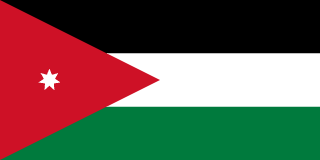
Inside Jordan’s foreign policy.
Hashemite Kingdom of Jordan
Asia · UN voting record, treaty positions, and alliances — every claim primary-sourced.
In short
Jordan is a security-first monarchy whose foreign and domestic policy still runs through King Abdullah II; the cabinet matters, but the palace sets the line on war, peace, intelligence, and relations with major donors and neighbors The Royal Hashemite Court,…
Capital
AmmanGovernment
Constitutional monarchyJordan's government & politics
Leadership, governance, and democratic trajectory.


Jordan's UN voting record
How Jordan votes at the UN General Assembly — ideological trajectory, voting partners, topic patterns, and key recent roll calls.
Ideological trajectory
Top voting partners
Topic-level voting
Source: Erik Voeten, “United Nations General Assembly Voting Data”, Harvard Dataverse (CC0). Aggregated by Model Diplomat. Last refresh tracked in profile freshness.
Jordan's foreign policy
Bilateral posture, key relationships, and live diplomatic statements.
Foreign Policy
Jordan’s foreign policy is monarchy-led, security-first, and designed to preserve regime stability by preventing regional wars from spilling across its borders. King Abdullah II remains the decisive foreign-policy actor under the constitution, while Prime Minister Jafar Hassan took office in September 2024 and Ayman Safadi has continued to anchor day-to-day diplomacy as deputy prime minister and foreign minister, which matters because Jordanian external policy is unusually centralized in the palace even when cabinets change The Constitution of the Hashemite Kingdom of Jordan, Reuters, Ministry of Foreign Affairs and Expatriates of Jordan. The doctrine is not framed in a single white paper so much as in repeated official themes: support for a two-state solution, protection of Jerusalem’s Islamic and Christian holy sites through the Hashemite custodianship, rejection of forced Palestinian displacement, border security against terrorism and narcotics trafficking, and preference for diplomacy over regional escalation Ministry of Foreign Affairs and Expatriates of Jordan, Royal Hashemite Court. In the interests pyramid, survival means keeping the Syrian and Iraqi fronts from reigniting and avoiding direct entanglement in Iran-Israel or US-Iran conflict; regime security means managing domestic anger over Gaza without rupturing ties to Washington; economic interest means protecting aid, trade corridors, and energy supplies in a country with chronic fiscal and resource constraints World Bank, IMF.
Jordan’s closest strategic relationship is with the United States, but it is not a client relationship in the simple sense often assumed. The two governments signed a 2021 Defense Cooperation Agreement ratified by Jordan in 2024, and Washington committed $1.45 billion per year in assistance for 2023–2029 under the latest memorandum of understanding, giving Amman military financing and budget support that few regional partners match U.S. Department of State, Jordan News Agency Petra. Jordan also remains deeply tied to Gulf monarchies, especially Saudi Arabia and the UAE, for investment, labor-market access, and political backing, while its peace treaty with Israel and security coordination on borders and water continue despite severe diplomatic strain over Gaza and settlement policy Council on Foreign Relations, Ministry of Foreign Affairs and Expatriates of Jordan. Egypt is a key Arab coordination partner on Gaza and on the Arab Gas Pipeline framework, and Iraq matters both as an export market and as an energy partner through the Basra-Aqaba and electricity interconnection discussions World Bank, International Crisis Group.
Regionally and multilaterally, Jordan uses memberships less for ideology than for insulation and brokerage. It is active in the Arab League, the Organisation of Islamic Cooperation, and the UN, and it presents itself as a moderate Arab state that can talk to Western capitals, Gulf monarchies, the Palestinian Authority, and sometimes even adversaries when de-escalation is needed United Nations Digital Library, League of Arab States, OIC. Its diplomatic reach rests on political credibility more than hard power: the World Bank estimated Jordan’s population at 11.4 million in 2023 and the IMF put nominal GDP near $56 billion in 2024, while SIPRI estimated military expenditure at 3.5% of GDP in 2023, high by global standards but still modest compared with the scale of threats Jordan faces World Bank Data, IMF World Economic Outlook Database, SIPRI Military Expenditure Database. That combination explains Jordan’s style: it cannot coerce, so it arbitrages access, hosts mediation, and sells reliability to stronger partners.
At the UN, Jordan usually aligns with the Arab bloc on Palestine, Jerusalem, refugees, and occupation, and it has consistently backed resolutions demanding civilian protection in Gaza and defending the legal status of East Jerusalem and UNRWA’s role UN Digital Library, UN General Assembly. It also tends to support sovereignty-based positions on regional conflicts, including support for a political process in Syria while prioritizing refugee burden-sharing and border control UNHCR Jordan, Ministry of Foreign Affairs and Expatriates of Jordan. The important break from bloc expectations is that Jordan does not behave like a maximalist rejectionist state: it keeps its peace treaty with Israel in force, preserves security coordination when core border interests require it, hosts US forces, and avoids aligning with Iran-backed “axis” politics even while publicly condemning Israeli military actions in Gaza U.S. Department of State, Royal Hashemite Court, Reuters. That divergence is the key to reading Amman correctly. Jordan’s rhetoric often tracks Arab consensus, but its behavior tracks a narrower hierarchy: prevent Palestinian displacement into Jordan, prevent regional escalation, preserve Western and Gulf support, and keep room to mediate.
The sharpest stress on that model comes from domestic politics. Public opinion is intensely pro-Palestinian, the economy remains burdened by unemployment, debt, and refugee pressures, and the Gaza war has made visible the gap between popular demands for harder rupture with Israel and the state’s need to preserve security arrangements and US ties


Jordan's treaties & memberships
UN multilateral treaty positions and IGO memberships.
International Organizations
Society & economy
Macro-economic snapshot and demographic context.
GDP (nominal)
$53.4B
#91/250GDP per capita
$4,618.096
#135/250Currency
—
HDI
0.74
#96/250GDP (nominal USD)
GDP per capita (USD)
Top trading partners


In the news
Stories surfacing across Jordan’s authoritative outlets, plus headline events and the diplomatic calendar.
Headlines
US and Iran Exchange Strikes Across the Gulf
The fragile US-Iran ceasefire cracked wide open overnight with strikes exchanged across the Gulf, raising concerns over escalating tensions.
US and Iran Trade Strikes Across Four
A US helicopter downed near Hormuz; Iran retaliates with strikes on US targets in Bahrain, Kuwait, and Jordan.
Jordanians to vote amid woes over economy and Gaza war - AL-MONITOR: The Middle Eastʼs leading independent news source since 2012
Summary: - Jordanians vote for a new parliament amid economic woes and the Gaza war, with the Gaza conflict dominating public debate and candidate platforms. - The 2024 election follows a 2022 law expanding seats, boosting women's representation, and lowering the candidate age. - Campaigns feature a mix of tribal, centrist, pro-government, independents, leftists, and the Islamic Action Front (IAF); over 5 million registered voters. - The Gaza war and Palestinian issues are ce
Explore Jordan in depth
Frequently asked questions about Jordan
Quick answers to the most common questions about Jordan.
What type of government does Jordan have?
Jordan is governed as a constitutional monarchy, with its capital at Amman.
Who is the head of state of Jordan?
Abdullah II of Jordan is the head of state of Jordan.
Who leads the government of Jordan?
Jafar Hassan serves as the head of government of Jordan, since 2024-09-15.
What is the population of Jordan?
Jordan has a population of approximately 11.6 million people, making it the 84th most populous country.
What is the economy of Jordan like?
Jordan has a nominal GDP of about $53 billion, or roughly $4,618 per capita.
What languages are spoken in Jordan?
The official language of Jordan is Arabic.
When did Jordan join the United Nations?
Jordan has been a member of the United Nations since 1955.
Who are Jordan's closest allies?
Jordan's key allies include United States, Saudi Arabia, United Arab Emirates, Egypt, and United Kingdom.
More about Jordan
Jordan is a security-first monarchy whose foreign and domestic policy still runs through King Abdullah II; the cabinet matters, but the palace sets the line on war, peace, intelligence, and relations with major donors and neighbors [The Royal Hashemite Court](https://kingabdullah.jo/en/biography), [CIA World Factbook - Jordan](https://www.cia.gov/the-world-factbook/countries/jordan/). Jordan is a constitutional monarchy with a bicameral parliament, but the king appoints the prime minister, can dissolve parliament, and retains decisive authority over the armed forces and key national-security files [CIA World Factbook - Jordan](https://www.cia.gov/the-world-factbook/countries/jordan/), [Constitute Project - Jordan 1952 Constitution](https://www.constituteproject.org/constitution/Jordan_2016). After the September 2024 parliamentary election, King Abdullah II asked Jaafar Hassan to form a government, and Hassan’s cabinet took office in September 2024; Jordan’s largest party bloc from that election is the Islamic Action Front, but the government itself is not formed by a parliamentary majority in the way it would be in a parliamentary republic [Reuters](https://www.reuters.com/world/middle-east/jordans-king-asks-jaafar-hassan-form-new-government-2024-09-15/), [Independent Election Commission of Jordan](https://www.iec.jo/), [Reuters](https://www.reuters.com/world/middle-east/jordans-opposition-islamists-make-gains-parliamentary-election-2024-09-11/). Jordan’s place in the world is larger than its material weight because it sells reliability in a violent neighborhood. It is a close U.S. security partner, a peace-treaty state with Israel under the 1994 treaty, a core Arab interlocutor on Jerusalem, refugees, and Gaza, and a state that works hard to stay aligned with Gulf partners while avoiding direct entanglement in regional escalation [U.S. Department of State - U.S. Relations With Jordan](https://www.state.gov/u-s-relations-with-jordan/), [UN Peacemaker - Israel-Jordan Peace Treaty 1994](https://peacemaker.un.org/israeljordan-peacetreaty94), [Carnegie Endowment for International Peace](https://carnegieendowment.org/research/2024/04/jordan-and-the-gaza-war?lang=en). That balancing act has become harder since the Gaza war and wider Iran-Israel-U.S. confrontation sharpened public anger inside Jordan while increasing the kingdom’s strategic value to Washington and Arab capitals [International Crisis Group](https://www.crisisgroup.org/middle-east-north-africa/east-mediterranean-mena/jordan/gaza-war-puts-jordan-under-pressure), [Reuters](https://www.reuters.com/world/middle-east/jordan-says-it-wont-be-battlefield-any-conflict-region-2024-04-14/). Jordan’s core external objective is survival: prevent spillover from Israel-Palestine, Syria, Iraq, and now wider regional exchange, while preserving aid flows, border security, and domestic calm [Carnegie Endowment for International Peace](https://carnegieendowment.org/research/2024/04/jordan-and-the-gaza-war?lang=en), [World Bank - Jordan Overview](https://www.worldbank.org/en/country/jordan/overview). Economically, Jordan is a services-heavy, import-dependent, resource-poor state that runs on logistics, tourism, remittances, foreign grants, and external financing more than on hydrocarbons or a large industrial base [World Bank - Jordan Overview](https://www.worldbank.org/en/country/jordan/overview), [IMF - Jordan 2024 Article IV Consultation and Third Review under the EFF](https://www.imf.org/en/Publications/CR/Issues/2024/06/27/Jordan-2024-Article-IV-Consultation-and-Third-Review-Under-the-Extended-Fund-Facility-551178). The World Bank reported Jordan’s GDP at about $53.4 billion in current U.S. dollars in 2024, close to the figure in your country context, and described growth as resilient but constrained by regional shocks, high unemployment, and fiscal pressure [World Bank Data - GDP (current US$), Jordan](https://data.worldbank.org/indicator/NY.GDP.MKTP.CD?locations=JO), [World Bank - Jordan Overview](https://www.worldbank.org/en/country/jordan/overview). The IMF said Jordan’s public debt remains high and unemployment, especially among youth and women, remains a structural weakness even as macroeconomic management has been comparatively disciplined under its reform program [IMF - Jordan 2024 Article IV Consultation and Third Review under the EFF](https://www.imf.org/en/Publications/CR/Issues/2024/06/27/Jordan-2024-Article-IV-Consultation-and-Third-Review-Under-the-Extended-Fund-Facility-551178). In practice, that means Jordan’s diplomacy is inseparable from economics: ties with the United States, the Gulf, and international financial institutions are not optional prestige relationships but part of the state’s operating model [U.S. Department of State - U.S. Relations With Jordan](https://www.state.gov/u-s-relations-with-jordan/), [IMF - Jordan 2024 Article IV Consultation and Third Review under the EFF](https://www.imf.org/en/Publications/CR/Issues/2024/06/27/Jordan-2024-Article-IV-Consultation-and-Third-Review-Under-the-Extended-Fund-Facility-551178). Three issues define Jordan’s current trajectory. The first is Gaza and Jerusalem: the monarchy has taken a hard public line against Israeli military operations in Gaza and defends its custodial role over Muslim and Christian holy sites in Jerusalem, because this is both foreign policy and regime security at home [Jordan Ministry of Foreign Affairs](https://mfa.gov.jo/en), [Carnegie Endowment for International Peace](https://carnegieendowment.org/research/2024/04/jordan-and-the-gaza-war?lang=en). The second is economic strain: inflation, joblessness, debt, and weak private-sector absorption keep social pressure high and make reform politically costly even when the macro framework is stable on paper [IMF - Jordan 2024 Article IV Consultation and Third Review under the EFF](https://www.imf.org/en/Publications/CR/Issues/2024/06/27/Jordan-2024-Article-IV-Consultation