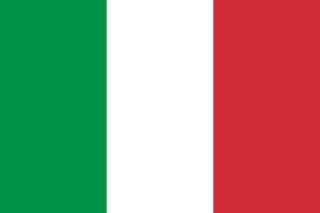
Inside Italy’s foreign policy.
Italian Republic
Europe · UN voting record, treaty positions, and alliances — every claim primary-sourced.
In short
Italy is a G7, EU, and NATO middle power whose foreign policy is currently more Atlanticist and security-focused than its pre-2022 reputation suggested, while its domestic politics are anchored by Prime Minister Giorgia Meloni’s right-led coalition…
Capital
RomeItaly's government & politics
Leadership, governance, and democratic trajectory.


Italy's UN voting record
How Italy votes at the UN General Assembly — ideological trajectory, voting partners, topic patterns, and key recent roll calls.
Ideological trajectory
Top voting partners
Topic-level voting
Source: Erik Voeten, “United Nations General Assembly Voting Data”, Harvard Dataverse (CC0). Aggregated by Model Diplomat. Last refresh tracked in profile freshness.
Italy's foreign policy
Bilateral posture, key relationships, and live diplomatic statements.
Foreign Policy
Italy’s foreign policy is Atlanticist by structure, Europeanist by necessity, and increasingly nationalist in presentation under Prime Minister Giorgia Meloni’s government; the constant is that Rome treats NATO, the EU, and the transatlantic link as the backbone of its security and economic model, even when it tries to carve out tactical room on migration, China, or Middle East diplomacy Italian Ministry of Foreign Affairs and International Cooperation, Presidency of the Council of Ministers, NATO, European Union. The decision structure is parliamentary on paper but more centralized in practice: the prime minister sets the political line, the foreign ministry under Antonio Tajani manages diplomacy, and the presidency under Sergio Mattarella retains unusual influence on strategic continuity, especially on EU and NATO commitments Presidency of the Council of Ministers, Italian Ministry of Foreign Affairs and International Cooperation, President of the Italian Republic. Italy’s core interests rank clearly: survival and alliance credibility through NATO deterrence, regime and system stability through EU fiscal and institutional anchoring, economic protection through export access and energy diversification, and status through a claim to be a major Mediterranean and G7 power NATO, European Commission, G7 Italy.
Rome’s stated doctrine is not a single codified grand strategy document in the French style; it is a layered set of commitments expressed through government programs, MFA priorities, NATO documents, and EU strategy. The recurring themes are support for Ukraine, defense of the rules-based order, stabilization of the Mediterranean, energy security, migration control, and stronger links with Africa, especially through the government’s “Piano Mattei” framework Italian Ministry of Foreign Affairs and International Cooperation, Presidency of the Council of Ministers, NATO Washington Summit Declaration. Capabilities make that agenda credible but constrained: Italy’s GDP was about $2.25 trillion in current prices in 2024 according to the World Bank, giving it major economic weight inside Europe, while NATO reports Italian defense expenditure at 1.49% of GDP in 2024, below the alliance’s 2% benchmark and therefore a persistent limit on Rome’s military leverage World Bank, NATO Defence Expenditure of NATO Countries (2014-2024). Italy compensates with diplomatic density: it is in the UN, EU, NATO, G7, G20, OSCE, and Council of Europe, and has long used that multilateral footprint to magnify influence beyond its raw hard-power position United Nations Digital Library, European Union, NATO, G20.
Its key bilateral relationships follow that hierarchy. The United States remains the indispensable security partner because Italy hosts major US and NATO facilities and treats Washington as the ultimate guarantor of European defense, even when Italian leaders seek more room for maneuver than northern European allies prefer U.S. Department of State, NATO. France and Germany are essential but complicated partners: Paris is Italy’s main co-competitor and co-partner in the Mediterranean, Libya, industrial policy, and EU reform, while Berlin matters more on fiscal rules, trade, and the direction of the EU single market Quirinale, Trattato del Quirinale, European Council. The United Kingdom matters above all on defense and Ukraine coordination despite Brexit, which is why Italian officials can downplay format disputes such as E3 versus E5 while still signaling that Rome wants recognition as a core European security actor ANSA. Outside Europe, Italy has hardened toward China since joining the Belt and Road Initiative in 2019 and then formally notifying Beijing in 2023 that it would exit the memorandum, aligning more closely with G7 de-risking while avoiding open confrontation Reuters, G7 Leaders’ Communiqué, Apulia.
At the UN, Italy usually votes with the EU camp on Ukraine, human rights, sanctions implementation, and multilateral governance, so its broad alignment is liberal-institutionalist rather than non-aligned UN Digital Library voting records, European Union


Italy's treaties & memberships
UN multilateral treaty positions and IGO memberships.
International Organizations
Society & economy
Macro-economic snapshot and demographic context.
GDP (nominal)
$2.38T
#8/250GDP per capita
$40,385.341
#37/250Currency
—
HDI
0.90
#31/250GDP (nominal USD)
GDP per capita (USD)
Top trading partners

In the news
Stories surfacing across Italy’s authoritative outlets, plus headline events and the diplomatic calendar.
Headlines
Prefer E5 format but London E3 meeting is no big deal says Tajani - Politics - Ansa.it
Italy’s foreign policy stance highlights a preference for broader E5 (Italy, France, Germany, plus UK? actually E5: plus Poland) engagement, while accepting the E3 format (Italy, France, Germany) for coordination. Foreign Minister Antonio Tajani said Italy did not participate in the London meeting with Ukraine’s Zelensky but remains committed to Ukraine and to peacebuilding at both European and bilateral levels. German officials reiterated that while the E3 is a proven format
How to watch Italy’s referendum like a pro – POLITICO
Summary: - The POLITICO piece explains Italy’s referendum on judicial reform in the context of Prime Minister Giorgia Meloni’s government. The reform aims to separate career tracks for judges and prosecutors, create an additional prosecutors’ governing body, and introduce a higher court for discipline, with most court members chosen by lottery rather than election. - Supporters argue the changes will curb politicization and improve accountability in the judiciary; opponents
Pressure builds on Italy’s Meloni to shun Trump as she gears up for 2027 election – POLITICO
Giorgia Meloni is recalibrating Italy’s foreign policy and domestic strategy as she prepares for the 2027 election. Key points: - Domestic pressures and economy: Italy’s weak growth, high debt, and looming Brussels scrutiny strain Meloni’s mandate. Public blame for rising energy costs linked to U.S. demands adds political risk. - Relationship with Trump: Once a close ally, Meloni is openly criticizing Trump and limiting U.S. access to Italian bases, signaling a shift to avoi
Diplomatic calendar
Upcoming key dates
- Sep 30, 2027Electionin 1y
2027 Italian parliamentary election
- Sep 30, 2027Electionin 1y
2027 Italian Chamber of Deputies election
- Sep 30, 2027Electionin 1y
2027 Italian Senate election
Explore Italy in depth
Frequently asked questions about Italy
Quick answers to the most common questions about Italy.
What type of government does Italy have?
Italy is governed as a unitary parliamentary constitutional republic, with its capital at Rome.
Who is the head of state of Italy?
Sergio Mattarella is the head of state of Italy, in office since 2015-02-03.
Who leads the government of Italy?
Giorgia Meloni serves as the head of government of Italy, since 2022-10-22.
What is the population of Italy?
Italy has a population of approximately 59.0 million people, making it the 25th most populous country.
What is the economy of Italy like?
Italy has a nominal GDP of about $2.38 trillion, or roughly $40,385 per capita.
What languages are spoken in Italy?
The official languages of Italy are Italian and Catalan.
When did Italy join the United Nations?
Italy has been a member of the United Nations since 1955.
Who are Italy's closest allies?
Italy's key allies include United States, France, Germany, United Kingdom, and Spain.
More about Italy
Italy is a G7, EU, and NATO middle power whose foreign policy is currently more Atlanticist and security-focused than its pre-2022 reputation suggested, while its domestic politics are anchored by Prime Minister Giorgia Meloni’s right-led coalition [Italian Government](https://www.governo.it/it/governo/governo-meloni), [NATO](https://www.nato.int/cps/en/natohq/topics_52044.htm), [G7 Italy](https://www.g7italy.it/en/). It is a unitary parliamentary republic with President Sergio Mattarella as head of state and Meloni as head of government; Meloni’s Brothers of Italy leads a coalition with the League and Forza Italia that took office in October 2022 and remains in power in 2026 [President of the Italian Republic](https://www.quirinale.it/), [Italian Government](https://www.governo.it/it/governo/governo-meloni), [Italian Ministry of the Interior](https://elezioni.interno.gov.it/). Foreign policy is formally run through the cabinet and Ministry of Foreign Affairs, but on major strategic questions the prime minister’s office sets the line, especially on Ukraine, EU bargaining, and relations with Washington [Italian Ministry of Foreign Affairs and International Cooperation](https://www.esteri.it/en/), [Chatham House](https://www.chathamhouse.org/2024/01/what-giorgia-melonis-foreign-policy-means-europe). Meloni’s government has surprised many European partners by choosing continuity over rupture on the highest-order file: survival and alliance security [Chatham House](https://www.chathamhouse.org/2024/01/what-giorgia-melonis-foreign-policy-means-europe). Italy continues to back Ukraine politically and materially, supports NATO reinforcement, and frames Russia’s war as a direct threat to European security, even while coalition partners have had more mixed historical views on Moscow [Italian Ministry of Foreign Affairs and International Cooperation](https://www.esteri.it/en/), [NATO](https://www.nato.int/cps/en/natohq/topics_37750.htm), [Reuters](https://www.reuters.com/world/europe/italy-pm-meloni-reaffirms-support-ukraine-2024-02-24/). That makes Italy broadly aligned with the United States, France, Germany, and the UK on hard-security questions, though Rome still prefers formats where it is visibly included, which helps explain Foreign Minister Antonio Tajani’s public emphasis on an “E5” rather than an “E3” diplomatic format in June 2026 [ANSA](https://www.ansa.it/english/news/politics/2026/06/09/prefer-e5-format-but-london-e3-meeting-is-no-big-deal-says-tajani_). The status layer matters: Italy wants recognition not just as a participant in Western policy, but as one of the states that shapes it [ISPI](https://www.ispionline.it/en). Economically, Italy is large, industrial, and structurally constrained. It remains one of the world’s biggest economies, with nominal GDP around $2.38 trillion in the country context provided here and a strong manufacturing base in machinery, transport equipment, pharmaceuticals, fashion, and food exports [World Bank](https://data.worldbank.org/country/italy), [OECD](https://www.oecd.org/italy/), [ICE Italian Trade Agency](https://www.ice.it/en/). It is also deeply embedded in the EU single market and the euro area, which gives it scale and monetary stability but limits national room for maneuver on fiscal and monetary policy [European Commission](https://economy-finance.ec.europa.eu/economic-surveillance-eu-economies/italy/economic-forecast-italy_en), [European Central Bank](https://www.ecb.europa.eu/). The core economic constraint on Italian statecraft is debt: Italy’s public debt remains among the highest in the EU as a share of GDP, which makes bond-market credibility, ECB conditions, and EU fiscal negotiations central foreign-policy variables rather than background economics [IMF](https://www.imf.org/en/Countries/ITA), [European Commission](https://economy-finance.ec.europa.eu/economic-surveillance-eu-economies/italy_en). Rome therefore mixes ambitious rhetoric with pragmatic bargaining for fiscal flexibility, industrial support, and EU-level burden sharing [Council of the European Union](https://www.consilium.europa.eu/en/), [European Commission](https://commission.europa.eu/index_en). Three issues define Italy’s current trajectory. The first is migration across the central Mediterranean, where Rome treats irregular arrivals as a combined border-security, domestic-political, and EU burden-sharing problem; this file sits at the junction of survival politics and regime security because it strongly shapes coalition legitimacy at home [Italian Ministry of the Interior](https://www.interno.gov.it/it), [European Commission](https://home-affairs.ec.europa.eu/policies/migration-and-asylum/pact-migration-and-asylum_en). The second is Europe’s security order after Russia’s invasion of Ukraine, where Italy’s actual behavior has been more disciplined and pro-alliance than many expected from a nationalist-led government [Reuters](https://www.reuters.com/world/europe/italy-pm-meloni-reaffirms-support-ukraine-2024-02-24/), [NATO](https://www.nato.int/cps/en/natohq/topics_37750.htm). The third is growth under fiscal constraint: Italy needs EU recovery funds, productivity gains, and energy resilience, but must pursue them while keeping Brussels and investors confident that debt dynamics remain manageable [European Commission](https://commission.europa.eu/business-economy-euro/economic-recovery/recovery-and-resilience-facility_en), [IMF](https://www.imf.org/en/Countries/ITA). Italy’s place in the world today is therefore clearer than it was a few years ago. It is not trying to overturn the Western order; it is trying to raise its ranking within it, especially on Mediterranean policy, migration, and European strategic decisions [Chatham House](https://www.chathamhouse.org/2024/01/what-giorgia-melonis-foreign-policy-means-europe), [ANSA](https://www.ansa.it/english/news/politics/2026/06/09/prefer-e5-format-but-london-e3-meeting-is-no-big-deal-says-tajani_). The non-obvious point is that Meloni’s government has gained external credibility precisely by being less revisionist abroad