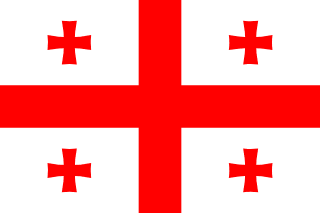
Inside Georgia’s foreign policy.
Asia · UN voting record, treaty positions, and alliances — every claim primary-sourced.
In short
Georgia is still formally pro-European, but its external position is now defined by a widening gap between constitutional Euro-Atlantic commitments and the behavior of the ruling Georgian Dream government under Prime Minister Irakli Kobakhidze Civil.ge,…
Capital
TbilisiGovernment
Unitary parliamentary republicGeorgia's government & politics
Leadership, governance, and democratic trajectory.


Georgia's UN voting record
How Georgia votes at the UN General Assembly — ideological trajectory, voting partners, topic patterns, and key recent roll calls.
Ideological trajectory
Top voting partners
Topic-level voting
Source: Erik Voeten, “United Nations General Assembly Voting Data”, Harvard Dataverse (CC0). Aggregated by Model Diplomat. Last refresh tracked in profile freshness.
Georgia's foreign policy
Bilateral posture, key relationships, and live diplomatic statements.
Foreign Policy
Georgia’s foreign policy is formally pro-European but operationally hedging. The constitution commits state bodies to pursue full integration into the European Union and NATO Constitution of Georgia, and the government still describes EU and Euro-Atlantic integration as the main strategic objective Ministry of Foreign Affairs of Georgia. In practice, decision-making is concentrated in the ruling Georgian Dream leadership and cabinet rather than the presidency, whose foreign-policy role is politically visible but constitutionally constrained after the shift to a parliamentary system Parliament of Georgia, Civil Georgia. That structure matters because Georgia’s external behavior increasingly reflects regime-security calculations by the governing party as much as the state’s long-standing Western orientation.
Georgia’s core interests rank clearly. Survival comes first: deterring further Russian coercion after the 2008 war and managing the unresolved status of Abkhazia and Tskhinvali/South Ossetia, which Russia recognizes as independent and where Russian forces remain deployed European Parliament, U.S. Department of State. Economic security comes next: Georgia positions itself as a Black Sea and South Caucasus transit state linking Europe to the Caspian, with particular weight on transport corridors and Azerbaijani energy flows through the South Caucasus Pipeline and related infrastructure World Bank, Jamestown Foundation. Regime security now shapes the trade-off between those tiers. The government has defended a line of avoiding direct confrontation with Moscow, refusing sanctions alignment beyond what is legally required, and framing Western criticism as pressure on sovereignty Reuters, JAMnews.
Its bilateral map is asymmetrical. The United States and the European Union remain Georgia’s preferred strategic poles: the EU granted Georgia candidate status in December 2023, conditional on reforms, and the country is tied to the Union through the Association Agreement and Deep and Comprehensive Free Trade Area European Council, European Commission. Turkey and Azerbaijan are indispensable economic and connectivity partners because they anchor transit, trade, and energy routes that bypass Russia Ministry of Foreign Affairs of Georgia, Ministry of Foreign Affairs of Georgia. Ukraine is politically important as a fellow target of Russian revisionism, but Tbilisi has repeatedly limited support to humanitarian and diplomatic backing while avoiding the harsher line taken by Kyiv’s closest backers UN General Assembly voting data, Reuters. Russia remains the principal security threat, yet also a market, a source of tourists and remittances, and a neighbor the government prefers to manage rather than openly challenge BTI Transformation Index 2026: Georgia, World Bank Migration and Remittances Data.
In multilateral terms, Georgia is embedded in Western institutions short of membership in the two it wants most. It is a member of the UN, OSCE, and Council of Europe, and it has deep institutional cooperation with NATO through the Substantial NATO-Georgia Package and the annual national program process NATO, Council of Europe. At the UN, Georgia usually aligns with Western positions on Ukraine and territorial integrity; it has supported General Assembly resolutions condemning Russia’s aggression against Ukraine and consistently promotes resolutions on the status of internally displaced persons from Abkhazia and Tskhinvali/South Ossetia UN Digital Library, United Nations. The break from its bloc is behavioral, not rhetorical. Unlike many EU and NATO aspirants, Georgia has not matched pro-Ukraine voting with full sanctions alignment or a uniformly confrontational Russia policy Reuters, PONARS Eurasia. That gap between stated Euro-Atlantic identity and selective accommodation of Russia is the most important clue to how Tbilisi will act under pressure.
The same divergence appears in its relations with Brussels and Washington. Official doctrine still treats EU and NATO integration as the destination Ministry of Foreign Affairs of Georgia, but recent disputes over rule of law, media freedom, and the “foreign agents” law have pushed Georgia into direct conflict with the EU and the United States European Commission, Reuters. That is where Georgia breaks most sharply


Rivals

Georgia's treaties & memberships
UN multilateral treaty positions and IGO memberships.
International Organizations
Society & economy
Macro-economic snapshot and demographic context.
GDP (nominal)
$34.2B
#108/250GDP per capita
$9,241.491
#102/250Currency
—
HDI
0.80
#63/250GDP (nominal USD)
GDP per capita (USD)
Top trading partners

In the news
Stories surfacing across Georgia’s authoritative outlets, plus headline events and the diplomatic calendar.
Headlines
Georgia Country Report 2026 - BTI Transformation Index
Georgia’s foreign policy and politics (summary based on the 2026 BTI Transformation Index report) - Domestic politics: The ruling Georgian Dream (GD) party has consolidated power, sidelined opposition, and weakened democratic institutions. This has driven democratic backsliding and reduced the credibility of Georgia’s commitment to European integration. - Foreign policy orientation: GD shifted away from a strongly pro-Western stance toward a more ambiguous position regarding
Georgian PM’s annual report/JAMnews
Georgian PM’s annual report outlines a foreign policy and economic agenda focused on strengthening ties with the United States, advancing EU integration, supporting Ukraine, and maintaining macroeconomic stability. Key points: - US relations: Restoring the strategic partnership with the United States is a top priority; active dialogue aimed at reviving cooperation and shaping a new bilateral agenda. - European Union: Continued alignment with EU integration; progress reports
Bochorishvili wants to “reset” relations with Washington, but blackmail from Brussels is unacceptable
- Georgia aims to reset its relations with the United States, with high-level exchanges already underway and expectations of a May visit by a State Department delegation. The Foreign Minister says US-Ga core strategic cooperation could be restored, contingent on American political will. - Georgia’s EU relations are described as strained by Brussels “blackmail language,” though officials deny anti-EU rhetoric and blame EU bureaucracy for delaying integration. The government sa
Explore Georgia in depth
Frequently asked questions about Georgia
Quick answers to the most common questions about Georgia.
What type of government does Georgia have?
Georgia is governed as a unitary parliamentary republic, with its capital at Tbilisi.
Who is the head of state of Georgia?
Mikheil Kavelashvili is the head of state of Georgia, in office since 2024-12-29.
Who leads the government of Georgia?
Irakli Kobakhidze serves as the head of government of Georgia, since 2024-02-08.
What is the population of Georgia?
Georgia has a population of approximately 3.7 million people, making it the 131st most populous country.
What is the economy of Georgia like?
Georgia has a nominal GDP of about $34 billion, or roughly $9,241 per capita.
What languages are spoken in Georgia?
The official language of Georgia is Georgian.
When did Georgia join the United Nations?
Georgia has been a member of the United Nations since 1992.
Who are Georgia's closest allies?
Georgia's key allies include United States, Ukraine, Türkiye, and Azerbaijan.
More about Georgia
Georgia is still formally pro-European, but its external position is now defined by a widening gap between constitutional Euro-Atlantic commitments and the behavior of the ruling Georgian Dream government under Prime Minister Irakli Kobakhidze [Civil.ge](https://civil.ge/archives/580954), [Constitution of Georgia](https://matsne.gov.ge/en/document/view/30346?publication=36), [European Parliament](https://www.europarl.europa.eu/doceo/document/TA-10-2024-0000_EN.html). It is a unitary parliamentary republic in which the government controls day-to-day foreign policy, while the presidency retains a limited but politically visible platform; that institutional split matters because President Salome Zourabichvili has publicly defended EU integration against the government’s course [Constitution of Georgia](https://matsne.gov.ge/en/document/view/30346?publication=36), [President of Georgia](https://president.ge/index.php?m=209&news_id=2244&lng=eng). Since the October 2024 parliamentary election, Georgian Dream has kept power and Kobakhidze has remained prime minister, giving the party effective control over the executive and legislative agenda [Parliament of Georgia](https://www.parliament.ge/en), [Government of Georgia](https://www.gov.ge/index.php?lang_id=ENG&sec_id=541). The government’s current line mixes EU candidate-country rhetoric with a sovereigntist push against what it describes as foreign interference, especially from Brussels and Washington [Government of Georgia](https://www.gov.ge/index.php?lang_id=ENG&sec_id=541&info_id=89748), [Reuters](https://www.reuters.com/world/europe/georgias-eu-bid-hit-by-foreign-agent-law-row-2024-05-30/). That has left Georgia in an awkward middle position: still outside Russia’s orbit in public opinion and formal strategy, but increasingly distrusted by many Western partners after the foreign agents law fight, democratic backsliding concerns, and repeated clashes over sanctions alignment and political freedoms [European Commission](https://neighbourhood-enlargement.ec.europa.eu/georgia-report-2024_en), [Freedom House](https://freedomhouse.org/country/georgia/freedom-world/2025), [PONARS Eurasia](https://www.ponarseurasia.org/the-costs-of-georgias-self-isolation/). For MUN delegates, the key read is that Georgia still seeks the security and economic benefits of Western integration, but the ruling party increasingly treats domestic regime security and autonomy from external pressure as the higher priority [BTI Transformation Index](https://bti-project.org/en/reports/country-report/GEO), [JAMnews](https://jam-news.net/georgian-pms-annual-report-what-he-said/). Economically, Georgia is a small, open transit and services economy rather than an industrial power [World Bank](https://data.worldbank.org/country/georgia), [National Statistics Office of Georgia](https://www.geostat.ge/en). Nominal GDP was about $34.2 billion in the country data provided, and the economy depends heavily on trade corridors, tourism, remittances, and logistics linking the Black Sea, South Caucasus, and wider Caspian region [World Bank](https://data.worldbank.org/country/georgia), [Jamestown Foundation](https://jamestown.org/program/georgia-considers-position-in-new-south-caucasus-transit-era/). Georgia’s strategic economic asset is geography: it sits on the Middle Corridor between Europe and Asia and works closely with Azerbaijan and Turkey on transport and energy connectivity, including routes that bypass Russia [U.S. International Trade Administration](https://www.trade.gov/country-commercial-guides/georgia-market-overview), [Jamestown Foundation](https://jamestown.org/program/georgia-considers-position-in-new-south-caucasus-transit-era/). That gives Tbilisi leverage, but also exposure, because any deterioration in Western ties or regional instability directly hits investment, market access, and transit credibility [World Bank](https://www.worldbank.org/en/country/georgia/overview), [PONARS Eurasia](https://www.ponarseurasia.org/the-costs-of-georgias-self-isolation/). Three issues define Georgia’s trajectory now. The first is democratic and institutional erosion: disputes over the foreign agents law, pressure on civil society, and questions over electoral fairness have become the main filter through which Western governments judge Tbilisi [Reuters](https://www.reuters.com/world/europe/georgias-eu-bid-hit-by-foreign-agent-law-row-2024-05-30/), [European Commission](https://neighbourhood-enlargement.ec.europa.eu/georgia-report-2024_en). The second is foreign-policy drift between Europe and Russia: Georgia still officially backs EU and NATO integration, but it has avoided direct confrontation with Moscow while Russia continues to occupy Abkhazia and South Ossetia, which Georgia regards as occupied territories [Ministry of Foreign Affairs of Georgia](https://mfa.gov.ge/MainNav/ForeignPolicy/OccupiedTerritories.aspx?lang=en-US), [NATO](https://www.nato.int/cps/en/natohq/topics_38988.htm). The third is corridor politics: as competition grows over South Caucasus transit, Georgia has a chance to deepen its role as a connector state, but that requires political predictability and partner trust that are now under strain [Jamestown Foundation](https://jamestown.org/program/georgia-considers-position-in-new-south-caucasus-transit-era/), [World Bank](https://www.worldbank.org/en/country/georgia/overview). The practical assessment is blunt. Georgia remains more strategically relevant than its size suggests, but its near-term trajectory depends less on geopolitics than on whether Georgian Dream keeps trading external alignment credibility for domestic control [BTI Transformation Index](https://bti-project.org/en/reports/country-report/GEO), [Freedom House](https://freedomhouse.org/country/georgia/freedom-world/2025). If the government restores working trust with the EU and United States, Georgia can still convert candidate status and corridor geography into investment and diplomatic weight [European Commission](https://neighbourhood-enlargement.ec.europa.eu/georgia-report-2024_en), [U.S. International Trade Administration](https://www.trade.gov/country-commercial-guides/georgia-market-overview). If it does not, the country risks a self-isolating outcome in which it is formally West-leaning, materially dependent on regional balancing, and progressively weaker at turning its location into durable influence [PONARS Eurasia](https://www