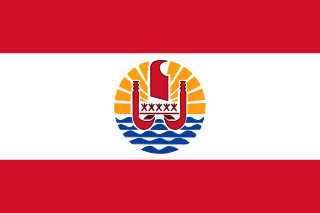
Inside French Polynesia’s foreign policy.
Oceania · UN voting record, treaty positions, and alliances — every claim primary-sourced.
In short
French Polynesia is not a sovereign state; it is a self-governing overseas collectivity of France whose external affairs and defense remain legally tied to Paris, while its elected territorial government has become more assertive in Pacific regional politics under President Moetai Brotherson [French Polynesia Government](https://www. presidence.
Capital
Papeetē
Government
Overseas collectivity …
French Polynesia's government & politics
Leadership, governance, and democratic trajectory.
French Polynesia's UN voting record
How French Polynesia votes at the UN General Assembly — ideological trajectory, voting partners, topic patterns, and key recent roll calls.
Source: Erik Voeten, “United Nations General Assembly Voting Data”, Harvard Dataverse (CC0). Aggregated by Model Diplomat. Last refresh tracked in profile freshness.
French Polynesia's foreign policy
Bilateral posture, key relationships, and live diplomatic statements.
Foreign Policy
French Polynesia does not run a sovereign foreign policy; Paris retains competence over defense, justice, currency, and foreign affairs, while the government in Papeetē exercises a recognized external action role in regional cooperation, development, and some international agreements under France’s constitutional and organic-law framework French Constitution, Article 74 Organic Law No. 2004-192 of 27 February 2004 on the autonomy of French Polynesia. That produces a dual-track posture: France speaks for the territory at the UN, but President Moetai Brotherson has pushed a distinctly Polynesian line centered on Pacific regionalism, anti-nuclear advocacy, climate vulnerability, and greater international visibility for the collectivity Government of French Polynesia Islands Business, 9 June 2026. The core interests hierarchy is clear. Survival is climate adaptation, ocean management, and disaster resilience for a dispersed island territory; regime and autonomy interests are protection of French Polynesia’s self-government and control over local development choices; economic interests are tourism, fisheries, public transfers from France, and better regional connectivity; status interests are decolonization-era recognition and a larger voice in Pacific diplomacy Pacific Community country profile France Diplomacy: Indo-Pacific.
Its stated doctrine is therefore less a classic grand strategy than an autonomy doctrine inside the French state. Brotherson has publicly framed French Polynesia as part of a “nuclear-free Pacific” and called for stronger Pacific unity amid great-power rivalry, signaling resistance to being treated only as a French strategic outpost in the Indo-Pacific Islands Business, 9 June 2026 Asia Pacific Report, 3 June 2026. That rhetoric aligns with long-running local sensitivities over the legacy of 193 French nuclear tests conducted in French Polynesia between 1966 and 1996, a history documented by the French state and central to territorial politics Vie publique: Les essais nucléaires en Polynésie française Assemblée nationale report on nuclear testing legacy. On deep-sea mining, Brotherson has also taken a more cautious line than resource-maximizing states, linking seabed policy to environmental stewardship and Pacific solidarity rather than simply extraction RNZ, 3 June 2026 Asia Pacific Report, 3 June 2026. The non-obvious point is that French Polynesia’s external messaging is driven as much by memory politics and environmental legitimacy as by economics.
The key bilateral relationship is with France because every major hard-power lever runs through Paris. French Polynesia uses the CFP franc, receives substantial fiscal support, and depends on the French state for defense and international legal personality in sovereign forums Institut d'émission d'outre-mer Organic Law No. 2004-192. But its most important political relationships are increasingly with Pacific Island neighbors, especially through high-level engagement with Samoa, Fiji, Cook Islands, and other Pacific leaders on mobility, climate, ocean governance, and decolonization questions Pacific Islands Forum Pacific Community. Relations with New Zealand and Australia are filtered through both Paris and regional institutions; both matter as aid, aviation, education, and security partners in the wider Pacific, but French Polynesia’s recent diplomacy has been more about embedding itself in the Islander consensus than deepening any separate bilateral alignment with Canberra or Wellington New Zealand Ministry of Foreign Affairs and Trade: French Polynesia Australian Department of Foreign Affairs and Trade: France relationship.
Regionally and multilaterally, French Polynesia’s reach is larger than its constitutional status suggests. It is a full member of the Pacific Islands Forum, the Pacific Community, and other regional bodies, which gives Papeetē direct diplomatic access even though it is not a UN member state Pacific Islands Forum members Pacific Community members. At the UN, however, it has no vote; voting alignment is expressed through France, while French Polynesia itself appears mainly as a subject of UN decolonization scrutiny. Since 2013, the UN General Assembly has reinscribed French Polynesia on the UN list of Non-Self-Governing Territories, despite French opposition, and the Special Committee on Decolonization continues to hear petitions and adopt texts on the territory’s political future UN General Assembly A/RES/67/265 UN Decolonization: French Polynesia. That creates a structural split: France votes and negotiates as the sovereign power, while a significant strand of French Polynesian politics seeks international forums precisely to qualify or challenge that sovereign framing.
That divergence from its bloc is the most important analytical insight. In most Indo-Pacific questions French Polynesia is counted, externally, as part of France’s presence and therefore adjacent to EU and Western positions; internally, it often speaks the language of Pacific anti-nuclearism, decolonization, and ecological restraint, which can sit uneasily with Paris’s strategic narrative about a stable French Indo-Pacific anchored by its overseas territories France Diplomacy: Indo-Pacific [blocked]
Society & economy
Macro-economic snapshot and demographic context.
GDP (nominal)
$6.3B
#166/250GDP per capita
$22,439.884
#68/250Currency
—
HDI
—
GDP (nominal USD)
GDP per capita (USD)
In the news
Stories surfacing across French Polynesia’s authoritative outlets, plus headline events and the diplomatic calendar.
Headlines
French Polynesia’s president endorses nuclear-free Pacific - Islands Business
Summary: - French Polynesia’s President Moetai Brotherson used a Pacific Islands Forum address to push for a nuclear-free Pacific and stronger regional security by upholding the South Pacific Nuclear-Free Zone (SPNFZ) and supporting the Treaty on the Prohibition of Nuclear Weapons (TPNW). - He framed nuclear weapons as a human rights and humanitarian law issue, advocating dialogue and the “Ocean of Peace” as the security model for the region, rooted in the Pacific Way. - Bro
French Polynesia’s Moetai Brotherson on New Caledonia, deep sea mining and regional ties
Summary: - French Polynesia President Moetai Brotherson used the Pacific Islands Forum to criticize France’s Macron-era decisions linked to escalating tensions in New Caledonia, calling for closer regional diplomacy amid a growing crisis. - Deep-sea issues are a priority: Brotherson notes deep-sea mining as a major unresolved topic, with Tonga and some Forum members not opposing it, while others oppose; a “we basically agree to disagree” stance highlights regional policy ten
French Polynesia urges Pacific to unite amid rising global tensions | Asia Pacific Report
French Polynesia’s President Moetai Brotherson urged regional unity to counter global instability, calling for deeper Pacific cooperation and resilience through partnerships with neighbors like New Zealand. Key points: - Emphasis on strengthening regional cooperation to withstand external shocks, with potential collaboration in climate adaptation, maritime/air connectivity, digital infrastructure, and economic development. - Caution about escalating US–China geopolitical com
Explore French Polynesia in depth
Frequently asked questions about French Polynesia
Quick answers to the most common questions about French Polynesia.
What type of government does French Polynesia have?
French Polynesia is governed as a overseas collectivity of france, with its capital at Papeetē.
What is the population of French Polynesia?
French Polynesia has a population of approximately 282 thousand people, making it the 187th most populous country.
What is the economy of French Polynesia like?
French Polynesia has a nominal GDP of about $6 billion, or roughly $22,440 per capita.
What languages are spoken in French Polynesia?
The official language of French Polynesia is French.