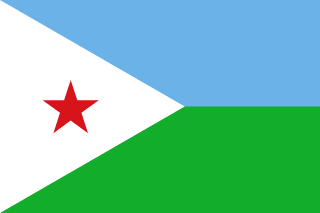
Inside Djibouti’s foreign policy.
Republic of Djibouti
Africa · UN voting record, treaty positions, and alliances — every claim primary-sourced.
In short
Djibouti is a highly centralized presidential state whose foreign and domestic policy are shaped by one fact above all others: it monetizes strategic geography at the Bab el-Mandeb while President Ismail Omar Guelleh and the ruling coalition keep political competition tightly contained…
Capital
DjiboutiGovernment
Unitary presidential republicDjibouti's government & politics
Leadership, governance, and democratic trajectory.


Head of government
Abdoulkader Kamil Mohamed
Head of Government
Djibouti's UN voting record
How Djibouti votes at the UN General Assembly — ideological trajectory, voting partners, topic patterns, and key recent roll calls.
Ideological trajectory
Top voting partners
Topic-level voting
Source: Erik Voeten, “United Nations General Assembly Voting Data”, Harvard Dataverse (CC0). Aggregated by Model Diplomat. Last refresh tracked in profile freshness.
Djibouti's foreign policy
Bilateral posture, key relationships, and live diplomatic statements.
Foreign Policy
Djibouti’s foreign policy is transactional, sovereignty-first, and built around geography. President Ismaïl Omar Guelleh won a sixth term in the April 2026 election with 84.26% of the vote, extending a system in which the presidency dominates strategic decisions and the foreign ministry implements rather than sets grand strategy Africanews BTI Transformation Index 2026: Djibouti Country Report. The regime’s core interest hierarchy is clear: survival and regime security come first, because Djibouti sits beside the Bab el-Mandeb chokepoint and volatile neighbors; economic interests come next, because rents from ports, logistics, and foreign military basing are central to state revenue and patronage; status comes last, pursued through mediation branding and dense multilateral participation Al Jazeera World Bank IGAD.
That logic explains Djibouti’s unusual bilateral map. It hosts military facilities used by France, the United States, China, Japan, Italy, and others, an arrangement President Guelleh has defended as a sovereignty-preserving business model tied to location rather than ideology Al Jazeera U.S. Department of State Ministry of Foreign Affairs of the People’s Republic of China. The most important external relationship is with Ethiopia, not because of formal alliance language but because Djibouti’s ports and corridor infrastructure are deeply tied to Ethiopian trade flows, making Addis Ababa central to Djibouti’s economic security International Trade Administration World Bank. France remains the historical security partner; the United States values Camp Lemonnier for Red Sea and Horn operations; China pairs its base with financing and port-linked infrastructure; Saudi and wider Gulf ties matter because Red Sea security and Arab League politics intersect directly with Djibouti’s own maritime interests U.S. Department of State Al Jazeera Arab League.
In regional and multilateral bodies, Djibouti behaves like a small state maximizing relevance through attendance, mediation language, and venue politics. It is a member of the United Nations, African Union, Intergovernmental Authority on Development, Arab League, Organisation of Islamic Cooperation, and Group of 77, giving it both African and Arab diplomatic lanes United Nations Digital Library African Union IGAD OIC. Its stated positions usually emphasize territorial integrity, non-interference, anti-piracy cooperation, freedom of navigation, and support for negotiated settlements in regional conflicts, which fits a state that profits from stability but cannot enforce it alone Ministry of Foreign Affairs of Djibouti United Nations Security Council. Djibouti also uses forums to reinforce its image as a reliable host for external powers that otherwise compete with each other, which is a rare form of leverage for a country of roughly 1.17 million people and GDP of about $4.15 billion in the supplied context, broadly consistent with World Bank macro data World Bank.
At the UN, Djibouti generally aligns with African and Arab majorities on decolonization, Palestinian statehood, and sovereignty questions, while avoiding the sharper anti-Western posture taken by some Arab or non-aligned states UN Digital Library Voting Data Group of 77. Its real divergence is behavioral, not rhetorical: Djibouti belongs to blocs that often frame global politics in ideological terms, but in practice it hosts both U.S. and Chinese forces, keeps close ties with France, and rarely lets symbolic alignment disrupt security rents or corridor business Al Jazeera U.S. Department of State Ministry of Foreign Affairs of the People’s Republic of China. That is the analytically useful break: Djibouti does not pick camps when camp competition can be monetized. It speaks the language of solidarity in multilateral halls, but its actual doctrine is controlled simultaneity — keep every major power invested, give none exclusive control, and convert external rivalry into regime durability BTI Transformation Index 2026: Djibouti Country Report Al Jazeera.
Domestic politics reinforce that pattern. BTI’s 2026 report describes a heavily centralized political order with weak competition, and that matters externally because foreign policy


Djibouti's treaties & memberships
UN multilateral treaty positions and IGO memberships.
International Organizations
Society & economy
Macro-economic snapshot and demographic context.
GDP (nominal)
$4.2B
#172/250GDP per capita
$3,553
#147/250HDI
0.509
#171/250GDP (nominal USD)
GDP per capita (USD)
Top trading partners

In the news
Stories surfacing across Djibouti’s authoritative outlets, plus headline events and the diplomatic calendar.
Headlines
Djibouti's Guelleh reelected for sixth presidential term: official results | Africanews
Djibouti’s President Ismaïl Omar Guelleh was reelected to a sixth term with 97.01% of the vote in the April 10 election, facing a single challenger amid frequent opposition boycotts. Analysts view the race as not genuinely competitive, with critics labeling it a foregone conclusion and rights groups accusing repression of dissent and press freedoms. Key implications: - Foreign policy and diplomacy: Guelleh’s long rule and stability stance have solidified Djibouti as a strate
‘Our geography is our oil’: Why Djibouti hosts many foreign military bases | Military News | Al Jazeera
Djibouti has become a unique hub for foreign military bases (U.S., China, France, Japan, Italy) due to its strategic location on access routes to the Red Sea and the Horn of Africa. The bases are part of a broader strategy to secure commercial interests and geopolitical influence, championed by President Ismail Omar Guelleh, who has governed for two decades and is poised to win a sixth term. Key points: - Strategic leverage: Bases support trade corridors (notably the Addis A
Djibouti votes, but power doesn’t shift: What’s really at stake in the 2026 election? • Global South World
Djibouti’s 2026 presidential race centers on long-time President Ismaïl Omar Guelleh (IOG), who has governed since 1999. Key points: - Leadership and political dominance: Guelleh, 78, may extend his rule as term limits and age caps have been removed, consolidating a near three-decade tenure. He is backed by the ruling People’s Rally for Progress and the broader Union for the Presidential Majority. - Election dynamics: The field is imbalanced; Guelleh has historically won lar
Explore Djibouti in depth
Frequently asked questions about Djibouti
Quick answers to the most common questions about Djibouti.
What type of government does Djibouti have?
Djibouti is governed as a unitary presidential republic, with its capital at Djibouti.
Who is the head of state of Djibouti?
Ismail Omar Guelleh is the head of state of Djibouti, in office since 1999-05-08.
Who leads the government of Djibouti?
Abdoulkader Kamil Mohamed serves as the head of government of Djibouti, since 2013-04-01.
What is the population of Djibouti?
Djibouti has a population of approximately 1.2 million people, making it the 161st most populous country.
What is the economy of Djibouti like?
Djibouti has a nominal GDP of about $4 billion, or roughly $3,553 per capita.
What languages are spoken in Djibouti?
The official languages of Djibouti are Arabic and French.
When did Djibouti join the United Nations?
Djibouti has been a member of the United Nations since 1977.
Who are Djibouti's closest allies?
Djibouti's key allies include Ethiopia, France, United States, China, and Saudi Arabia.
More about Djibouti
Djibouti is a highly centralized presidential state whose foreign and domestic policy are shaped by one fact above all others: it monetizes strategic geography at the Bab el-Mandeb while President Ismail Omar Guelleh and the ruling coalition keep political competition tightly contained [CIA World Factbook](https://www.cia.gov/the-world-factbook/countries/djibouti/), [Africanews](https://www.africanews.com/2026/06/09/djiboutis-guelleh-reelected-for-sixth-presidential-term-official-results/), [Al Jazeera](https://www.aljazeera.com/news/2026/5/30/our-geography-is-our-oil-why-djibouti-hosts-many-foreign-military-bases). The country is formally a unitary presidential republic [CIA World Factbook](https://www.cia.gov/the-world-factbook/countries/djibouti/). Guelleh was declared reelected in June 2026 for a sixth term, extending a presidency that began in 1999 [Africanews](https://www.africanews.com/2026/06/09/djiboutis-guelleh-reelected-for-sixth-presidential-term-official-results/). Prime Minister Abdoulkader Kamil Mohamed remains head of government, and power is anchored in the presidential camp led by the Union for the Presidential Majority coalition, dominated by Guelleh’s RPP party structure rather than competitive parliamentary turnover [BTI Transformation Index 2026: Djibouti Country Report](https://bti-project.org/en/reports/country-report/DJI), [CIA World Factbook](https://www.cia.gov/the-world-factbook/countries/djibouti/). Djibouti’s place in the world is larger than its population or GDP suggest because it sits on one of the busiest maritime chokepoints on earth and hosts an unusual concentration of foreign military facilities, including those of France, the United States, China, Japan, Italy, and others [Al Jazeera](https://www.aljazeera.com/news/2026/5/30/our-geography-is-our-oil-why-djibouti-hosts-many-foreign-military-bases), [U.S. Department of State](https://www.state.gov/u-s-relations-with-djibouti/), [Ministry for Europe and Foreign Affairs of France](https://www.diplomatie.gouv.fr/en/country-files/djibouti/). That gives Djibouti outsized diplomatic leverage: it is small, but major powers treat access, port security, and overflight in Djibouti as operational issues tied to the Red Sea, Gulf of Aden, and wider Indo-Pacific and Middle East security environment [Al Jazeera](https://www.aljazeera.com/news/2026/5/30/our-geography-is-our-oil-why-djibouti-hosts-many-foreign-military-bases), [U.S. Department of State](https://www.state.gov/u-s-relations-with-djibouti/). Its regional role is also tied to Ethiopia, whose trade relies heavily on Djiboutian port infrastructure after Eritrea’s long closure to Ethiopian access [World Bank](https://www.worldbank.org/en/country/djibouti/overview), [BTI Transformation Index 2026: Djibouti Country Report](https://bti-project.org/en/reports/country-report/DJI). Economically, Djibouti is a services-and-logistics state more than a diversified producer. The World Bank describes growth as driven by port, logistics, and infrastructure services linked to trade corridors, while warning that poverty, unemployment, and high living costs remain major constraints [World Bank](https://www.worldbank.org/en/country/djibouti/overview). IMF reporting likewise centers the economy on transport, logistics, and associated services, with public debt vulnerabilities and dependence on external-financed infrastructure still central to macroeconomic management [IMF](https://www.imf.org/en/Countries/DJI). In nominal terms the economy is small, around $4.15 billion by the country context provided here, and that small base explains why rents from ports, bases, and transit matter so much politically: they are not side revenues, they are the model [World Bank](https://www.worldbank.org/en/country/djibouti/overview), [IMF](https://www.imf.org/en/Countries/DJI). Three issues define Djibouti’s current trajectory. The first is regime durability without meaningful political opening. BTI’s 2026 report assesses the system as strongly dominated by the presidency, with weak opposition capacity and limited democratic alternation [BTI Transformation Index 2026: Djibouti Country Report](https://bti-project.org/en/reports/country-report/DJI). The second is strategic balancing among external powers. Djibouti benefits from hosting rival security partners at once, but that model depends on remaining useful to all of them and avoiding alignment shocks as U.S.-China and Red Sea tensions intensify [Al Jazeera](https://www.aljazeera.com/news/2026/5/30/our-geography-is-our-oil-why-djibouti-hosts-many-foreign-military-bases), [U.S. Department of State](https://www.state.gov/u-s-relations-with-djibouti/). The third is whether infrastructure-led growth can produce broader employment and social gains rather than simply sustaining elite control and debt-heavy state development [World Bank](https://www.worldbank.org/en/country/djibouti/overview), [IMF](https://www.imf.org/en/Countries/DJI). The practical read for MUN delegates is straightforward: Djibouti will usually frame itself as a sovereignty-conscious, non-disruptive, logistics-critical state that wants stability in the Red Sea, secure trade routes, and continued external investment without political conditionality [U.S. Department of State](https://www.state.gov/u-s-relations-with-djibouti/), [BTI Transformation Index 2026: Djibouti Country Report](https://bti-project.org/en/reports/country-report/DJI). Its red lines are threats to internal regime control, instability that disrupts port and base revenue, and any regional escalation that reduces its value as a neutral host platform [Al Jazeera](https://www.aljazeera.com/news/2026/5/30/our-geography-is-our-oil-why-djibouti-hosts-many-foreign-military-bases), [World Bank](https://www.worldbank.org/en/country/djibouti/overview). That makes Djibouti less a conventional small state than a brokerage