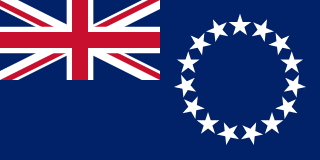
Inside Cook Islands’ foreign policy.
Oceania · UN voting record, treaty positions, and alliances — every claim primary-sourced.
In short
The Cook Islands is a self-governing state in free association with New Zealand, and its foreign-policy profile in 2026 is defined by one fact: it is pushing for wider international room to maneuver while New Zealand and other partners are trying to set limits, especially around China [Cook Islands Government Constitution Act 1964](https://www. legislation.
Capital
Avarua
Government
Self-governing territo…
Cook Islands's government & politics
Leadership, governance, and democratic trajectory.
Cook Islands's UN voting record
How Cook Islands votes at the UN General Assembly — ideological trajectory, voting partners, topic patterns, and key recent roll calls.
Source: Erik Voeten, “United Nations General Assembly Voting Data”, Harvard Dataverse (CC0). Aggregated by Model Diplomat. Last refresh tracked in profile freshness.
Cook Islands's foreign policy
Bilateral posture, key relationships, and live diplomatic statements.
Foreign Policy
Cook Islands foreign policy is sovereignty-maximizing, aid-sensitive, and increasingly transactional. The state is self-governing in free association with New Zealand under the 2001 Joint Centenary Declaration, which recognizes Cook Islands’ capacity to conduct its own foreign affairs while preserving New Zealand’s responsibilities for citizenship and, when requested and consulted, assistance in defense and external affairs New Zealand Ministry of Foreign Affairs and Trade Pacific Islands Legal Information Institute, Joint Centenary Declaration. Prime Minister Mark Brown, who also holds key strategic portfolios, has framed policy around “sovereignty” and independent decision-making, especially in response to criticism of recent China agreements Cook Islands News Cook Islands Government, Office of the Prime Minister. In interest terms, survival and regime security still run through the New Zealand link, but economic interest now drives diversification toward any partner willing to finance infrastructure, connectivity, seabed research, and tourism recovery MFAT Asian Development Bank.
The decision structure is unusually concentrated. Cook Islands has a Westminster-style parliamentary system, but foreign policy is directed from the prime minister’s office rather than by an autonomous strategic bureaucracy, which makes elite political judgment and leader-to-leader diplomacy disproportionately important in external alignment CIA World Factbook Cook Islands Government, Office of the Prime Minister. Its doctrine on paper emphasizes “friends to all and enemies to none” Pacific diplomacy, climate advocacy, sustainable ocean governance, and development partnerships, but in practice the central operating principle is preserving room to maneuver between traditional patrons and newer financiers Pacific Islands Forum Cook Islands Ministry of Foreign Affairs and Immigration. That explains why Cook Islands seeks international recognition and treaty-making space beyond what outside observers often assume a free-association state can exercise: it is a member of many UN specialized agencies and regional bodies even though it is not a UN member state UN Treaty Collection World Health Organization UNESCO.
New Zealand remains the indispensable bilateral relationship because it underwrites citizenship access, provides major development assistance, and is the default security backstop MFAT. Australia matters as a parallel security and development partner through the broader Pacific architecture, while Japan, the United States, and multilateral banks matter mainly through fisheries, maritime capacity, and climate-finance channels Pacific Islands Forum Fisheries Agency Asian Development Bank. China is the relationship that reveals the country’s strategic method. Cook Islands signed a Comprehensive Strategic Partnership with China in 2025 and pursued cooperation on economic development and ocean-related sectors, prompting public concern in Wellington and Canberra about transparency, dual-use risks, and whether free-association consultation norms had been bypassed Government of the Cook Islands RNZ ABC News. The June 2026 New Zealand–Cook Islands security declaration appears to reassert limits on that autonomy in practice, especially on security-facing cooperation with third countries, even as Cook Islands publicly insists its sovereignty is intact ABC News Cook Islands News.
Regionally, Cook Islands is embedded in the Pacific Islands Forum, the Pacific Community, the Forum Fisheries Agency, and other Polynesian and Pacific institutions where climate change, maritime zones, fisheries revenue, and development finance dominate the agenda Pacific Islands Forum Pacific Community Forum Fisheries Agency. Because it is not a UN member, it does not cast votes in the UN General Assembly; any claim about “UN voting alignment” has to be stated negatively and precisely United Nations Member States. Its alignment therefore has to be inferred from treaty participation, public statements in UN-linked forums, and regional caucusing. On climate, decolonization, oceans, and small-island development issues, Cook Islands usually tracks the wider Pacific consensus and the Alliance of Small Island States line, even without a UN vote of its own AOSIS UNESCO. On hard-security positioning, however, it has shown more willingness than some Pacific peers to test the boundary of Western comfort by engaging China directly while remaining formally inside the New Zealand-centered constitutional order RNZ ABC News.
That
Society & economy
Macro-economic snapshot and demographic context.
GDP (nominal)
—
GDP per capita
—
Currency
—
HDI
—
In the news
Stories surfacing across Cook Islands’s authoritative outlets, plus headline events and the diplomatic calendar.
Headlines
New Zealand security declaration with Cook Islands puts 'massive limitations' on China pacts, minister says - ABC News
New Zealand and the Cook Islands signed a new security declaration that ends a political rift over China pacts. Key points: - The declaration designates New Zealand as the Cook Islands’ “security partner of choice” and gives Wellington a formal say on security issues, including critical infrastructure and any third-party agreements. - The pact requires the Cook Islands to notify New Zealand early on security matters and effectively grants New Zealand a veto over deals with o
Cook Islands China deal riles allies as West’s grip loosens
Summary: - The Cook Islands has signed broad, high-profile deals with China in infrastructure, ship-building, tourism, agriculture, technology, education, and deep-sea mineral exploration, surprising allies and bypassing traditional partner New Zealand. - Domestic and regional backlash followed: protests on Rarotonga and a no-confidence vote against Prime Minister Mark Brown (which he survived), highlighting tensions over the pivot toward China. - The moves raise concerns in
The Cook Islands and Niue: States in Free Association | Congress.gov
Summary: - The Cook Islands and Niue are in Free Association with New Zealand, managing their own domestic affairs while New Zealand provides support. The United States established diplomatic relations with both countries in 2023, signaling a U.S. interest in their role in Pacific regionalism, security, and resource development. - U.S. policy priorities in the region include safeguarding free waterways, expanding diplomatic engagement, supporting development and sustainable f
Explore Cook Islands in depth
Frequently asked questions about Cook Islands
Quick answers to the most common questions about Cook Islands.
What type of government does Cook Islands have?
Cook Islands is governed as a self-governing territory in free association with new zealand, with its capital at Avarua.
What is the population of Cook Islands?
Cook Islands has a population of approximately 15 thousand people, making it the 227th most populous country.
What languages are spoken in Cook Islands?
The official languages of Cook Islands are English and Cook Islands Māori.