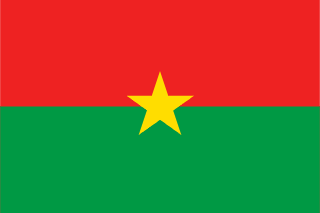
Inside Burkina Faso’s foreign policy.
Africa · UN voting record, treaty positions, and alliances — every claim primary-sourced.
In short
Burkina Faso is a military-led state fighting for regime survival and territorial control, and that security crisis drives almost every major foreign-policy and economic choice it makes today.
Capital
OuagadougouGovernment
Military junta (transitional)Burkina Faso's government & politics
Leadership, governance, and democratic trajectory.


Burkina Faso's UN voting record
How Burkina Faso votes at the UN General Assembly — ideological trajectory, voting partners, topic patterns, and key recent roll calls.
Ideological trajectory
Top voting partners
Topic-level voting
Source: Erik Voeten, “United Nations General Assembly Voting Data”, Harvard Dataverse (CC0). Aggregated by Model Diplomat. Last refresh tracked in profile freshness.
Burkina Faso's foreign policy
Bilateral posture, key relationships, and live diplomatic statements.
Foreign Policy
Burkina Faso’s foreign policy is now driven less by the foreign ministry than by the military leadership around Captain Ibrahim Traoré, and its external behavior follows a clear hierarchy: regime survival first, territorial security second, and economic diversification third. Traoré has remained head of state under the Transition Charter, while Apollinaire Joachim Kyélem de Tambèla has continued as prime minister in the transitional order established after the September 2022 coup Presidency of Burkina Faso, African Union Peace and Security Council. The formal line is sovereignty, anti-terrorism, and refusal of “external interference,” expressed in official transition documents and presidential statements framing security restoration and state reconquest of territory as the state’s overriding mission Burkina Faso Transitional Charter, Presidency of Burkina Faso. In practice, that doctrine has justified a sharp distancing from France and ECOWAS pressure, and a corresponding turn toward partners willing to supply arms, training, and political backing without governance conditions International Crisis Group, Chatham House.
Its core interests are unusually easy to rank. Survival means preventing further territorial loss to jihadist groups; the UN has repeatedly described the scale of insecurity and displacement in Burkina Faso as among the gravest in the central Sahel UNHCR, UN OCHA. Regime security sits just below that and often overrides economic logic: the junta has defended prolonged transition timelines and rejected external pressure for a quick return to civilian rule, even when that worsened relations with ECOWAS and some Western donors ECOWAS, Reuters. Economic interests are narrower but still important. Gold dominates Burkina Faso’s export profile, making secure mining zones, alternative investors, and transport corridors strategic concerns for the state World Bank, OEC. Status matters too, but mostly through a sovereigntist lens: Ouagadougou wants recognition as part of a new Sahelian center of gravity rather than as a rule-taker inside a West African order shaped by coastal states.
That logic explains Burkina Faso’s bilateral map. Relations with Mali and Niger have become the centerpiece of its regional policy through the Alliance of Sahel States, formalized in 2023 as a collective security arrangement and later developed into a broader political bloc by the three military governments Alliance des États du Sahel, Reuters. Russia has gained influence as a security and political partner; official meetings and public messaging from Ouagadougou increasingly cast Moscow as a respectful partner in defense cooperation, part of a wider diversification away from former Western security patrons Russian Foreign Ministry, Carnegie Endowment for International Peace. Ties with Turkey have also expanded through defense commerce and diplomatic outreach, fitting Burkina Faso’s search for non-Western suppliers Turkish Ministry of Foreign Affairs. By contrast, the rupture with France was explicit: Burkina Faso denounced military arrangements and demanded the departure of French forces in 2023, a move the French government confirmed publicly Ministry for Europe and Foreign Affairs of France, Reuters. That was not just symbolism; it signaled a foreign-policy test the junta now applies consistently — partners are judged by whether they strengthen coercive capacity and avoid public pressure on the transition.
Burkina Faso’s multilateral posture is increasingly selective rather than bloc-disciplined. It remains a member of the United Nations, African Union, ECOWAS, and the Organisation of Islamic Cooperation, but its practical investment in these forums is uneven United Nations, African Union, OIC. The most important shift is with ECOWAS: Burkina Faso has not simply resisted sanctions and mediation pressure; alongside Mali and Niger it has worked to build an institutional counterweight to the organization’s democratic-restoration agenda ECOWAS, International Crisis Group. At the UN, Burkina Faso still uses standard Global South language on sovereignty, development finance, and counterterrorism, and it has generally aligned with broad African positions rather than acting as a high-profile ideological outlier UN Digital Library, Group of 77. The break comes in emphasis: compared with many African states that balance non-interference with constitutionalism, Burkina Faso under the junta gives much heavier weight to anti-intervention and security exceptionalism, especially where regional bodies invoke democratic norms against military rulers African Union Peace and Security Council, UN General Assembly.
The most analytically useful divergence is that Burkina Faso still speaks the language of African multilateral solidarity while helping hollow out one of West Africa’s central multilateral enforcement mechanisms. The country has not exited African diplomacy; it is trying to rewire it around junta-to-junta legitimacy, mutual defense, and a narrower reading of sovereignty Chatham House, Al Jazeera. That puts it partly inside and partly against its own traditional blocs. It remains formally in ECOWAS and the AU orbit, but behaviorally it is closer to a revisionist Sahel alignment with Mali and Niger than


Burkina Faso's treaties & memberships
UN multilateral treaty positions and IGO memberships.
International Organizations
Society & economy
Macro-economic snapshot and demographic context.
GDP (nominal)
$23.1B
#124/250GDP per capita
$981.993
#194/250Currency
—
HDI
0.45
#186/250GDP (nominal USD)
GDP per capita (USD)
Top trading partners


In the news
Stories surfacing across Burkina Faso’s authoritative outlets, plus headline events and the diplomatic calendar.
Headlines
A marriage of three: Will Mali, Niger, Burkina Faso bloc reshape the Sahel? | Politics News | Al Jazeera
Summary: - The Alliance of Sahel States (AES) formed in 2023 by Mali, Niger, and Burkina Faso—now led by military governments backed by Russian mercenaries—and separated from ECOWAS, arguing Western influence and debt conditions hinder regional sovereignty. - The AES agenda centers on rapid, joint security and development initiatives: a cross-border joint military force, a Sahel Investment and Development Bank to fund infrastructure without Western loans, and a shared media a
Burkina Faso: Between strategic diversification and…
Burkina Faso’s foreign policy in early 2026 centers on three intertwined aims: - Diversifying strategic partners beyond the West, pursuing non-Western cooperation (e.g., high-level ties indicated by General Célestin Simporé) to reduce dependence and broaden support. - Deepening regional security coordination with neighbors, especially with Ghana, to bolster defense and stability in the Sahel. - Formalizing a doctrine-driven security and diplomacy framework through the AES (Al
The Sahel's most acute crisis is unfolding in Burkina Faso
Summary: - The article argues Burkina Faso is the Sahel’s epicenter of the security crisis, eclipsed by the regime of coup-leader Ibrahim Traoré. - Since the 2022 coup, extremism has surged, with attacks rising sharply and civilian harm increasing, posing broader regional stability risks. - Traoré consolidates power through military reforms, purges, and suppression of dissent—reorganizing the army, replacing key security chiefs, and sending potential rivals abroad for trainin
Explore Burkina Faso in depth
Frequently asked questions about Burkina Faso
Quick answers to the most common questions about Burkina Faso.
What type of government does Burkina Faso have?
Burkina Faso is governed as a military junta (transitional), with its capital at Ouagadougou.
Who is the head of state of Burkina Faso?
Ibrahim Traoré is the head of state of Burkina Faso, in office since 2022-10-06.
Who leads the government of Burkina Faso?
Apollinaire Joachim Kyélem de Tambèla serves as the head of government of Burkina Faso, since 2022-01-23.
What is the population of Burkina Faso?
Burkina Faso has a population of approximately 23.5 million people, making it the 59th most populous country.
What is the economy of Burkina Faso like?
Burkina Faso has a nominal GDP of about $23 billion, or roughly $982 per capita.
What languages are spoken in Burkina Faso?
The official language of Burkina Faso is French.
When did Burkina Faso join the United Nations?
Burkina Faso has been a member of the United Nations since 1960.
Who are Burkina Faso's closest allies?
Burkina Faso's key allies include Mali, Niger, Russia, and Türkiye.
More about Burkina Faso
Burkina Faso is a military-led state fighting for regime survival and territorial control, and that security crisis drives almost every major foreign-policy and economic choice it makes today. Since Captain Ibrahim Traoré seized power in September 2022, the country has been governed under a transitional charter rather than normal constitutional party politics; Traoré serves as Head of State and Apollinaire Joachim Kyélem de Tambèla remains Prime Minister, with the military-backed transition institutions, not an elected ruling party, holding real authority [Presidency of Faso](https://www.presidencedufaso.bf/) [Constitute Project, Burkina Faso 2024 Transitional Charter](https://www.constituteproject.org/) [Encyclopaedia Britannica, Ibrahim Traoré](https://www.britannica.com/biography/Ibrahim-Traore). In practice, the presidency and armed forces dominate decision-making, while civilian institutions operate inside a security-first framework set by the junta [International Crisis Group, Burkina Faso: Stopping the Spiral of Violence](https://www.crisisgroup.org/africa/sahel/burkina-faso) [Freedom House, Burkina Faso 2025](https://freedomhouse.org/country/burkina-faso/freedom-world/2025). Burkina Faso’s place in the world is no longer defined mainly by ECOWAS diplomacy or French security ties; it is now one of the core states of the Sahel’s anti-status-quo bloc alongside Mali and Niger. The three governments created the Alliance of Sahel States in 2023 and later announced a confederation structure, explicitly framing it as a sovereignty-centered alternative to ECOWAS pressure and to older French-led regional security arrangements [Alliance des États du Sahel](https://www.aes-sahel.org/) [Reuters, Sahel states announce confederation](https://www.reuters.com/world/africa/mali-niger-burkina-faso-form-confederation-2024-07-06/). Burkina Faso, Mali, and Niger also finalized their withdrawal from ECOWAS after the bloc acknowledged the departure in January 2025, narrowing Ouagadougou’s West African diplomatic room while deepening coordination with fellow juntas and expanding ties with Russia and Turkey [ECOWAS Commission](https://www.ecowas.int/) [Reuters, ECOWAS acknowledges withdrawal of three Sahel states](https://www.reuters.com/world/africa/west-african-bloc-ecowas-acknowledges-exit-three-junta-led-states-2025-01-29/) [Carnegie Endowment for International Peace, Russia’s Africa Strategy](https://carnegieendowment.org/). Economically, Burkina Faso is poor, aid-dependent, and still anchored in commodities, with gold and cotton dominating exports while insecurity distorts nearly every development indicator. The World Bank classifies it as a low-income country, estimated GDP at about $22 billion in 2023, and notes that gold accounts for the overwhelming share of export earnings [World Bank, Burkina Faso Overview](https://www.worldbank.org/en/country/burkinafaso/overview). The IMF reported real GDP growth of 3.6% in 2024 after 3.0% in 2023, but that growth sits beside acute fiscal and humanitarian strain caused by conflict, displacement, and food insecurity [IMF, Burkina Faso: 2025 Article IV Consultation Press Release and Staff Report](https://www.imf.org/en/Countries/BFA). The country’s population was estimated at 23.5 million in 2024, and humanitarian agencies reported millions in need of assistance as violence disrupted farming, transport, and local markets [World Bank Data, Population total Burkina Faso](https://data.worldbank.org/indicator/SP.POP.TOTL?locations=BF) [OCHA, Burkina Faso Situation Reports](https://www.unocha.org/burkina-faso). Three issues define Burkina Faso’s current trajectory. First is the insurgency: large areas have faced attacks by jihadist groups linked to Jama’at Nasr al-Islam wal Muslimin and Islamic State Sahel Province, and the state has relied on army operations, emergency rule, and mass civilian auxiliaries known as the Volunteers for the Defense of the Homeland to hold territory [UN Security Council, reports on West Africa and the Sahel](https://www.un.org/securitycouncil/) [Human Rights Watch, Burkina Faso](https://www.hrw.org/africa/burkina-faso) [International Crisis Group, Burkina Faso](https://www.crisisgroup.org/africa/sahel/burkina-faso). Second is diplomatic realignment: Ouagadougou has cut military cooperation with France, welcomed new Russian support, and tied its security future to Mali and Niger rather than to ECOWAS mediation [Reuters, Burkina Faso ends military accord with France](https://www.reuters.com/world/africa/burkina-faso-end-military-accord-with-france-2023-03-02/) [Reuters, Russia to deepen ties with Sahel juntas](https://www.reuters.com/world/africa/). Third is state legitimacy: the junta presents itself as restoring sovereignty and security, but prolonged transition, repression of dissent, and continued battlefield pressure mean its domestic credibility still depends far more on security performance than on formal institution-building [Freedom House, Burkina Faso 2025](https://freedomhouse.org/country/burkina-faso/freedom-world/2025) [Amnesty International, Burkina Faso](https://www.amnesty.org/en/location/africa/west-and-central-africa/burkina-faso/). The key reading for delegates is that Burkina Faso will usually rank survival first, regime security second, and conventional diplomacy third. That means it is more likely to back hard-edged sovereignty language, resist external political conditionality, and favor security partnerships that deliver immediate operational help even when they increase isolation from Western donors or regional institutions [IMF, Burkina Faso 2025 Article IV](https://www.imf.org/en/Countries/BFA) [ECOWAS Commission](https://www.ecowas.int/) [Reuters](https://www.reuters.com/world/africa/). Its vulnerability is that the same strategy that consolidates junta control in the short term can deepen economic stress, alienate parts of its aid network, and lock the state into a narrow alliance pattern centered on other crisis-hit military regimes [World Bank, Burkina Faso Overview](https://www.worldbank.org/en/country/burkinafaso/overview) [International Crisis Group](https://www.crisisgroup.org/africa/sahel/burkina-faso).