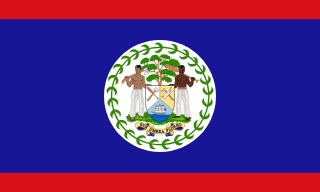
Inside Belize’s foreign policy.
Americas · UN voting record, treaty positions, and alliances — every claim primary-sourced.
In short
Belize is a small parliamentary constitutional monarchy whose foreign policy is driven less by power projection than by sovereignty protection, trade access, and climate resilience Government of Belize, World Bank.
Capital
BelmopanGovernment
Parliamentary constitutional monarchyBelize's government & politics
Leadership, governance, and democratic trajectory.


Belize's UN voting record
How Belize votes at the UN General Assembly — ideological trajectory, voting partners, topic patterns, and key recent roll calls.
Ideological trajectory
Top voting partners
Topic-level voting
Source: Erik Voeten, “United Nations General Assembly Voting Data”, Harvard Dataverse (CC0). Aggregated by Model Diplomat. Last refresh tracked in profile freshness.
Belize's foreign policy
Bilateral posture, key relationships, and live diplomatic statements.
Foreign Policy
Belize’s foreign policy is defensive, legalistic, and coalition-based: it uses multilateral forums to compensate for small-state capacity and treats the territorial claim by Guatemala as its top survival issue. The Ministry of Foreign Affairs, Foreign Trade, Culture and Immigration states that Belize’s external policy is anchored in sovereignty, territorial integrity, peaceful dispute settlement, regional integration, and support for international law Ministry of Foreign Affairs of Belize Government of Belize. In practice, that puts the interests pyramid in a clear order: survival first through defense of borders and the International Court of Justice process with Guatemala, economic security second through trade, tourism, climate finance, and market access, and status third through active participation in CARICOM, SICA, the Commonwealth, the UN, and the Alliance of Small Island States International Court of Justice CARICOM Sistema de la Integración Centroamericana AOSIS. Belize’s parliamentary system leaves day-to-day diplomacy with the prime minister and foreign ministry rather than the monarch or governor-general, so external behavior is usually steady and cabinet-driven rather than personalized Belize Constitution Office of the Prime Minister of Belize.
The Guatemala file dominates Belize’s bilateral map. Belize and Guatemala agreed by simultaneous referenda to submit Guatemala’s territorial, insular, and maritime claim to the ICJ, and the case remains pending, making legal process itself a core instrument of Belizean foreign policy rather than a side issue International Court of Justice Organization of American States. Belize’s public line is consistently that the dispute must end through the Court and that the adjacency zone must remain calm under confidence-building measures supported by the OAS Government of Belize Press Office Organization of American States. That legalism shapes other bilateral ties. The United Kingdom remains Belize’s security backstop through historic defense links and training cooperation, while Mexico is a practical economic and border partner on trade, energy, migration, and transport UK Ministry of Defence Embassy of Mexico in Belize. The United States is economically central through exports, tourism, remittances, and security cooperation, but Belize generally frames that relationship in functional rather than ideological terms U.S. Department of State World Bank.
Regionally, Belize sits in an unusual overlap zone: geographically Central American, politically and diplomatically Caribbean. It is a full member of both CARICOM and SICA, which gives it access to two integration systems but also forces constant balancing between Caribbean voting habits and Central American practical interests CARICOM Sistema de la Integración Centroamericana. In trade and development diplomacy, Belize leans heavily on CARICOM and small-island coalitions, especially on climate finance, debt vulnerability, and sustainable development despite not being an island state in the strict geographic sense AOSIS United Nations. That is rational: climate exposure, reef protection, disaster risk, and tourism dependence make Belize’s external economic agenda look much closer to that of Caribbean small states than to larger mainland neighbors UNDP Belize World Bank Climate Change Knowledge Portal. The result is a foreign policy style built on caucusing in small-state blocs, defending rules-based process, and avoiding unnecessary polarization among major powers.
At the UN, Belize broadly aligns with CARICOM on decolonization, sustainable development, climate vulnerability, and defense of the multilateral system, and it regularly associates itself with small-state positions in the General Assembly United Nations Digital Library CARICOM. It also supports the long-standing regional position on Cuba, reflected in repeated votes against the U.S. embargo in the General Assembly, where CARICOM states have been consistently aligned United Nations General Assembly U.S. Department of State. The more analytically useful pattern is where Belize softens bloc instincts. Unlike some larger Latin American states that use UN platforms for ideological signaling, Belize tends to avoid high-cost confrontation and returns to procedural, legal, and development language. Its biggest divergence is not dramatic roll-call rebellion but selective understatement: on polarizing security disputes beyond its region, Belize usually prefers low-profile conformity to broad CARICOM language over activist leadership, because its diplomatic capital is reserved for the Guatemala case, climate finance, and protecting economic ties with the United States, Mexico, and Caribbean partners United Nations Digital Library Ministry of Foreign Affairs of Belize.
That restraint is the key to reading Belize correctly. Many small states speak in universal terms, but Belize’s actual behavior is tightly ranked by vulnerability. Territorial integrity is the red line; climate and economic resilience are the next layer; symbolic positioning comes last International Court of Justice World Bank. Its leverage is limited in material terms — a population of about 417,000 and nominal GDP around $3.2 billion in the provided country context, broadly consistent with World Bank country data World Bank


Belize's treaties & memberships
UN multilateral treaty positions and IGO memberships.
International Organizations
Society & economy
Macro-economic snapshot and demographic context.
GDP (nominal)
$3.2B
#176/250GDP per capita
$7,681
#111/250HDI
0.683
#123/250GDP (nominal USD)
GDP per capita (USD)
Top trading partners


In the news
Stories surfacing across Belize’s authoritative outlets, plus headline events and the diplomatic calendar.
Headlines
Not Just Tariffs: Understanding Belize’s Exposure in the Face of a Global Polycrisis
Summary: - Theme: Belize’s exposure to a global polycrisis, with emphasis on trade, economy, and policy resilience. - Economic linkages: Belize is highly exposed to U.S. policy shifts due to strong trade ties (roughly 40% of imports from the U.S. and notable exports to the U.S.). U.S. policy changes can ripple through Belize’s supply chains via intermediate goods, raising import costs and consumer prices. - Transmission channels: The risk extends beyond trade balance and rev
Oscar Arnold Returns Home to Shape Belize’s Foreign Policy | Greater Belize Media
Oscar Arnold, newly appointed CEO of Belize’s Ministry of Foreign Affairs and Foreign Trade, brings frontline diplomatic experience from his tenure as Belize’s ambassador to Mexico to shape Belize’s foreign policy from within. Highlights from his recent remarks: - Diplomatic impact in Mexico: Secured market access for Belizean cattle and other commodities (e.g., coconut water; exploring the coconut whole for export) and strengthened cross-border trade relations. - Internal l
BELIZE, GUATEMALA & THE ICJ: Understanding the Claim, the Anxiety, and the Possible Future of Belize | National Perspective Belize
Summary: - The article frames Belize’s current stance on the Guatemala-ICJ dispute as a pivotal moment for Belize’s foreign policy, diplomacy, and national sovereignty, rooted in colonial history and modern international law. - It emphasizes that the ICJ process is about more than borders: it involves sovereignty, diplomacy, regional security, stability, and Belize’s identity within CARICOM, SICA, the OAS, and the Commonwealth. - Core legal matter centers on the 1859 British
Explore Belize in depth
Frequently asked questions about Belize
Quick answers to the most common questions about Belize.
What type of government does Belize have?
Belize is governed as a parliamentary constitutional monarchy, with its capital at Belmopan.
Who is the head of state of Belize?
Charles III is the head of state of Belize, in office since 2022-09-08.
Who leads the government of Belize?
Johnny Briceño serves as the head of government of Belize, since 2020-11-12.
What is the population of Belize?
Belize has a population of approximately 417 thousand people, making it the 177th most populous country.
What is the economy of Belize like?
Belize has a nominal GDP of about $3 billion, or roughly $7,681 per capita.
What languages are spoken in Belize?
The official languages of Belize are Belizean Creole, English, and Spanish.
When did Belize join the United Nations?
Belize has been a member of the United Nations since 1981.
Who are Belize's closest allies?
Belize's key allies include United Kingdom, Mexico, Jamaica, and Trinidad and Tobago.
More about Belize
Belize is a small parliamentary constitutional monarchy whose foreign policy is driven less by power projection than by sovereignty protection, trade access, and climate resilience [Government of Belize](https://www.governmentofbelize.gov.bz/), [World Bank](https://data.worldbank.org/country/belize). The state recognizes King Charles III as head of state and is governed domestically by Prime Minister Johnny Briceño, whose People’s United Party won the last general election and has remained in office through the current parliamentary term [Belize Elections and Boundaries Department](https://www.elections.gov.bz/), [The Commonwealth](https://thecommonwealth.org/our-member-countries/belize). For diplomats, the key point is that Belize behaves like a Caribbean and Central American bridge state: active in CARICOM, present in SICA, and unusually focused on defending its territory and legal position in the long-running dispute with Guatemala [CARICOM](https://caricom.org/member-states-and-associate-members/), [SICA](https://www.sica.int/miembros/blz), [International Court of Justice](https://www.icj-cij.org/case/177). The current government is institutionally Westminster-style, but foreign-policy authority is concentrated in the cabinet led by Briceño and executed through the Ministry of Foreign Affairs, Foreign Trade, Culture and Immigration [Government of Belize](https://www.governmentofbelize.gov.bz/), [Ministry of Foreign Affairs, Foreign Trade, Culture and Immigration](https://mfaft.gov.bz/). The People’s United Party has framed its external agenda around economic recovery, investment attraction, climate finance, and a rules-based settlement of the Guatemala claim rather than military balancing [People's United Party](https://www.pup.org.bz/), [Ministry of Foreign Affairs, Foreign Trade, Culture and Immigration](https://mfaft.gov.bz/). That matters because Belize’s hard-power capacity is limited; its leverage comes from law, coalition diplomacy, and membership in small-state groupings including CARICOM, the Commonwealth, the UN, and AOSIS [United Nations](https://www.un.org/en/about-us/member-states/belize), [Alliance of Small Island States](https://www.aosis.org/members/). Economically, Belize is small and externally exposed. The World Bank reported GDP of about $3.3 billion in current US dollars for 2023, while services dominate output and exports remain concentrated in tourism, agriculture, and marine products [World Bank](https://data.worldbank.org/indicator/NY.GDP.MKTP.CD?locations=BZ), [Belize Trade and Investment Development Service](https://www.belizetradeandinvestment.org/). Tourism remains a major foreign-exchange earner, making Belize highly sensitive to external demand shocks, transport costs, and weather disruption [World Travel & Tourism Council](https://wttc.org/research/economic-impact), [World Bank](https://www.worldbank.org/en/country/belize/overview). The same vulnerability shapes trade policy: Belize needs access to U.S., Caribbean, and regional markets, but it also needs fiscal room to manage debt, infrastructure gaps, and disaster risk [IMF](https://www.imf.org/en/Countries/BLZ), [Inter-American Development Bank](https://www.iadb.org/en/countries/belize/overview). Three issues define Belize’s current trajectory. The first is the Guatemala territorial, insular, and maritime claim, now before the International Court of Justice after both countries voted to submit the dispute to adjudication; for Belize this is a survival-tier issue because it goes directly to territorial integrity and border certainty [International Court of Justice](https://www.icj-cij.org/case/177), [Government of Belize](https://www.gov.bz/guatemala-claim/). The second is climate exposure: Belize is a low-lying coastal and reef-dependent state that consistently links development policy to adaptation, blue economy protection, and climate finance [UNFCCC](https://unfccc.int/), [AOSIS](https://www.aosis.org/members/), [World Bank](https://www.worldbank.org/en/country/belize/overview). The third is economic diversification, because dependence on tourism and a narrow export basket leaves the country vulnerable to global downturns, commodity swings, and supply shocks [IMF](https://www.imf.org/en/Countries/BLZ), [Belize Trade and Investment Development Service](https://www.belizetradeandinvestment.org/). Belize’s place in the world today is therefore larger diplomatically than its size suggests. It aligns most often with Caribbean small-state priorities on climate, development financing, and multilateral law, while also maintaining practical ties with the United States, Mexico, the United Kingdom, and regional neighbors [U.S. Department of State](https://www.state.gov/u-s-relations-with-belize/), [Government of Mexico](https://embamex.sre.gob.mx/belice/), [The Commonwealth](https://thecommonwealth.org/our-member-countries/belize). Its pattern is cautious, legalistic, and coalition-based: Belize rarely sets the global agenda alone, but it is effective when the issue is sovereignty, environmental protection, or the procedural interests of small developing states [United Nations](https://www.un.org/en/about-us/member-states/belize), [CARICOM](https://caricom.org/member-states-and-associate-members/). The non-obvious point is that Belize’s foreign policy is not mainly about choosing between blocs; it is about using every available forum to convert structural weakness into diplomatic insulation.