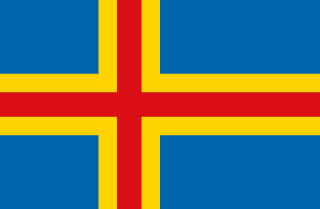
Inside Åland Islands’ foreign policy.
Europe · UN voting record, treaty positions, and alliances — every claim primary-sourced.
In short
Åland is a demilitarized, Swedish-speaking autonomous region of Finland whose politics are local, but whose strategic value has risen sharply as Baltic security deteriorates after Finland joined NATO in 2023 [Government of Åland](https://www. regeringen.
Capital
Mariehamn
Government
Autonomous region of F…
Åland Islands's government & politics
Leadership, governance, and democratic trajectory.
Åland Islands's UN voting record
How Åland Islands votes at the UN General Assembly — ideological trajectory, voting partners, topic patterns, and key recent roll calls.
Source: Erik Voeten, “United Nations General Assembly Voting Data”, Harvard Dataverse (CC0). Aggregated by Model Diplomat. Last refresh tracked in profile freshness.
Åland Islands's foreign policy
Bilateral posture, key relationships, and live diplomatic statements.
Foreign Policy
Åland does not run an independent foreign policy; its external posture is a negotiated extension of Finnish sovereignty constrained by legally entrenched autonomy, demilitarization, and neutralization. Finland’s Ministry for Foreign Affairs states that Åland’s special status rests on the 1921 Convention on the Non-Fortification and Neutralisation of the Åland Islands and the Finnish Act on the Autonomy of Åland, under which Finland retains responsibility for foreign affairs while Åland has extensive self-government in internal matters Ministry for Foreign Affairs of Finland. The Åland government describes the islands’ external priorities as safeguarding autonomy, Swedish language and culture, and the demilitarized status that has defined the archipelago’s security model for more than a century Government of Åland. The practical decision structure matters: Helsinki holds the treaty file and UN seat, but Åland’s institutions shape policy where EU matters, Nordic cooperation, shipping, tax derogations, or autonomy competences are affected, creating a constant two-level negotiation rather than a unitary state line Ministry for Foreign Affairs of Finland Government of Åland.
Its core interests sit clearly in the survival and regime-security tiers, though “regime” here means continuity of the autonomy settlement rather than state sovereignty. The top red line is preservation of demilitarization and neutralization, because those rules are both a security instrument and the legal-symbolic foundation of Åland’s distinct status Ministry for Foreign Affairs of Finland. The second is protection of Swedish-speaking identity and home-region rights, including control over land ownership and voting rights tied to regional citizenship, which Åland treats as essential to preventing demographic dilution of autonomy Government of Åland. The third is economic: the islands’ prosperity depends heavily on shipping, ferry traffic, and special tax arrangements linked to their position outside the EU VAT area, a derogation embedded in Finland’s EU accession settlement European Commission Government of Åland. That economic interest makes Åland outward-looking and Nordic-European in practice, but usually cautious about any legal change that could weaken exemptions or centralize authority in Helsinki or Brussels Nordic Labour Journal.
Bilateral relationships are therefore filtered through Finland, Sweden, and increasingly the wider Baltic security environment. Sweden is Åland’s closest external reference point because Swedish is the sole official language of the islands and the autonomy settlement was originally tied to the League of Nations’ attempt to reconcile Finnish sovereignty with the population’s Swedish identity Government of Åland Ministry for Foreign Affairs of Finland. Finland remains the indispensable bilateral actor because it controls defense, treaty commitments, and representation in the EU and UN, yet periodic friction persists over whether Helsinki adequately defends Åland’s interests in national and European decision-making Government of Åland. Russia is the most sensitive external relationship, not because Åland engages Moscow directly as a sovereign actor, but because Russian policy treats the islands as strategically relevant to Baltic access and NATO operations; recent reporting shows renewed debate over whether Åland’s demilitarized status remains credible under current regional threat perceptions after Finland joined NATO POLITICO Jamestown Foundation. Åland’s own preference has been to defend the legal regime, not replace it with open militarization, which puts it in a more status-quo position than some Finnish and allied security hawks Ministry for Foreign Affairs of Finland.
Regionally and multilaterally, Åland is embedded rather than fully represented. It is not a UN member and does not cast votes in the General Assembly; Åland’s UN alignment is therefore Finland’s alignment, including Finland’s voting behavior within the EU and Nordic diplomatic pattern United Nations Member States Ministry for Foreign Affairs of Finland. Åland does, however, participate directly in Nordic cooperation structures and has a recognized role in EU affairs where its competences are implicated, including a seat in the EU’s Committee of the Regions through Finland’s delegation Congress of Local and Regional Authorities Government of Åland. The consequence is unusual: Åland is politically European and institutionally networked, but legally dependent on Finland for formal diplomacy. That makes its “bloc behavior” indirect and often more visible in implementation fights over shipping, taxation, language, sanctions spillovers, and security law than in headline summit statements Government of Åland.
The main divergence from its bloc is not ideological but constitutional. Finland has moved sharply toward harder defense integration since Russia’s full-scale invasion of Ukraine and accession to NATO, while Åland’s strongest instinct is to preserve a security exception based on demilitarization and neutralization rather than absorb the islands fully into the new Baltic deterrence model NATO Ministry for Foreign Affairs of Finland. That is the analytically useful break: Åland is inside the Euro-Atlantic strategic space but resists being treated as a normal frontline territory. The autonomy system rewards legal continuity, linguistic protection, and negotiated exceptions; the regional security environment rewards standardization, contingency planning, and military access. As long as Russia remains the central threat, pressure to narrow that gap will continue, but Åland’s local institutions have strong incentives to argue that
Society & economy
Macro-economic snapshot and demographic context.
GDP (nominal)
—
GDP per capita
—
Currency
—
HDI
—
In the news
Stories surfacing across Åland Islands’s authoritative outlets, plus headline events and the diplomatic calendar.
Headlines
Speech - Congress of local and regional authorities
Summary: The document presents Åland as a uniquely autonomous region of Finland with extensive self-governance gained under the 1922 Autonomy Act, guaranteed by the League of Nations. Key points include: - Legislative power over internal matters (education, health care, infrastructure, police, postal services) and financial autonomy (local tax revenue and budget control). - Swedish as the sole official language to preserve linguistic/cultural identity. - Finland handles defen
Russia’s wary neighbor weighs militarizing Baltic islands – POLITICO
Summary: - The Åland Islands’ demilitarized status under the Åland Convention has long shaped its politics and identity as “the islands of peace,” with no troops or military installations allowed there. - Finland’s security posture toward Åland is evolving as regional threats rise, especially after Russia’s invasion of Ukraine. The idea of reexamining Åland’s treaties to allow a Finnish military presence is gaining traction among some Finns. - The Finnish government, likely t
The special status of the Åland Islands - Ministry for Foreign Affairs
The Åland Islands enjoy a unique, self-governing status within Finland with a framework shaped by international law and specific constitutional provisions: - Autonomy and language: Åland is an autonomous, demilitarised, Swedish-speaking region of Finland, comprising about 6,700 islands with Mariehamn as its main town. - Demilitarisation and neutrality: The islands may not host military forces or fortifications and are kept neutral in wartime. - Historical basis: After Finlan
Explore Åland Islands in depth
Frequently asked questions about Åland Islands
Quick answers to the most common questions about Åland Islands.
What type of government does Åland Islands have?
Åland Islands is governed as a autonomous region of finland, with its capital at Mariehamn.
What is the population of Åland Islands?
Åland Islands has a population of approximately 31 thousand people, making it the 223rd most populous country.
What languages are spoken in Åland Islands?
The official language of Åland Islands is Swedish.