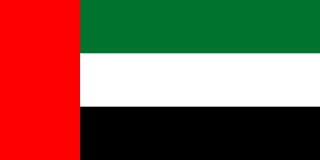
Inside United Arab Emirates’ foreign policy.
Asia · UN voting record, treaty positions, and alliances — every claim primary-sourced.
In short
The UAE is a centralized, activist Gulf state whose foreign policy is set overwhelmingly by President Sheikh Mohamed bin Zayed Al Nahyan and executed through a small federal system dominated by Abu Dhabi, with Dubai shaping the commercial agenda…
Capital
Abu DhabiGovernment
Federal constitutional monarchyUnited Arab Emirates's government & politics
Leadership, governance, and democratic trajectory.


United Arab Emirates's UN voting record
How United Arab Emirates votes at the UN General Assembly — ideological trajectory, voting partners, topic patterns, and key recent roll calls.
Ideological trajectory
Top voting partners
Topic-level voting
Source: Erik Voeten, “United Nations General Assembly Voting Data”, Harvard Dataverse (CC0). Aggregated by Model Diplomat. Last refresh tracked in profile freshness.
United Arab Emirates's foreign policy
Bilateral posture, key relationships, and live diplomatic statements.
Foreign Policy
The UAE runs a hedging foreign policy built around regime security, trade access, and strategic autonomy rather than bloc loyalty. Power is centralized in President Sheikh Mohamed bin Zayed Al Nahyan, while the Ministry of Foreign Affairs executes policy inside a federal system ultimately dominated by Abu Dhabi on security and grand strategy The United Arab Emirates Government Portal, UAE Ministry of Foreign Affairs, Encyclopaedia Britannica. The UAE presents its external line as support for stability, sovereignty, economic openness, and “zero problems” style de-escalation, but in practice it combines diplomacy, selective military projection, and transactional partnerships across rival camps UAE Ministry of Foreign Affairs, Carnegie Endowment for International Peace.
Its interests pyramid is clear. At the top is survival and territorial security, especially freedom of navigation through the Strait of Hormuz and deterrence against spillover from Iran, Yemen, and regional missile and drone threats U.S. Energy Information Administration, IISS Military Balance. Next comes regime security: the Emirati leadership treats internal stability, counter-Islamist politics, and insulation from regional upheaval as core priorities, which helps explain its support for strong state actors and hostility to transnational movements linked to the Muslim Brotherhood European Council on Foreign Relations, Carnegie Endowment for International Peace. Economic interests then shape nearly everything else. The World Bank estimated UAE GDP at about $505 billion in current US dollars in 2023, and the federation’s diplomacy increasingly serves logistics, energy, technology, and investment diversification goals tied to its post-oil strategy World Bank, UAE Ministry of Economy. Status matters too: hosting COP28, serving on the UN Security Council in 2022–2023, and maintaining a dense network of mediation and aid initiatives all support its bid to be treated as a middle power larger than its population would suggest United Nations Security Council, UN Climate Change.
Its bilateral map is deliberately diversified. The United States remains the UAE’s principal security partner; the two states cooperate closely on defense, counterterrorism, and advanced technology, and the U.S. State Department describes the relationship as a long-standing strategic partnership U.S. Department of State. France is another major defense partner, with a permanent French military presence in Abu Dhabi and regular strategic coordination French Ministry for Europe and Foreign Affairs. India is central on trade, diaspora, and maritime connectivity; the Comprehensive Economic Partnership Agreement entered into force in 2022 and sharply raised the relationship’s economic weight Government of India, Ministry of Commerce, UAE Ministry of Foreign Affairs. Relations with Israel expanded after the 2020 Abraham Accords, producing cooperation in trade, technology, and transport even as the Gaza war forced the UAE to harden its public line on Palestinian statehood and humanitarian access U.S. Department of State, UAE Ministry of Foreign Affairs. The key regional nuance is that the UAE no longer defines itself simply through anti-Iran or anti-Turkey rivalry; it restored diplomatic engagement with Tehran in 2022 and has repaired ties with Ankara and Doha when commercial or strategic interests required it Reuters, Reuters, Gulf Cooperation Council.
In multilateral terms, the UAE uses memberships instrumentally rather than ideologically. It is active in the UN, GCC, Arab League, OIC, and OPEC architecture, and it joined BRICS as of 2024, which widened its room to operate between Western and non-Western forums United Nations, Gulf Cooperation Council, BRICS Information Centre. At the UN, Emirati voting generally aligns with Arab and broader Global South positions on Palestine, sovereignty, and development finance, but it is less reflexively anti-Western than many states in those groups UN Digital Library, Security Council Report. Its most useful divergence is this: the UAE often stays inside Arab consensus rhetorically while breaking from it operationally through normalization with Israel, deep security ties with the United States and France


United Arab Emirates's treaties & memberships
UN multilateral treaty positions and IGO memberships.
International Organizations
Society & economy
Macro-economic snapshot and demographic context.
GDP (nominal)
$552.3B
#26/250GDP per capita
$50,273.506
#30/250Currency
—
HDI
0.91
#26/250GDP (nominal USD)
GDP per capita (USD)
Top trading partners


In the news
Stories surfacing across United Arab Emirates’s authoritative outlets, plus headline events and the diplomatic calendar.
Headlines
CFR: Hormuz Crisis Is an Inflection Point
CFR analysis suggests the Hormuz crisis may not favor renewables as coal and oil supply gain traction in the short term.
OPEC's Influence Collapses
With the UAE's exit, OPEC's production increase is deemed symbolic, as the Strait of Hormuz closure limits actual output capabilities.
The Hormuz Inflection Point: Renewable Boom
The U.S.-Iran war impacts global energy supply, pushing renewables and fossil fuels into competition.
Explore United Arab Emirates in depth
Frequently asked questions about United Arab Emirates
Quick answers to the most common questions about United Arab Emirates.
What type of government does United Arab Emirates have?
United Arab Emirates is governed as a federal constitutional monarchy, with its capital at Abu Dhabi.
Who is the head of state of United Arab Emirates?
Mohammed Bin Zayed Al Nahyan is the head of state of United Arab Emirates, in office since 2022-05-14.
Who leads the government of United Arab Emirates?
Mohammed bin Rashid Al Maktoum serves as the head of government of United Arab Emirates.
What is the population of United Arab Emirates?
United Arab Emirates has a population of approximately 11.0 million people, making it the 86th most populous country.
What is the economy of United Arab Emirates like?
United Arab Emirates has a nominal GDP of about $552 billion, or roughly $50,274 per capita.
What languages are spoken in United Arab Emirates?
The official language of United Arab Emirates is Arabic.
When did United Arab Emirates join the United Nations?
United Arab Emirates has been a member of the United Nations since 1971.
Who are United Arab Emirates's closest allies?
United Arab Emirates's key allies include Saudi Arabia, United States, Israel, France, and India.
More about United Arab Emirates
The UAE is a centralized, activist Gulf state whose foreign policy is set overwhelmingly by President Sheikh Mohamed bin Zayed Al Nahyan and executed through a small federal system dominated by Abu Dhabi, with Dubai shaping the commercial agenda [The United Arab Emirates, The Political System](https://u.ae/en/about-the-uae/the-uae-government/political-system-of-the-uae) [Encyclopaedia Britannica, United Arab Emirates](https://www.britannica.com/place/United-Arab-Emirates). Formally it is a federal constitutional monarchy of seven emirates, with Sheikh Mohammed bin Zayed serving as president and ruler of Abu Dhabi and Sheikh Mohammed bin Rashid Al Maktoum serving as vice president, prime minister, and ruler of Dubai [The Presidential Court](https://www.president.gov.ae/en/) [UAE Government, Prime Minister and Rulers](https://u.ae/en/about-the-uae/the-uae-government/the-cabinet). There is no ruling party system in the conventional sense because political parties are not permitted; power runs through hereditary emirate leadership, especially the Abu Dhabi and Dubai ruling families [UAE Government, Political System](https://u.ae/en/about-the-uae/the-uae-government/political-system-of-the-uae) [Freedom House, Freedom in the World 2024: United Arab Emirates](https://freedomhouse.org/country/united-arab-emirates/freedom-world/2024). In world politics, the UAE now acts above its demographic weight by combining financial reach, military modernization, logistics infrastructure, sovereign investment, and unusually flexible diplomacy [Carnegie Endowment for International Peace, The UAE’s New Foreign Policy](https://carnegieendowment.org/research/2024/03/the-united-arab-emirates-new-foreign-policy) [U.S. Department of State, U.S. Relations With the United Arab Emirates](https://www.state.gov/u-s-relations-with-the-united-arab-emirates/). It is a treaty-light but network-heavy power: a close U.S. security partner, a member of the Gulf Cooperation Council and OPEC through mid-2025 reporting, and an early Arab normalizer with Israel under the Abraham Accords [GCC Secretariat](https://www.gcc-sg.org/en-us/Pages/default.aspx) [U.S. Department of State, Abraham Accords Declaration](https://www.state.gov/the-abraham-accords/) [OPEC, UAE Facts and Figures](https://www.opec.org/opec_web/en/about_us/170.htm). At the same time, Abu Dhabi has kept channels open with China, Russia, Iran, India, and Türkiye, reflecting a strategy of strategic diversification rather than bloc loyalty [European Council on Foreign Relations, The UAE’s multi-alignment strategy](https://ecfr.eu/article/the-gulf-and-the-great-powers-strategic-diversification-in-the-uae/) [Carnegie Endowment for International Peace, The UAE’s New Foreign Policy](https://carnegieendowment.org/research/2024/03/the-united-arab-emirates-new-foreign-policy). Its economic profile is the foundation of that posture. The World Bank put UAE GDP at about $505 billion in current US dollars in 2023, with high income levels, heavy hydrocarbon rents, and a large non-oil economy centered on trade, transport, construction, tourism, finance, and services [World Bank Data, GDP current US$ - United Arab Emirates](https://data.worldbank.org/indicator/NY.GDP.MKTP.CD?locations=AE) [IMF, United Arab Emirates 2024 Article IV Consultation Press Release](https://www.imf.org/en/News/Articles/2024/06/24/pr24235-united-arab-emirates-imf-executive-board-concludes-2024-article-iv-consultation). Dubai remains one of the world’s busiest re-export, aviation, and logistics hubs, while Abu Dhabi anchors hydrocarbons, sovereign capital, and strategic industry [DP World, Our Global Network](https://www.dpworld.com/en/what-we-do/ports-and-terminals) [ADNOC, About Us](https://www.adnoc.ae/en/about-us). The IMF said non-hydrocarbon growth remained strong and linked medium-term resilience to diversification, private-sector expansion, and reform rather than oil alone [IMF, United Arab Emirates 2024 Article IV Consultation Press Release](https://www.imf.org/en/News/Articles/2024/06/24/pr24235-united-arab-emirates-imf-executive-board-concludes-2024-article-iv-consultation). Three issues define the UAE’s current trajectory. First is economic diversification with state direction: industrial policy, clean energy investment, technology, and logistics are meant to protect regime wealth and status against long-term oil volatility [UAE Ministry of Industry and Advanced Technology, Operation 300bn](https://moiat.gov.ae/en/strategic-initiatives/operation-300bn) [Masdar, About Us](https://masdar.ae/en/about-masdar). Second is strategic hedging in a harsher region: the UAE wants U.S. security ties without dependence, commercial ties with China without sanctions exposure, and de-escalation with Iran without giving up deterrence [International Crisis Group, The UAE’s Foreign-Policy Balancing Act](https://www.crisisgroup.org/middle-east-north-africa/gulf-and-arabian-peninsula/united-arab-emirates/uaes-foreign-policy-balancing-act) [U.S. Department of State, U.S. Relations With the United Arab Emirates](https://www.state.gov/u-s-relations-with-the-united-arab-emirates/). Third is reputation management: the government markets itself as a climate, technology, and tolerance hub, but that narrative sits alongside persistent criticism over political freedoms, surveillance, and limits on dissent [UN Climate Change, COP28 UAE](https://unfccc.int/cop28) [Human Rights Watch, United Arab Emirates](https://www.hrw.org/middle-east/north-africa/united-arab-emirates). The result is a state whose top priorities are survival, regime security, and post-oil influence, in that order. On survival and regime security, it invests in defense, internal control, and regional de-escalation; SIPRI estimated UAE military spending at $22.3 billion in 2023, about 4.1 percent of GDP [SIPRI Military Expenditure Database, United Arab Emirates](https://milex.sipri.org/sipri). On economics,