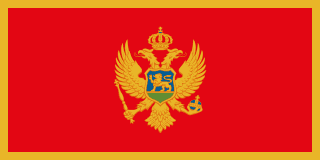
Inside Montenegro’s foreign policy.
Europe · UN voting record, treaty positions, and alliances — every claim primary-sourced.
In short
Montenegro is a small NATO member and EU accession frontrunner whose foreign policy is anchored in Euro-Atlantic integration, but its domestic politics remain fragmented and vulnerable to disputes over identity, judicial reform, and Serbian influence…
Capital
PodgoricaGovernment
Unitary parliamentary republicResearch Montenegro on your topic
Start a Quick answer framed for your committee — official statements, UN votes, and bloc context.
Montenegro's government & politics
Leadership, governance, and democratic trajectory.


Montenegro's UN voting record
How Montenegro votes at the UN General Assembly — ideological trajectory, voting partners, topic patterns, and key recent roll calls.
Ideological trajectory
Top voting partners
Topic-level voting
Source: Erik Voeten, “United Nations General Assembly Voting Data”, Harvard Dataverse (CC0). Aggregated by Model Diplomat. Last refresh tracked in profile freshness.
Montenegro's foreign policy
Bilateral posture, key relationships, and live diplomatic statements.
Foreign Policy
Montenegro’s foreign policy is anchored in one clear hierarchy: EU accession first, NATO credibility second, and regional stability managed tightly enough not to derail either. The government of Prime Minister Milojko Spajić, formed in October 2023, has presented EU membership as the state’s strategic priority, while President Jakov Milatović has likewise framed Montenegro’s external orientation around European integration and alliance commitments Government of Montenegro, President of Montenegro. The formal doctrine is less a standalone grand strategy than a consistent post-independence line set out through foreign ministry messaging, NATO membership since 2017, and the EU accession process opened in 2012: sovereignty protection and Western integration are survival and status interests, while access to EU markets, investment, and rule-of-law conditionality are economic interests Ministry of Foreign Affairs of Montenegro, NATO, European Commission. In capability terms Montenegro is small but institutionally plugged in: about 623,000 people and nominal GDP around $8.3 billion, which gives it limited hard-power leverage but a strong incentive to trade autonomy for institutional shelter in NATO and the EU process World Bank, World Bank.
The decision structure matters because Montenegro’s foreign policy can sound noisier domestically than it behaves externally. Constitutionally, the government and foreign ministry run day-to-day diplomacy, while the president has agenda-setting visibility but not full executive control; when coalition politics fragment, Brussels-facing policy tends to default to the cabinet and the accession bureaucracy because EU chapters, sanctions alignment, and NATO obligations are implemented through government machinery, not presidential rhetoric Constitute Project, Government of Montenegro, European Commission. That helps explain a recurring pattern: internal disputes over identity, church politics, or relations with Serbia generate tactical ambiguity at home, but Montenegro still aligns strongly with the EU’s Common Foreign and Security Policy. The European Commission’s 2023 Montenegro report said the country remained fully aligned with EU foreign and security policy declarations and restrictive measures, including those related to Russia’s war against Ukraine European Commission.
Its key bilateral relationships follow that same hierarchy. The United States, Germany, Italy, and other core NATO and EU states matter because they underwrite Montenegro’s security umbrella and accession path; Washington has consistently backed Montenegro’s NATO role and Euro-Atlantic trajectory, while Berlin and Rome matter disproportionately through EU influence and investment ties U.S. Department of State, NATO. Croatia is important both as an EU/NATO neighbor and as a practical Adriatic partner, though bilateral issues such as border and historical-property questions have periodically complicated the relationship Ministry of Foreign Affairs of Montenegro, European Commission. Serbia is the structurally difficult relationship. Serbia is a major economic and social counterpart, and identity overlap inside Montenegro makes Belgrade impossible to ignore, but Podgorica treats Serbian political influence as a regime-security and sovereignty risk when it appears to spill into domestic politics, religious disputes, or intelligence concerns Balkan Insight, European Commission. Russia, by contrast, moved from investor and tourist source to open security problem after 2016 and especially after 2022; Montenegro joined EU sanctions and expelled Russian diplomats, accepting economic costs to preserve alliance discipline Council of the European Union, European Commission, Radio Free Europe/Radio Liberty.
Multilaterally, Montenegro uses membership as force multiplication. It has been in the UN since 2006, in the OSCE since independence, and in NATO since 2017, while EU accession remains the central organizing framework for domestic reform and external positioning United Nations, OSCE, NATO, European Commission. In the UN General Assembly, Montenegro generally votes with the European and transatlantic mainstream, especially on Ukraine. It voted in favor of the March 2022 resolution demanding Russia immediately withdraw from Ukraine, aligning with most EU and NATO states United Nations Digital Library. That pattern fits its broader behavior better than some domestic commentary suggesting a “bridge” role between East and West. On sanctions, recognition issues, and Euro-Atlantic security, Montenegro has behaved less like a hedging Balkan state and more like a small frontline ally seeking credibility through consistency European Commission, U.S. Department of State.
The analytically useful divergence is not that Montenegro breaks from its


Montenegro's treaties & memberships
UN multilateral treaty positions and IGO memberships.
International Organizations
Society & economy
Macro-economic snapshot and demographic context.
GDP (nominal)
$8.3B
#158/250GDP per capita
$13,263
#90/250HDI
0.832
#49/250GDP (nominal USD)
GDP per capita (USD)


In the news
Coverage from Montenegro’s authoritative outlets and headline events from the last 30 days.
Explore Montenegro in depth
Frequently asked questions about Montenegro
Quick answers to the most common questions about Montenegro.
What type of government does Montenegro have?
Montenegro is governed as a unitary parliamentary republic, with its capital at Podgorica.
Who is the head of state of Montenegro?
Jakov Milatović is the head of state of Montenegro, in office since 2023-05-20.
Who leads the government of Montenegro?
Milojko Spajić serves as the head of government of Montenegro, since 2023-10-31.
What is the population of Montenegro?
Montenegro has a population of approximately 624 thousand people, making it the 171st most populous country.
What is the economy of Montenegro like?
Montenegro has a nominal GDP of about $8 billion, or roughly $13,263 per capita.
What languages are spoken in Montenegro?
The official language of Montenegro is Montenegrin.
When did Montenegro join the United Nations?
Montenegro has been a member of the United Nations since 2006.
Who are Montenegro's closest allies?
Montenegro's key allies include United States, United Kingdom, Germany, Italy, and Croatia.
More about Montenegro
Montenegro is a small NATO member and EU accession frontrunner whose foreign policy is anchored in Euro-Atlantic integration, but its domestic politics remain fragmented and vulnerable to disputes over identity, judicial reform, and Serbian influence European Commission, NATO. It is a unitary parliamentary republic in which the government is led by Prime Minister Milojko Spajić, while President Jakov Milatović holds a directly elected but more limited constitutional role Constitute Project, Government of Montenegro, President of Montenegro. Since the 2023 parliamentary election, Spajić’s Europe Now Movement has led the government through a broad and ideologically mixed coalition, making Montenegro externally pro-Western but internally contested OSCE/ODIHR, Government of Montenegro.
The current government’s core political brand is acceleration toward the European Union alongside fiscal modernization and higher living standards Europe Now Movement, European Commission. That agenda has traction because Montenegro has already opened all EU negotiation chapters and remains the most advanced accession candidate in the Western Balkans Council of the European Union, European Commission. The constraint is not geopolitical orientation but state capacity: Brussels’ recurring concerns are judicial independence, corruption, media pressure, and political polarization, which means the decisive foreign-policy variable is often domestic reform delivery rather than diplomacy abroad European Commission, Freedom House.
Economically, Montenegro is small, service-heavy, and unusually exposed to tourism, external financing, and import dependence World Bank, IMF. The World Bank lists GDP at roughly $8.3 billion in current US dollars, close to the figure in the country context, and identifies services as the dominant share of output World Bank, World Bank. Tourism receipts, construction, and coastal real estate remain major growth drivers, while the country’s use of the euro without being an eurozone member gives monetary stability but leaves adjustment dependent on fiscal policy and external inflows European Commission, IMF. This structure makes Montenegro more internationally connected than its size suggests, but also sensitive to shocks in European demand, energy costs, and investor confidence IMF, World Bank.
Three issues define Montenegro’s current trajectory. First is EU accession: the country’s strategic objective is no longer choosing between East and West, but proving it can deliver rule-of-law benchmarks fast enough to convert candidate status into membership progress Council of the European Union, European Commission. Second is domestic coalition management. Spajić governs with partners that do not share the same view on identity, church-state questions, or relations with Serbia, so cabinet stability directly affects reform credibility Government of Montenegro, Freedom House. Third is security positioning in the Western Balkans: Montenegro is firmly in NATO and aligned with the EU on major external issues, including sanctions policy toward Russia, but it must manage persistent influence campaigns and political spillover from Serbia and the wider region NATO, European Commission.
In the world today, Montenegro matters less for hard power than for what it represents: a test case for whether the EU can still pull a small Balkan state through accession by rewarding reform, and whether a post-DPS political order can become stable without drifting from the West European Council on Foreign Relations, European Commission. Its strategic direction is clearer than its political execution. If the government can keep coalition disputes from blocking judicial and governance reforms, Montenegro remains the likeliest Western Balkan state to move forward fastest with the EU; if not, its main risk is not external realignment but slow internal paralysis European Commission, Freedom House.