

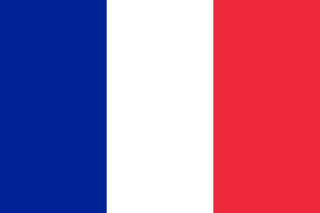
France.
French Republic
In short
France is a nuclear-armed permanent member of the UN Security Council, an EU and NATO heavyweight, and one of the few European states that still tries to act as a strategic power in its own right; that ambition shapes nearly every major foreign-policy choice it makes today [Élysée](https://www. elysee.
Capital
Paris
Government
Unitary semi-president…
France's government & politics
Leadership, governance, and democratic trajectory.


France's UN voting record
How France votes at the UN General Assembly — ideological trajectory, voting partners, topic patterns, and key recent roll calls.
Ideological trajectory
Top voting partners
Topic-level voting
Source: Erik Voeten, “United Nations General Assembly Voting Data”, Harvard Dataverse (CC0). Aggregated by Model Diplomat. Last refresh tracked in profile freshness.
France's foreign policy
Bilateral posture, key relationships, and live diplomatic statements.
Foreign Policy
France’s foreign policy is Gaullist in method even when its coalitions change: it seeks strategic autonomy for Europe, preserves freedom of action through its nuclear deterrent and permanent UN Security Council seat, and treats great-power relevance as a core national interest rather than a luxury [Élysée – Revue nationale stratégique 2022](https://www.elysee.fr/emmanuel-macron/2022/11/09/revue-nationale-strategique-2022), [Ministry for Europe and Foreign Affairs – France at the United Nations](https://www.diplomatie.gouv.fr/en/french-foreign-policy/united-nations/), [NATO – France](https://www.nato.int/cps/en/natohq/topics_52044.htm). The Fifth Republic’s foreign-policy file is heavily presidential; Emmanuel Macron chairs the defence and national security councils and sets the line on Ukraine, Europe, and nuclear policy, while the Quai d’Orsay executes and Parliament has limited ex post influence over most operational choices [Élysée – Institutions and powers of the President](https://www.elysee.fr/en/emmanuel-macron/the-president-of-the-republic-and-the-institutions), [Vie publique – Le Président de la République](https://www.vie-publique.fr/fiches/19494-les-pouvoirs-propres-du-president-de-la-republique), [French Ministry for Europe and Foreign Affairs](https://www.diplomatie.gouv.fr/en/). France’s interests pyramid is unusually clear: survival rests on deterrence, homeland security, and NATO-backed territorial defence; regime and state continuity require control of terrorism spillovers and cyber threats; economic interests center on the EU single market, energy resilience, and export competitiveness; status interests drive activism at the UNSC, G7, and in francophone Africa [Élysée – Revue nationale stratégique 2022](https://www.elysee.fr/emmanuel-macron/2022/11/09/revue-nationale-strategique-2022), [European Commission – France in the EU](https://european-union.europa.eu/principles-countries-history/country-profiles/france_en), [OIF – France](https://www.francophonie.org/).
France is structurally anchored in the EU and NATO, but it resists reducing either to US leadership by another name. Paris has been one of Kyiv’s major European backers since Russia’s full-scale invasion, backing EU sanctions and bilateral military support while arguing that Europe must build its own defence-industrial base and planning capacity [French Ministry of the Armed Forces – Support to Ukraine](https://www.defense.gouv.fr/ukraine), [Council of the European Union – EU restrictive measures in view of Russia’s actions in Ukraine](https://www.consilium.europa.eu/en/policies/sanctions/restrictive-measures-against-russia-over-ukraine/), [Élysée – Revue nationale stratégique 2022](https://www.elysee.fr/emmanuel-macron/2022/11/09/revue-nationale-strategique-2022). Germany is France’s indispensable EU partner through the Élysée and Aachen treaties, but the relationship is cooperative-competitive: both governments back European integration, yet they diverge repeatedly on energy, fiscal rules, industrial policy, and the pace of defence integration [Élysée – Treaty of Aachen](https://www.elysee.fr/en/2019/01/22/treaty-of-aachen), [Bundesregierung – Treaty of Aachen](https://www.bundesregierung.de/breg-en/news/treaty-of-aachen-1570126). With the United States, France is an ally, not a follower; it remains integrated in NATO command but still defends “European strategic autonomy,” especially on defence procurement, Indo-Pacific presence, and the risk of European overdependence on US security guarantees [NATO – France](https://www.nato.int/cps/en/natohq/topics_52044.htm), [European Parliament – Strategic autonomy: concept, issues and challenges](https://www.europarl.europa.eu/thinktank/en/document/EPRS_BRI(2022)733589). The United Kingdom remains a critical security partner through the Lancaster House framework despite Brexit, especially on nuclear cooperation, expeditionary capability, and support for Ukraine [UK Government – Lancaster House treaties](https://www.gov.uk/government/topical-events/uk-france-summit-2023/about), [French Ministry for Europe and Foreign Affairs – Franco-British relations](https://www.diplomatie.gouv.fr/en/country-files/united-kingdom/).
At the UN, France usually votes with the broader European liberal bloc on Ukraine, human rights machinery, sanctions enforcement, and multilateral climate action, and as a permanent Security Council member it uses agenda-setting power that most EU states lack [UN Digital Library – France voting records](https://digitallibrary.un.org/), [UN Security Council – Members](https://main.un.org/securitycouncil/en/content/current-members). The analytical value is in its breaks. France is more willing than some EU partners to use military force abroad under national command, as seen in the Sahel and in strike operations against ISIS, because Paris treats instability on Europe’s southern flank as a direct security problem rather than a distant development issue [French Ministry of the Armed Forces – Opération Chammal](https://www.defense.gouv.fr/operations/operations/operation-chammal), [Assemblée nationale – Mission d’information sur l’évolution de l’opération Barkhane](https://www.assemblee-nationale.fr/). It also diverges inside the Western bloc on Middle East diplomacy: France has paired support for Israel’s security with sharper public criticism of settlement policy, greater openness to Palestinian statehood, and more frequent emphasis on humanitarian ceasefires and international law than Washington typically accepts [French Ministry for Europe and Foreign Affairs – Israel/Palestinian Territories](https://www.diplomatie.gouv.fr/en/country-files/israel-palestinian-territories/), [UN General Assembly – ES-10 resolutions](https://www.un.org/en/ga/10th-emergency-special-session). On China, Paris supports the EU line of “de-risking” rather than full decoupling and preserves space for commercial engagement, which is firmer than some southern EU states but less ideological than recent US policy [European Commission – EU-China: A strategic outlook](https://commission.europa.eu/system/files/2019-03/communication-eu-china-a-strategic-outlook.pdf), [Élysée – State visit to China, April 2023](https://www.elysee.fr/en/emmanuel


France's treaties & memberships
UN multilateral treaty positions and IGO memberships.
International Organizations
Society & economy
Macro-economic snapshot and demographic context.
GDP (nominal)
$3.16T
#7/250GDP per capita
$46,103.084
#33/250Currency
—
HDI
0.90
#28/250GDP (nominal USD)
GDP per capita (USD)
Top trading partners

In the news
Stories surfacing across France’s authoritative outlets, plus headline events and the diplomatic calendar.
Headlines
EU Orders Meta to Restore WhatsApp Rival AI
The European Commission mandates Meta to reinstate AI chatbot access to WhatsApp Business API within five days, citing competition harm.
EU AI Act's High-Risk Rules Activation Soon
The EU AI Act's high-risk system rules will take effect on August 2, marking a significant regulatory milestone for AI.
Macron announces €93 billion in foreign investment at 'Choose France' summit - France 24
Summary: - France’s Choose France summit: President Macron announced €93 billion in foreign investment commitments for France across 71 projects, spanning AI, data centers, logistics, and potential rare-earth initiatives; expected to create over 15,600 jobs. - Major pledges highlighted: - SoftBank: up to €45 billion (potentially €75 billion) for 3.1 GW capacity in Hauts-de-France by 2031; Masayoshi Son to visit Macron. - Amazon: invest >€15 billion in three new logistics
Explore France in depth
Frequently asked questions about France
Quick answers to the most common questions about France.
What type of government does France have?
France is governed as a unitary semi-presidential constitutional republic, with its capital at Paris.
Who is the head of state of France?
Emmanuel Macron is the head of state of France, in office since 2017-05-14.
Who leads the government of France?
Sébastien Lecornu serves as the head of government of France, since 2025-09-09.
What is the population of France?
France has a population of approximately 68.6 million people, making it the 23rd most populous country.
What is the economy of France like?
France has a nominal GDP of about $3.16 trillion, or roughly $46,103 per capita.
What languages are spoken in France?
The official language of France is French.
When did France join the United Nations?
France has been a member of the United Nations since 1945.
Who are France's closest allies?
France's key allies include Germany, United States, United Kingdom, Italy, and Spain.