Keiko Fujimori's Win Accelerates Peru's Decli
Fujimori's presidency marks a shift in Peru's democracy.
Model Diplomat8 min readSouth America
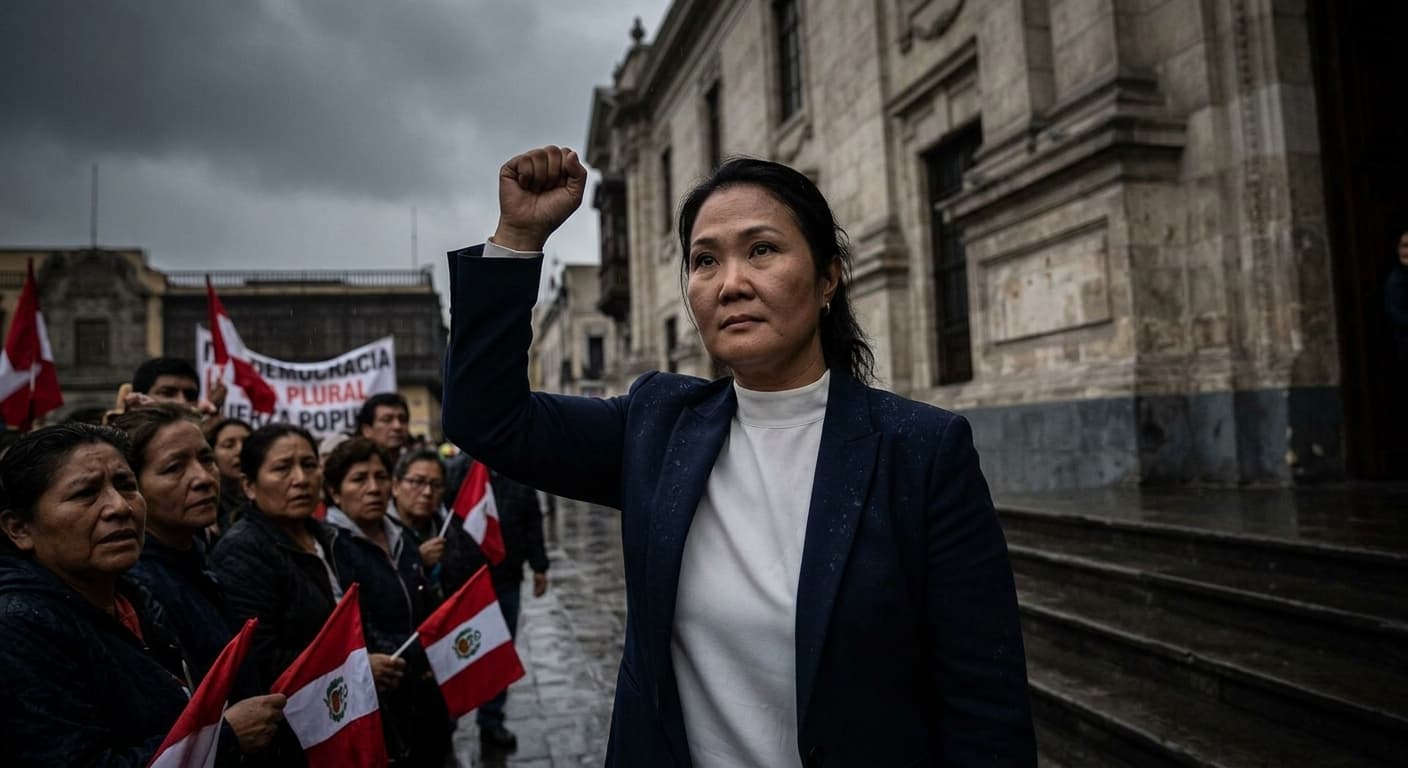
Keiko Fujimori's Win Accelerates Peru's Democratic Decline
Keiko Fujimori won Peru's 2026 runoff by 49,641 votes. With Fuerza Popular's grip on a new bicameral Congress and a 2025 amnesty law already on the books, her presidency inherits a state re-engineered to concentrate power.
Keiko Fujimori will be sworn in as Peru's ninth president in ten years on July 28, 2026, after the National Jury of Elections (JNE) certified her win over leftist Roberto Sánchez by 49,641 votes — 50.135% to 49.865% — according to figures published by the Oficina Nacional de Procesos Electorales and reported by BBC News Mundo. The margin is the story only on the surface. Fujimori inherits a state that Congress and her own party spent the last three years re-engineering to reward the winner and disarm the losers — a 2025 amnesty law that voids hundreds of human rights cases, a bicameral legislature restored under thresholds Fuerza Popular helped write, and a Constitutional Tribunal that has stopped enforcing Inter-American Court rulings. The presidency is the least of her instruments. The machinery already exists; she only has to run it.
The count that took a month, and the concession that came late
The June 7 runoff produced no immediate winner. For 22 days the two campaigns fought over impugned tally sheets district by district, with Fuerza Popular contesting rural boxes where Sánchez led and his Juntos por el Perú challenging Lima strongholds. ONPE closed the count at 100% on June 29, 2026, giving Fujimori 9,223,396 votes to Sánchez's 9,173,755, according to BBC News Mundo. The JNE proclaimed her the winner on July 3. She is the first woman elected to Peru's presidency by popular vote.
Sánchez had spent three weeks denouncing the count as "fraudulent". In a June 23 statement carried by Al Jazeera, he demanded the JNE annul overseas ballots and vowed "a movement of popular and patriotic resistance." He conceded on July 6, saying his party "recognised that the National Elections Board had officially proclaimed the electoral results,"
per Al Jazeera. Election monitors found no evidence for his fraud claims. The historical irony is thick: Fujimori herself refused to accept her 2021 loss to Pedro Castillo by a similar 0.25-point margin, spending weeks alleging fraud that never materialised. The precedent of the losing candidate refusing to concede — which Fujimori set — is now the political norm.
The concession does not dissolve the polarisation. Roughly 49.86% of the electorate voted against a Fujimori restoration, and rural Andean regions where Sánchez won by 20-point margins remain the most likely flashpoint for street mobilisation. The Atlantic Council noted that the last two presidential contests, both lost by Fujimori, were also decided by roughly forty thousand votes — the country is stuck in a 50-50 stalemate that no side has managed to break.
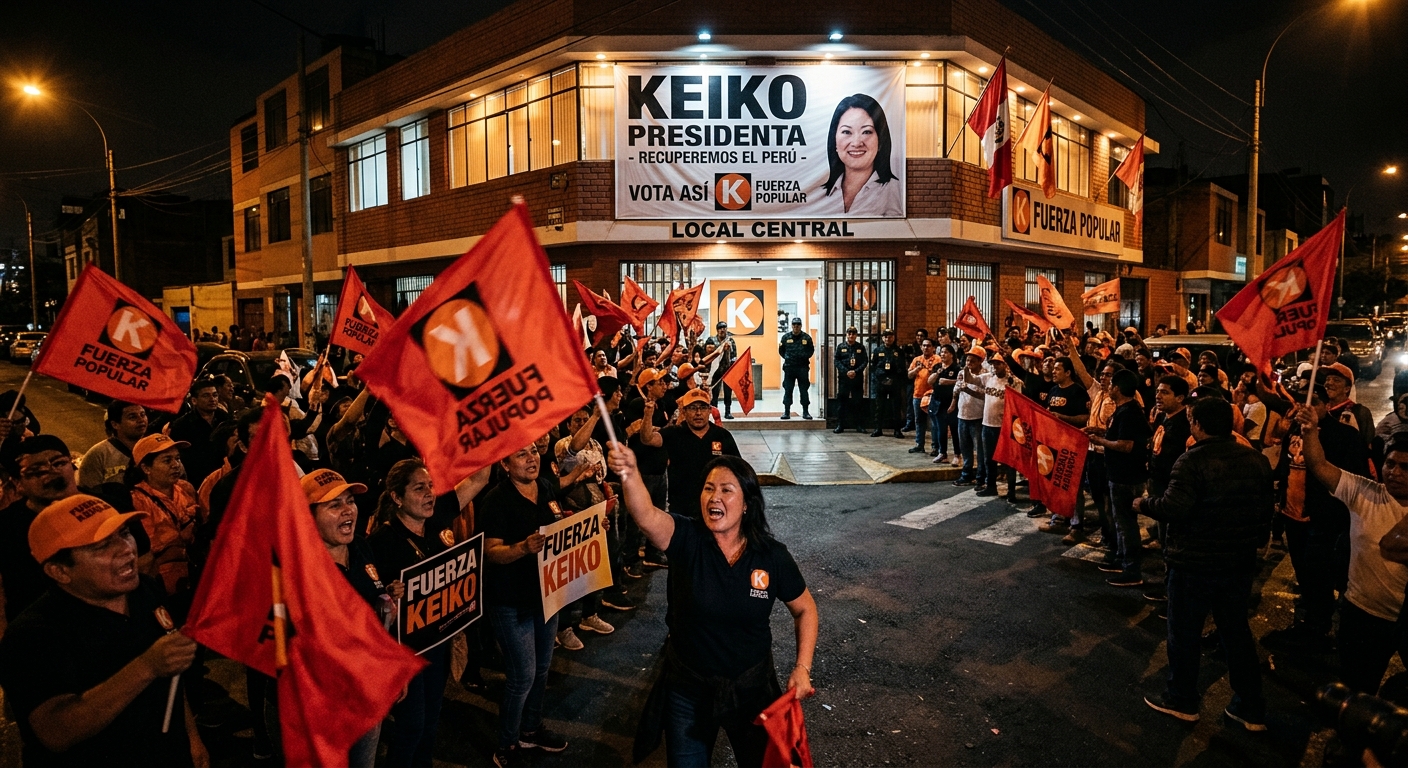
The machinery Fujimori inherits
The 2026 election reconstituted Peru's legislature into a 130-seat Chamber of Deputies and a 60-seat Senate — the first bicameral Congress since 1990, when Alberto Fujimori dissolved it in a self-coup and drafted the 1993 constitution that still governs the country. The rules of the new system were rewritten by the outgoing Congress. A 5% national threshold now requires parties to win at least seven deputies and three senators to keep their legal registration — a filter Al Jazeera reported was pushed through in 2025 and described by critics as "nearly insurmountable" for small parties. Fuerza Popular chaired the Constitutional Committee that drafted it.
Nobody wins an outright majority in the new chamber, but Fuerza Popular is the only bench with institutional memory. According to an Institute of Peruvian Studies analysis published by Crítica y Debate, 22% of its candidates had prior congressional wins and it holds 77% loyalty among its experienced legislators — figures no other bloc approaches. Forty of its 44 returning ex-legislators served in the 2021–2026 cycle, meaning the bench arrives already knowing how to whip votes. The
Atlantic Council judged that "Fujimori's party holds enough Senate and Congress seats to avoid impeachment" — the single legal instrument that has removed six of the last ten Peruvian presidents.
That last point matters. Peru's presidential vacancy mechanism, invoked against Pedro Kuczynski, Martín Vizcarra and Pedro Castillo in five years, requires 87 of 130 votes under the old rules. Under bicameralism, blocking impeachment requires a cohesive one-third minority. Fuerza Popular is engineered for exactly that role — and its own presidential candidate will hold the pen.
The amnesty question, and the court Peru has stopped listening to
The most consequential legislation of the Boluarte interregnum passed in July 2025, before Fujimori was elected. Peru's Congress approved Law No. 32419, granting blanket amnesty to members of the armed forces, national police and civilian self-defence committees accused, investigated or convicted of crimes committed during the 1980–2000 internal armed conflict, and mandating the release of those over 70 already serving sentences. Boluarte signed it on August 13, 2025, Human Rights Watch reported, defying an Inter-American Court order to suspend it. The bill was authored by Fernando Rospigliosi — a Fuerza Popular congressman,
Al Jazeera noted.
UN human rights experts estimated the law could halt or overturn more than 600 pending trials and 156 convictions, according to a BBC News analysis of the measure's reach. The Peruvian Truth and Reconciliation Commission had documented roughly 70,000 deaths and 20,000 disappearances during the conflict, attributing 83% of documented sexual violence cases to state agents. On July 24, 2025, Inter-American Court president Nancy Hernández López ordered Peru to "immediately suspend" the bill's processing, warning it violated the court's binding Barrios Altos jurisprudence. Boluarte publicly rejected the order a week later, telling a police ceremony her government was "free, sovereign and autonomous" and would not permit the court's "intervention,"
per Al Jazeera.
The Boluarte precedent is what Fujimori inherits. In December 2023, Peru's Constitutional Tribunal ordered Alberto Fujimori's release from prison despite a specific Inter-American Court order not to do so — a decision analysed by Jorge Contesse in the American Journal of International Law as the moment Peru effectively abandoned the doctrine of "conventionality control." In August 2024, Congress passed a statute of limitations for crimes against humanity committed before 2002, closing hundreds more investigations. UN human rights experts in December 2025
called the Constitutional Tribunal's ratification of that "impunity law" a "dangerous regression," warning that international law makes crimes against humanity imprescriptible regardless of domestic ruling.
Keiko Fujimori's political record on this is not ambiguous. She and Fuerza Popular championed the 2025 amnesty and the 2024 statute of limitations; both directly benefit officers convicted alongside her father and dismantle the framework built on the Barrios Altos and La Cantuta rulings for which he was sentenced to 25 years. Alejandra Zavaleta, a political scientist quoted by Al Jazeera in June 2026, put it directly: "I do think she wants to subvert constitutional norms and the rule of law. That's just how she has acted and how she has used her power in Congress."
The Freedom House trend, and who benefits
Peru's democratic backsliding predates Fujimori. Freedom House rates Peru "Partly Free" with a 2026 aggregate score of 66/100, down from 70 in 2024 — a four-point slide over two years driven, per the ratings agency, by "modifications to the law on forfeiture of assets" that "weakened accountability measures" and "the congressional majority's efforts to assert control over the attorney general's office." The Political Rights sub-score dropped from 28 to 27 out of 40. Two consecutive years of institutional-quality decline is the pattern researchers use to identify democratic erosion, not democratic crisis.
Public trust has collapsed in parallel. A February 2026 Institute of Peruvian Studies poll published as a PDF recorded 90% disapproval of Congress, unchanged since November. That figure is the raw material of autocratic consolidation: an unpopular legislature, a president elected by 0.27 points, and no institutional referee both sides accept. The
Global Issues analysis published July 3 argued Fujimori "inherits a system so engineered for dysfunction that rather than making compromises, she may decide the concentration of power is her only means of survival."
Who benefits: Fuerza Popular's legislative bloc, the roughly 600 uniformed personnel with cases now stayed under the amnesty, and — bluntly — the Fujimori family, which returns to executive power 26 years after Alberto's fax-in resignation from Tokyo. Keiko has already promised to pardon Pedro Castillo, per Al Jazeera's June 2026 profile, inviting Castillo family members to run for Congress on her ticket — a transactional gesture that neutralises the strongest surviving opposition figure.
Who loses: the National Human Rights Coordinator's coalition of victims' families in the 156 concluded and 600-plus pending cases; the Attorney General's office, whose independence Freedom House flags as under sustained legislative pressure; and, most concretely, the Inter-American human rights system itself. Peru has now defied binding orders on the Alberto Fujimori pardon (2023), the statute of limitations (2024), and the amnesty law (2025). A fourth defiance under President Fujimori would put Lima on the trajectory Human Rights Watch's Juanita Goebertus warned about in August 2025: "Peru is joining the ranks of Nicaragua, Venezuela, and others that defy the Inter-American human rights system."
The historical parallel, and its limits
The temptation is to read Keiko as her father redux. The parallel misleads. Alberto Fujimori seized power in a 1992 self-coup against a fractured opposition and rewrote the constitution around a single-chamber legislature he could dominate. Keiko arrives elected, into a bicameral Congress her party helped design, with no majority. She does not need a self-coup. The 1993 constitution — the one her father wrote and Sánchez campaigned to replace — has been progressively bent by Congress since 2022 to shift power from the presidency to the legislature, a process the Global Issues analysis called a "licence for autocracy" hardwired into the system.
Ricardo Vilca, quoted by Al Jazeera in April 2026, predicted the crisis will worsen because deputies will "not be very satisfied with having a subordinate position in front of the Senate" — moving Peru "from a crisis of two to a crisis of three." Fujimori's leverage lies precisely in that fragmentation: as the only politician with a cohesive national bench in both chambers, she is the equilibrium point. Governing is easier when the alternative is chaos.
What to watch
- July 28, 2026 — Inauguration and Independence Day address. Watch for cabinet picks from her father's 1990–2000 governments (she has said 20% of appointees may fit that profile) and any language on constitutional reform or the Inter-American Court.
- August 2026 — First Inter-American Court hearings on Peruvian compliance under a Fujimori presidency. The court has scheduled ongoing supervision of the Barrios Altos and La Cantuta cases; a formal declaration of non-compliance would trigger reputational and potentially trade consequences.
- First 180 days — Any move to pardon Pedro Castillo, extend the 2025 amnesty, or restructure the Attorney General's office. Each is a leading indicator of whether Fujimori intends to consolidate or moderate.
The Bottom Line
Keiko Fujimori's 49,641-vote victory does not, by itself, end Peruvian democracy — but it removes the last institutional friction on a decade-long process of erosion that Fuerza Popular has directed from Congress. The amnesty law, the statute of limitations, the electoral threshold, the defiance of the Inter-American Court: none of these required her to be president. Now she is, and the machinery is already running.
Discover more
US Politics
Congress Targets AI Chatbot Access for Terror
The House passed the Generative AI Terrorism Risk Assessment Act, focusing on AI's role in terrorism and potential surveillance implications.
India
Rajnath Singh's Durga Squad for 2026 Polls
Rajnath Singh's Durga Squad promised women's safety in Bengal but has since disappeared from the agenda, revealing BJP's true priorities.

US Politics
US Launches $166B Tariff Refund Portal
The US is launching a $166 billion tariff refund portal to aid importers hit by Trump-era tariffs, with major implications for trade and supply costs.

Economics
Fed's Amex AML order puts correspondent banking on notice
Federal Reserve's Amex AML order requires board-level controls and a 90-day plan; OCC fined the bank $350 million over enterprise-wide deficiencies.