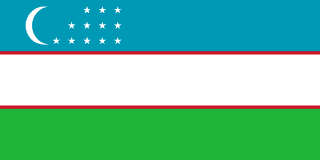
Inside Uzbekistan’s foreign policy.
Republic of Uzbekistan
Asia · UN voting record, treaty positions, and alliances — every claim primary-sourced.
In short
Uzbekistan is the pivotal swing state in Central Asia: a presidential republic whose foreign policy now centers on regime stability at home, economic opening abroad, and balancing Russia, China, the West, and regional neighbors without formal alignment to any one camp…
Capital
TashkentGovernment
Presidential republicUzbekistan's government & politics
Leadership, governance, and democratic trajectory.

Head of state
Shavkat Mirziyoyev
Head of State

Head of government
Abdulla Aripov
Head of Government
Uzbekistan's UN voting record
How Uzbekistan votes at the UN General Assembly — ideological trajectory, voting partners, topic patterns, and key recent roll calls.
Ideological trajectory
Top voting partners
Topic-level voting
Source: Erik Voeten, “United Nations General Assembly Voting Data”, Harvard Dataverse (CC0). Aggregated by Model Diplomat. Last refresh tracked in profile freshness.
Uzbekistan's foreign policy
Bilateral posture, key relationships, and live diplomatic statements.
Foreign Policy
Uzbekistan’s foreign policy is multi-vector by design: it avoids formal bloc dependence, prioritizes regime and state autonomy, and uses regional diplomacy as a buffer against great-power pressure. President Shavkat Mirziyoyev set that line clearly in the updated foreign-policy concept approved in 2024, which states that Uzbekistan will pursue an open, pragmatic, and balanced foreign policy, strengthen Central Asia as the main priority, and not join military blocs or allow foreign military bases on its territory President of Uzbekistan, Constitution of the Republic of Uzbekistan. The decision structure is highly presidential: Mirziyoyev defines strategic direction through the Presidential Administration and the Security Council, while the Ministry of Foreign Affairs executes rather than drives policy President of Uzbekistan, Ministry of Foreign Affairs of Uzbekistan. In interests-pyramid terms, the top tier is survival through border stability, especially around Afghanistan; the second is regime security through insulation from external coercion; the third is economic growth via trade corridors, energy, and investment; the fourth is status, pursued through claims to regional convening power in Central Asia and the Turkic world President of Uzbekistan, Asian Development Bank, World Bank.
That logic explains Tashkent’s bilateral map. Russia remains a major security and labor-migration partner, and remittances from Uzbek citizens working abroad remain economically important, but Uzbekistan has avoided re-entering the Collective Security Treaty Organization and has kept distance from Moscow-led hard-security integration World Bank, CSTO. China is central on infrastructure, lending, and industrial investment, especially through transport and energy projects linked to wider Eurasian connectivity, but Tashkent still resists exclusive dependence on Beijing Ministry of Investment, Industry and Trade of Uzbekistan, Asian Infrastructure Investment Bank. Kazakhstan is Uzbekistan’s key regional counterpart because Central Asian integration works only if Tashkent and Astana coordinate on trade, water, transport, and regional diplomacy; official statements from both sides repeatedly frame the relationship as strategic and region-shaping President of Kazakhstan, President of Uzbekistan. Turkey has grown in importance through the Organisation of Turkic States and defense-industrial, educational, and commercial ties, while South Korea, the United States, and the European Union matter as diversification partners for technology, investment, and market access rather than treaty security Organisation of Turkic States, U.S. Department of State, European Commission.
Regionally, Uzbekistan is active but selective. It is a member of the United Nations, SCO, OIC, Organisation of Turkic States, and Non-Aligned Movement, and it treats these bodies as platforms for flexibility rather than identity commitments United Nations, Shanghai Cooperation Organization, Organisation of Islamic Cooperation, Organisation of Turkic States, Non-Aligned Movement. Its strongest and most consistent regional message is that Central Asia should be handled as a primary political space of its own, visible in repeated Uzbek initiatives on border settlement, transport connectivity, water cooperation, and Afghanistan dialogue President of Uzbekistan, UN Regional Centre for Preventive Diplomacy for Central Asia. That is also where Uzbekistan differs from several neighbors: it is more willing to institutionalize regional consultation outside Russian formats, but less willing than Kazakhstan to bind itself to Moscow-centered economic or military structures such as the Eurasian Economic Union or CSTO Eurasian Economic Union, CSTO.
At the UN, Uzbekistan generally aligns with sovereignty-first positions, support for development, and cautious language on human rights scrutiny, while presenting itself as a constructive middle actor on Afghanistan, sustainable development, and regional cooperation Permanent Mission of Uzbekistan to the UN, UN General Assembly. Its behavior is less ideological than its memberships suggest. The most important divergence is that although Uzbekistan sits in institutions with Russia and China, it does not behave like a reliable anti-Western vote-delivery state; it often prefers abstention, procedural caution, or issue-by-issue positioning over bloc discipline, especially on highly polarized geopolitical resolutions UN Digital Library, Carnegie Endowment for International Peace. It also breaks from parts of the Non-Aligned and OIC rhetorical mainstream by putting transit, investment climate, and functional regionalism ahead of declaratory confrontation with the West President of Uzbekistan, World Bank.
The practical effect is a foreign policy that is more constrained than it looks but also more agile than many formal allies of larger powers. Uzbekistan’s military spending was about 3.0 percent of GDP in SIPRI’s latest available series, giving it credible national defense capacity by regional standards without turning it into an expeditionary actor SIPRI. Its leverage is geographic and diplomatic: the country sits at the center of Central Asia, borders all other mainland Central Asian states plus Afghanistan, and can shape corridor politics across the region Encyclopaedia Britannica, Asian Development Bank. The non-obvious point


Uzbekistan's treaties & memberships
UN multilateral treaty positions and IGO memberships.
International Organizations
Society & economy
Macro-economic snapshot and demographic context.
GDP (nominal)
$115.0B
#67/250GDP per capita
$3,161.7
#152/250Currency
—
HDI
0.73
#101/250GDP (nominal USD)
GDP per capita (USD)
Top trading partners


In the news
Stories surfacing across Uzbekistan’s authoritative outlets, plus headline events and the diplomatic calendar.
Headlines
Uzbekistan’s Ambassador to Kazakhstan on Regional Integration and a Shifting Global Order - The Times Of Central Asia
Summary: An interview with Uzbekistan’s Ambassador to Kazakhstan, Bakhtiyor Ibragimov, highlights Tashkent’s proactive regional diplomacy and reform-led economic strategy. Key points: - Regional integration and economic leadership: Uzbekistan and Kazakhstan are central drivers of Central Asia’s growth, with combined regional GDP around $450 billion as of 2025. Both countries prioritize joint economic projects to bolster regional well-being. - Foreign policy approach: Uzbekis
Uzbekistan Country Report 2026 - BTI Transformation Index
Uzbekistan’s recent foreign policy and political trajectory (2023–2024) shows balancing between pro-Russia alignment and gradual Western/multilateral engagement, alongside evolving domestic politics and economic reform. Key points: - Domestic politics: A 2023 constitutional referendum introduced amendments the report criticizes for historical inaccuracy and distortion, followed by presidential re-election. - Foreign policy posture: Stronger ties with Russia appear to have de
bne IntelliNews - Shavkat Mirziyoyev re-elected as President of Uzbekistan with overwhelming majority
Shavkat Mirziyoyev has been re-elected as Uzbekistan’s president with a large majority in early elections held July 9. Key points: - Outcome: Mirziyoyev won over 87% of the votes; turnout about 79%. - Context: The vote followed constitutional amendments approved in a April referendum, which allowed early presidential elections and expanded presidential powers in governance. - Election framework: Electoral changes were codified on May 6, with the Central Election Commission o
Explore Uzbekistan in depth
Frequently asked questions about Uzbekistan
Quick answers to the most common questions about Uzbekistan.
What type of government does Uzbekistan have?
Uzbekistan is governed as a presidential republic, with its capital at Tashkent.
Who is the head of state of Uzbekistan?
Shavkat Mirziyoyev is the head of state of Uzbekistan, in office since 2016-09-08.
Who leads the government of Uzbekistan?
Abdulla Aripov serves as the head of government of Uzbekistan, since 2016-12-14.
What is the population of Uzbekistan?
Uzbekistan has a population of approximately 36.4 million people, making it the 43rd most populous country.
What is the economy of Uzbekistan like?
Uzbekistan has a nominal GDP of about $115 billion, or roughly $3,162 per capita.
What languages are spoken in Uzbekistan?
The official languages of Uzbekistan are Russian and Uzbek.
When did Uzbekistan join the United Nations?
Uzbekistan has been a member of the United Nations since 1992.
Who are Uzbekistan's closest allies?
Uzbekistan's key allies include Kazakhstan, Türkiye, United States, and South Korea.
More about Uzbekistan
Uzbekistan is the pivotal swing state in Central Asia: a presidential republic whose foreign policy now centers on regime stability at home, economic opening abroad, and balancing Russia, China, the West, and regional neighbors without formal alignment to any one camp [Constitution of the Republic of Uzbekistan](https://lex.uz/docs/6445145), [Ministry of Foreign Affairs of Uzbekistan](https://gov.uz/en/mfa), [BTI Transformation Index 2026: Uzbekistan Country Report](https://bti-project.org/en/reports/country-report/UZB). President Shavkat Mirziyoyev remains the dominant decision-maker after winning a new term in the July 2023 presidential election, while Prime Minister Abdulla Aripov continues to run the cabinet; the Legislative Chamber’s largest pro-presidential force is the Liberal Democratic Party of Uzbekistan (UzLiDeP), which backed Mirziyoyev’s candidacy in the 2023 election [Central Election Commission of Uzbekistan](https://saylov.uz/en), [Government Portal of the Republic of Uzbekistan](https://gov.uz/en), [Inter-Parliamentary Union: Uzbekistan, Oliy Majlis](https://data.ipu.org/content/uzbekistan?chamber_id=13467). In practice, foreign-policy authority is highly centralized in the presidency, with the foreign ministry executing rather than independently setting grand strategy [BTI Transformation Index 2026: Uzbekistan Country Report](https://bti-project.org/en/reports/country-report/UZB), [Ministry of Foreign Affairs of Uzbekistan](https://gov.uz/en/mfa). Uzbekistan’s place in the world is stronger than its raw power would suggest because it sits at the center of every major Central Asian connectivity map. It borders all four other Central Asian republics plus Afghanistan, giving it unmatched regional reach in transport, electricity trade, water diplomacy, and security coordination [Britannica: Uzbekistan](https://www.britannica.com/place/Uzbekistan), [World Bank Overview: Uzbekistan](https://www.worldbank.org/en/country/uzbekistan/overview). Tashkent has used that geography to build a “multi-vector” external posture: it is active in the UN, SCO, OIC, Non-Aligned Movement, and Organisation of Turkic States, while also deepening practical ties with the EU, United States, South Korea, Turkey, Russia, and China rather than treating these relationships as mutually exclusive [Ministry of Foreign Affairs of Uzbekistan](https://gov.uz/en/mfa), [Organisation of Turkic States](https://turkicstates.org/en), [Shanghai Cooperation Organisation: Member States](http://eng.sectsco.org/memberstates/). That makes Uzbekistan less an alliance state than a hedging state, seeking autonomy through diversified partnerships. Its economic profile explains much of that behavior. Uzbekistan had a population of about 36.8 million in 2024, the largest in Central Asia, and the World Bank reported GDP of about $115 billion in current US dollars in 2024, giving Tashkent both a large domestic market and a labor force that matters regionally [World Bank Data: Population, total - Uzbekistan](https://data.worldbank.org/indicator/SP.POP.TOTL?locations=UZ), [World Bank Data: GDP (current US$) - Uzbekistan](https://data.worldbank.org/indicator/NY.GDP.MKTP.CD?locations=UZ). The economy is driven by gold, natural gas, copper, agriculture, remittances, and a state-led industrial and infrastructure push, with gold remaining a major export earner and external buffer through the Central Bank and Navoi mining complex [Observatory of Economic Complexity: Uzbekistan](https://oec.world/en/profile/country/uzb), [World Gold Council: Central bank statistics](https://www.gold.org/goldhub/data/monthly-central-bank-statistics), [U.S. International Trade Administration: Uzbekistan - Country Commercial Guide](https://www.trade.gov/country-commercial-guides/uzbekistan-country-commercial-guide). Reform since 2017 has made the economy more open to trade, investment, and currency convertibility, but the state still holds commanding influence over finance, energy, and strategic sectors [World Bank Overview: Uzbekistan](https://www.worldbank.org/en/country/uzbekistan/overview), [EBRD: Uzbekistan country overview](https://www.ebrd.com/uzbekistan.html). Three issues define Uzbekistan’s current trajectory. The first is controlled political and economic reform: Mirziyoyev has liberalized parts of the economy and public administration, but the political system remains tightly managed, and constitutional changes approved in 2023 reset presidential term counting in a way that can extend his rule [Venice Commission Opinion on Constitutional Amendments in Uzbekistan](https://www.venice.coe.int/webforms/documents/?pdf=CDL-AD(2023)031-e), [Freedom House: Freedom in the World 2025 - Uzbekistan](https://freedomhouse.org/country/uzbekistan/freedom-world/2025). The second is regional integration, especially with Kazakhstan, Kyrgyzstan, and Tajikistan, where Tashkent now treats border management, trade corridors, and electricity and water coordination as core national interests rather than peripheral diplomacy [The Times of Central Asia](https://timesca.com/uzbekistans-ambassador-to-kazakhstan-on-regional-integration-and-a-shifting-global-order/), [World Bank Overview: Uzbekistan](https://www.worldbank.org/en/country/uzbekistan/overview). The third is Afghanistan: Uzbekistan wants border security and suppression of extremist spillover, but it also wants rail, power, and trade links through Afghanistan to South Asia, so its policy mixes caution with sustained engagement [Ministry of Foreign Affairs of Uzbekistan](https://gov.uz/en/mfa), [United States Institute of Peace: Uzbekistan and the Taliban](https://www.usip.org/publications/2023/09/uzbekistan-and-taliban-pragmatic-engagement). The result is a state that is more outward-looking and more ambitious than it was a decade ago, but not more liberal in proportion to its economic opening. Uzbekistan’s core hierarchy of interests is clear: survival and border stability first, regime security second, growth and investment third, and regional status fourth [BTI Transformation Index 2026: Uzbekistan Country Report](https://bti-project.org/en/reports/country-report/UZB), [Constitution of the Republic of Uzbekistan](https://lex.uz/docs/6445145). For MUN delegates, the practical takeaway is that Uzbekistan usually supports sovereignty, non-interference, and pragmatic connectivity projects, but it will judge any proposal by whether it protects domestic control, preserves strategic flexibility, and