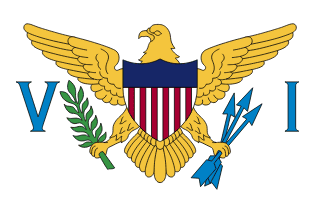
Inside U.S. Virgin Islands’ foreign policy.
Virgin Islands of the United States
Americas · UN voting record, treaty positions, and alliances — every claim primary-sourced.
In short
The U.S. Virgin Islands is not a sovereign state but a self-governing U.S. unincorporated territory, so its external posture is shaped less by independent diplomacy than by how effectively its elected government can extract federal support, manage tourism dependence, and reduce infrastructure vulnerability [U.S. Dep…
Capital
Charlotte Amalie
Government
Unincorporated territo…
U.S. Virgin Islands's government & politics
Leadership, governance, and democratic trajectory.
U.S. Virgin Islands's UN voting record
How U.S. Virgin Islands votes at the UN General Assembly — ideological trajectory, voting partners, topic patterns, and key recent roll calls.
Source: Erik Voeten, “United Nations General Assembly Voting Data”, Harvard Dataverse (CC0). Aggregated by Model Diplomat. Last refresh tracked in profile freshness.
U.S. Virgin Islands's foreign policy
Bilateral posture, key relationships, and live diplomatic statements.
Foreign Policy
The U.S. Virgin Islands does not run an independent foreign policy; its external posture is filtered through Washington, while its government pursues economic diplomacy, disaster recovery, and Caribbean functional cooperation inside powers delegated by U.S. law. The territory remains an unincorporated U.S. territory under the Revised Organic Act, with Governor Albert Bryan Jr. in office and publicly presenting the USVI as a cooperative partner for the current U.S. administration, including on trade and economic outreach to the wider Caribbean Office of the Governor of the U.S. Virgin Islands, Virgin Islands Code, Revised Organic Act materials via Legislature of the Virgin Islands, Virgin Islands News Online, Government House, U.S. Virgin Islands. In practice, the decision structure is hierarchical: treaty-making, recognition, sanctions, defense, and UN representation are controlled by the U.S. federal government, while the territorial government can lobby, host regional meetings, and negotiate commercial or technical links that do not contradict federal authority U.S. Department of the Interior, Office of Insular Affairs, U.S. Department of State.
Its core interests are mostly economic and resilience-driven rather than strategic in the classic sovereign-state sense. Survival-level interests are hurricane preparedness, energy security, and continuity of transport and imports across a small island economy repeatedly exposed to storm damage and external price shocks; Bryan’s office and local reporting in May–June 2026 tied the Iran war and rising fuel costs directly to local economic vulnerability St. John Source, St. John Source. Economic interests come next: tourism, port activity, rum revenues, federal transfers, and access to Caribbean trade flows dominate the territory’s external engagement, and Bryan’s government has explicitly framed regional outreach in 2026 as trade and economic development policy Government House, U.S. Virgin Islands, St. Croix Source, U.S. Department of the Interior, Office of Insular Affairs. Status interests are narrower: the USVI seeks visibility and practical influence in Caribbean bodies, but not diplomatic autonomy from the United States CARICOM, Government House, U.S. Virgin Islands.
The key bilateral relationship is the United States itself, because every hard-power and legal instrument that matters to external affairs runs through federal institutions. The territory’s security umbrella, currency, citizenship framework, border controls, and international legal personality all derive from U.S. sovereignty, making Washington both patron and principal rather than merely a partner U.S. Constitution resources via Congress.gov, U.S. Department of the Interior, Office of Insular Affairs, U.S. Department of Homeland Security. Its next most important external relationships are functional ties with neighboring Caribbean states and territories, especially on tourism, maritime links, disaster response, and commerce. The USVI participates in regional Caribbean forums and cooperation mechanisms, including engagement with CARICOM institutions and the Caribbean Tourism Organization, but it does so as a non-sovereign territory pursuing practical coordination rather than bloc politics CARICOM, Caribbean Tourism Organization. Geography makes the British Virgin Islands and Puerto Rico especially important for ferry, labor, tourism, and emergency-management coordination, even when those links are shaped by U.S. federal customs and immigration rules U.S. Customs and Border Protection, Government House, U.S. Virgin Islands.
At the multilateral level, the decisive fact is that the USVI is not a UN member state and does not cast its own vote in the General Assembly; the United States votes on matters affecting the territory’s formal international position United Nations Member States, U.S. Department of State. That means its UN alignment is, formally, identical to the United States, including on sanctions, recognition questions, and most headline security resolutions United Nations Digital Library, U.S. Mission to the United Nations. The analytically useful divergence is elsewhere: on decolonization and territorial self-determination, the USVI appears in UN processes as a Non-Self-Governing Territory, and local political debate has often been more open to discussing self-determination, constitutional status reform, and international scrutiny than Washington’s broader preference for treating the issue as a domestic constitutional matter United Nations Special Committee on Decolonization, United Nations, NSGT profile for the U.S. Virgin Islands, U.S. Department of the Interior, Office of Insular Affairs. That is the main break from its bloc: not a voting split, since it has no vote, but a structural mismatch between U.S. global diplomacy and the territory’s own unresolved status question.
That asymmetry shapes likely behavior. The USVI will keep aligning outwardly with U.S. federal positions because it lacks the legal tools to do otherwise, but its own external advocacy will stay concentrated on disaster finance, energy resilience, Caribbean market access, and looser practical cooperation with neighboring islands Government House, U.S. Virgin Islands [blocked]
Society & economy
Macro-economic snapshot and demographic context.
GDP (nominal)
$4.7B
GDP per capita
$44,320.909
Currency
—
HDI
—
GDP (nominal USD)
GDP per capita (USD)
In the news
Stories surfacing across U.S. Virgin Islands’s authoritative outlets, plus headline events and the diplomatic calendar.
Headlines
Gov Bryan says Trump has a 'willing partner' in the USVI | Virgin Islands News Online
Governor Albert A. Bryan Jr. used a mid-year IGIA plenary to press federal partners on energy, healthcare equity, and economic development in the U.S. Virgin Islands (USVI). Key points: - National security and energy: Bryan framed reliable, affordable energy as essential to national defense, calling the USVI a strategic gateway to the continental U.S. and saying “President Trump has a willing partner in the US Virgin Islands.” - Port Hamilton refinery: He touted potential to
V.I. Economy Shows Glimmers of Growth, But Real-Time Challenges Persist, Lawmakers Told | St. Croix Source
Summary: - Virgin Islands leaders testified to the 36th Legislature about a cautiously improving economy, but with structural gaps and modernization needs. The Virgin Islands Economic Development Authority (VIEDA) and the Bureau of Economic Research (BER) highlighted growth alongside concerns over funding, transparency, and capacity. - Financial and governance concerns: VIEDA remains largely funded by government appropriations despite semi-autonomous status; lawmakers questio
Governor Bryan Advances Caribbean Trade and Economic…
Summary: - The article reports that Governor Bryan of the United States Virgin Islands participated in Caribbean trade and economic diversification talks in Panama, highlighting ongoing U.S. Virgin Islands efforts to strengthen regional economic ties and diversify its economy through diplomacy and regional cooperation. - Topics touched include foreign policy and diplomacy within the Caribbean, with possible implications for the VI’s economic development, trade relationships,
Explore U.S. Virgin Islands in depth
Frequently asked questions about U.S. Virgin Islands
Quick answers to the most common questions about U.S. Virgin Islands.
What type of government does U.S. Virgin Islands have?
U.S. Virgin Islands is governed as a unincorporated territory of the united states, with its capital at Charlotte Amalie.
What is the population of U.S. Virgin Islands?
U.S. Virgin Islands has a population of approximately 104 thousand people, making it the 202nd most populous country.
What is the economy of U.S. Virgin Islands like?
U.S. Virgin Islands has a nominal GDP of about $5 billion, or roughly $44,321 per capita.
What languages are spoken in U.S. Virgin Islands?
The official language of U.S. Virgin Islands is English.