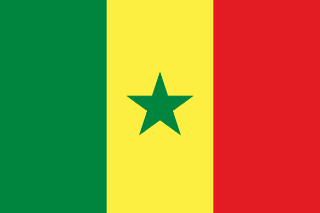
Inside Senegal’s foreign policy.
Republic of Senegal
Africa · UN voting record, treaty positions, and alliances — every claim primary-sourced.
In short
Senegal is in political transition, not strategic drift: President Bassirou Diomaye Faye governs a unitary presidential republic and is trying to convert an anti-establishment electoral mandate into state reform while preserving Senegal’s reputation as one of West Africa’s more stable diplomatic actors…
Capital
DakarGovernment
Unitary presidential republicSenegal's government & politics
Leadership, governance, and democratic trajectory.

Head of state & government
Bassirou Diomaye Faye
Head of State
Senegal's UN voting record
How Senegal votes at the UN General Assembly — ideological trajectory, voting partners, topic patterns, and key recent roll calls.
Ideological trajectory
Top voting partners
Topic-level voting
Source: Erik Voeten, “United Nations General Assembly Voting Data”, Harvard Dataverse (CC0). Aggregated by Model Diplomat. Last refresh tracked in profile freshness.
Senegal's foreign policy
Bilateral posture, key relationships, and live diplomatic statements.
Foreign Policy
Senegal’s foreign policy under President Bassirou Diomaye Faye is still officially framed by the familiar pillars of African solidarity, non-alignment, multilateralism, and regional integration, but the operational shift since 2024 has been toward greater sovereignty in security and economic negotiations, especially with Western partners Presidency of Senegal, Reuters. Faye was sworn in as president on 2 April 2024 after Senegal’s March 2024 election, and under Senegal’s presidential system the presidency, not parliament, is the decisive foreign-policy node Reuters, U.S. Department of State. The hierarchy of interests is clear: regime and state stability come first after a volatile pre-election period; economic sovereignty comes next, especially over hydrocarbons, fisheries, and debt; status matters after that, with Dakar seeking to remain a credible democratic and diplomatic capital in West Africa BTI 2026 Senegal Country Report, World Bank.
Regionally, Senegal remains deeply invested in ECOWAS and the African Union, and it continues to support constitutional rule more consistently than several junta-led Sahel states ECOWAS, African Union. That makes Senegal an important counterweight inside West Africa: it opposed unconstitutional changes of government in principle, yet it has also avoided the maximalist rhetoric or military adventurism that damaged ECOWAS credibility during the Niger crisis International Crisis Group, Reuters. The analytically useful point is that Senegal is pro-ECOWAS but not automatically pro-coercion. It generally aligns with the bloc’s legal norms, then hedges when enforcement risks regional blowback or domestic political cost International Crisis Group, BTI 2026 Senegal Country Report.
Its bilateral map is broad rather than alliance-bound. France remains a major economic and security partner, but Dakar under Faye has pushed a harder sovereignty line, including scrutiny of the long-standing French military presence and defense arrangements Reuters, France Diplomacy. The United States is important on security cooperation, development finance, and democratic signaling; Washington elevated Senegal as a relatively stable coastal partner as instability spread across the Sahel U.S. Department of State, USAID. Turkey has expanded its footprint through construction, trade, and diplomacy, while Gulf partners and China matter as financiers and commercial actors Ministry of Foreign Affairs of Türkiye, IMF. Senegal’s closest practical neighborhood relationships are with The Gambia, where geography makes cooperation on borders and Casamance indispensable, and with Côte d’Ivoire as a fellow pro-market, institutionally engaged West African state U.S. Department of State, World Bank.
At the UN, Senegal’s record usually places it in the African mainstream: strong support for decolonization language, Palestinian statehood, climate finance for developing countries, and sovereignty protections for weaker states UN Digital Library, Ministère de l’Intégration africaine et des Affaires étrangères. It has a long multilateral résumé, including past service on the UN Security Council and active participation in UN peacekeeping diplomacy, which reinforces Dakar’s preference for negotiated legitimacy over unilateral force UN Peacekeeping, UN Security Council. But Senegal often votes with the Global South without fully joining the anti-Western posture that some states attach to those positions. That divergence matters: Dakar seeks bargaining room, not camp politics. It can back African or OIC positions on Palestine and development financing while keeping security and donor ties with Washington, Paris, and international financial institutions intact Organisation of Islamic Cooperation, IMF.
The main constraint on Senegalese foreign policy is domestic. Growth prospects have improved with the start of oil and gas production, but debt pressures, youth unemployment, and demands for visible economic redistribution push any government toward tougher rhetoric on contracts, foreign military access, and external influence IMF, World Bank. That means Senegal is likely to remain one of West Africa’s more cooperative multilateral actors while becoming more transactional in bilateral deals. The non-obvious insight is that Dakar’s break from its bloc is not ideological but procedural: unlike more polarized African states, Senegal rarely advertises defiance for its own sake. It uses moderation as leverage, preserving access across rival camps and converting its reputation for democratic


Senegal's treaties & memberships
UN multilateral treaty positions and IGO memberships.
International Organizations
Society & economy
Macro-economic snapshot and demographic context.
GDP (nominal)
$32.8B
#110/250GDP per capita
$1,773.218
#173/250Currency
—
HDI
0.51
#170/250GDP (nominal USD)
GDP per capita (USD)


In the news
Stories surfacing across Senegal’s authoritative outlets, plus headline events and the diplomatic calendar.
Headlines
Senegal split threatens reforms as Faye reshapes cabinet - Africa Briefing
Summary: Senegal is facing a deepening political split between President Bassirou Diomaye Faye and National Assembly Speaker Ousmane Sonko after Sonko’s PASTEF party declined to join Faye’s new cabinet. The rift threatens to derail reforms and the country’s IMF negotiations at a delicate moment when public finances and debt transparency are under scrutiny. Faye retained key economic minister Cheikh Diba, signaling some continuity in policy while expanding his own influence. T
How a shake-up in Senegal could strengthen Trump’s hand in the Sahel – HCNTimes.com
Summary: - The Senegalese political crisis intensified after President Bassirou Diomaye Faye dismissed Prime Minister Ousmane Sonko, raising concerns about instability and its impact on Senegal’s role in the Sahel. - Faye’s new government, including economist Ahmadou Al Aminou Lo who favors the CFA-Franc, signals a pro-Western tilt and potential warmer relations with the United States. - The shift could enable Washington to strengthen ties with pro-Western, AES-aligned states
BTI 2026 Senegal Country Report
Senegal’s foreign policy under President Faye blends sovereignty rhetoric with continued international engagement. Key points: - Sovereignty and diplomacy - Faye and Sonko emphasize African/Senegalese sovereignty and reducing Western dependence. - France: calls for withdrawal of French troops, but maintains a relatively amicable stance toward France compared with some neighbors. - International relations and influence - Senegal remains a stable, democratic country wit
Diplomatic calendar
Upcoming key dates
- Jul 31, 2027Electionin 10mo
2027 Senegalese parliamentary election
Explore Senegal in depth
Frequently asked questions about Senegal
Quick answers to the most common questions about Senegal.
What type of government does Senegal have?
Senegal is governed as a unitary presidential republic, with its capital at Dakar.
Who is the head of state of Senegal?
Bassirou Diomaye Faye is the head of state of Senegal, in office since 2024-04-02.
What is the population of Senegal?
Senegal has a population of approximately 18.5 million people, making it the 69th most populous country.
What is the economy of Senegal like?
Senegal has a nominal GDP of about $33 billion, or roughly $1,773 per capita.
What languages are spoken in Senegal?
The official language of Senegal is French.
When did Senegal join the United Nations?
Senegal has been a member of the United Nations since 1960.
Who are Senegal's closest allies?
Senegal's key allies include France, The Gambia, Côte d'Ivoire, United States, and Türkiye.
More about Senegal
Senegal is in political transition, not strategic drift: President Bassirou Diomaye Faye governs a unitary presidential republic and is trying to convert an anti-establishment electoral mandate into state reform while preserving Senegal’s reputation as one of West Africa’s more stable diplomatic actors [Presidency of Senegal](https://www.presidence.sn/), [BTI 2026 Senegal Country Report](https://bti-project.org/en/reports/country-report/SEN). After the March 2024 election, Faye took office as president, and recent reporting indicates he reshaped the executive again in May 2026 by dismissing Prime Minister Ousmane Sonko and dissolving the government amid internal friction, a sign that the presidency, not a dual executive, is now the decisive center of foreign and domestic policy [Reuters](https://www.reuters.com/world/africa/senegal-president-sacks-prime-minister-sonko-dissolves-government-2026-05-30/), [Africa Briefing](https://africabriefing.org/2026/06/09/senegal-split-threatens-reforms-as-faye-reshapes-cabinet/). The ruling force remains the PASTEF camp built around Faye and Sonko, but the cabinet rupture matters because Senegal’s external posture will track whether Faye consolidates presidential control or has to bargain with a fragmented reform coalition [BTI 2026 Senegal Country Report](https://bti-project.org/en/reports/country-report/SEN), [Reuters](https://www.reuters.com/world/africa/senegal-president-sacks-prime-minister-sonko-dissolves-government-2026-05-30/). In the world today, Senegal still punches above its economic weight through diplomacy, peace-and-security credibility, and institutional visibility. It is a member of the United Nations, African Union, ECOWAS, the Organisation of Islamic Cooperation, and the Francophonie, giving Dakar access to African, Islamic, and francophone forums that many regional peers cannot bridge as easily [United Nations Digital Library](https://digitallibrary.un.org/), [African Union](https://au.int/en/member_states/countryprofiles2), [ECOWAS](https://www.ecowas.int/member-states/), [Organisation internationale de la Francophonie](https://www.francophonie.org/), [OIC](https://www.oic-oci.org/states/?lan=en). Its foreign policy remains broadly non-revolutionary: pro-multilateral, open to Western security and development partnerships, but increasingly interested in diversifying ties toward Türkiye, Gulf partners, and other nontraditional actors as anti-French sentiment and Sahel instability reshape West African alignments [Chatham House](https://www.chathamhouse.org/2024/04/what-senegals-election-result-means-west-africa), [Responsible Statecraft](https://responsiblestatecraft.org/senegal-trump-sahel/). That makes Senegal important less as a hard-power state than as a regional hinge between Atlantic West Africa, the crisis-hit Sahel, and external powers looking for a reliable partner after ruptures with Mali, Burkina Faso, and Niger [International Crisis Group](https://www.crisisgroup.org/africa/west-africa/senegal), [Responsible Statecraft](https://responsiblestatecraft.org/senegal-trump-sahel/). Economically, Senegal is a lower-middle-income economy with a GDP of about $32.8 billion and a population of roughly 18.5 million, with growth long driven by services, construction, public investment, agriculture, and now hydrocarbons [World Bank](https://data.worldbank.org/country/senegal), [IMF](https://www.imf.org/en/Countries/SEN). The big structural change is energy: offshore oil and gas projects, especially the Sangomar oil field and the Greater Tortue Ahmeyim gas project shared with Mauritania, have raised expectations that Senegal can improve export earnings, fiscal space, and energy security if governance holds [Woodside Energy](https://www.woodside.com/what-we-do/projects/africa/sangomar-field-development-phase-1), [BP](https://www.bp.com/en/global/corporate/what-we-do/bp-worldwide/bp-in-mauritania-and-senegal/gta-project.html), [IMF](https://www.imf.org/en/News/Articles/2024/06/24/pr24244-senegal-imf-staff-completes-2024-article-iv-mission). But the economy is still constrained by high living costs, youth unemployment, fiscal pressure, and dependence on food and energy imports, which is why campaign promises on sovereignty and redistribution have real political weight beyond rhetoric [IMF](https://www.imf.org/en/News/Articles/2024/06/24/pr24244-senegal-imf-staff-completes-2024-article-iv-mission), [World Bank](https://www.worldbank.org/en/country/senegal/overview). Three issues define Senegal’s current trajectory. The first is whether Faye can turn an opposition victory into durable state control without reproducing the same concentration of power his coalition campaigned against; the 2026 cabinet rupture shows that elite cohesion is now a central variable in policy delivery [Reuters](https://www.reuters.com/world/africa/senegal-president-sacks-prime-minister-sonko-dissolves-government-2026-05-30/), [Africa Briefing](https://africabriefing.org/2026/06/09/senegal-split-threatens-reforms-as-faye-reshapes-cabinet/). The second is whether hydrocarbon revenues become a development asset or a governance stress test, especially as public expectations are rising faster than the state’s administrative capacity [IMF](https://www.imf.org/en/News/Articles/2024/06/24/pr24244-senegal-imf-staff-completes-2024-article-iv-mission), [Woodside Energy](https://www.woodside.com/what-we-do/projects/africa/sangomar-field-development-phase-1). The third is Senegal’s security environment: the country has avoided the coups and state breakdown seen across the central Sahel, but instability in Mali and the wider region keeps pressure on border security, migration management, and external security partnerships [International Crisis Group](https://www.crisisgroup.org/africa/west-africa/senegal), [Chatham House](https://www.chathamhouse.org/2024/04/what-senegals-election-result-means-west-africa). The key read for delegates is that Senegal