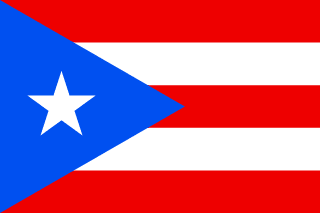
Inside Puerto Rico’s foreign policy.
Commonwealth of Puerto Rico
Americas · UN voting record, treaty positions, and alliances — every claim primary-sourced.
In short
Puerto Rico is not a sovereign state but a self-governing unincorporated territory of the United States, so its external room for maneuver is structurally limited by Washington even when its domestic politics point toward greater autonomy or sovereignty [U. S.
Capital
San Juan
Government
Unincorporated territo…
Puerto Rico's government & politics
Leadership, governance, and democratic trajectory.
Puerto Rico's UN voting record
How Puerto Rico votes at the UN General Assembly — ideological trajectory, voting partners, topic patterns, and key recent roll calls.
Source: Erik Voeten, “United Nations General Assembly Voting Data”, Harvard Dataverse (CC0). Aggregated by Model Diplomat. Last refresh tracked in profile freshness.
Puerto Rico's foreign policy
Bilateral posture, key relationships, and live diplomatic statements.
Foreign Policy
Puerto Rico does not run a sovereign foreign policy; Washington holds treaty-making, defense, sanctions, and UN representation under the U.S. territorial framework, while San Juan’s external action is limited to cultural, commercial, and intergovernmental outreach that does not contradict federal law U.S. Department of State, Foreign Affairs Manual U.S. Constitution, Article IV Puerto Rico Federal Affairs Administration. That decision structure is the key fact: the governor and Puerto Rico’s Department of State can pursue trade promotion, diaspora ties, and relations with Caribbean and Latin American governments, but the United States decides recognition, security alignments, and votes in multilateral bodies Department of State of Puerto Rico U.S. Department of State, Office of Insular Affairs and territorial status materials.
Puerto Rico’s stated external posture is pragmatic and status-conscious rather than doctrinal. The island’s own institutions emphasize economic development, disaster recovery, migration management, transportation links, and regional cooperation with the Caribbean and the Americas, especially where those ties can attract investment or improve resilience after hurricanes and fiscal crisis Puerto Rico Department of Economic Development and Commerce FEMA, Puerto Rico disaster recovery updates World Bank national accounts data, Puerto Rico profile. In interest-pyramid terms, survival means access to U.S. federal protection and disaster assistance; regime security means preserving the territorial government’s room to maneuver inside the U.S. system; economic interest means securing shipping, tourism, pharmaceuticals, and federal transfers; status means keeping Puerto Rico visible in hemispheric forums despite lacking sovereignty Congressional Research Service, Puerto Rico Political Status and Background U.S. Bureau of Economic Analysis, Puerto Rico Economy. That is why even leaders who favor statehood, free association, or independence often converge on the same near-term external priorities: market access, reconstruction funds, and regional connectivity Puerto Rico Status Act materials, U.S. House Committee on Natural Resources.
Its most important bilateral relationship is overwhelmingly the United States. Puerto Rico uses the U.S. dollar, depends on federal transfers, falls under U.S. customs and cabotage rules, and relies on U.S. military protection, while Puerto Ricans are U.S. citizens and move freely to the mainland, making migration and diaspora politics central to any external strategy U.S. Department of the Treasury U.S. Customs and Border Protection Congressional Research Service, The Puerto Rican Diaspora Jones Act overview, U.S. Maritime Administration. Outside that core relationship, Puerto Rico’s practical links are strongest with the Dominican Republic and the wider Caribbean basin through trade, ferry and air connections, migration, and shared exposure to hurricanes and energy shocks U.S. Census Bureau, Trade in Goods with Puerto Rico and Caribbean partners Dominican Republic Ministry of Foreign Affairs Caribbean Tourism Organization. It also maintains sub-sovereign participation in Iberian and Latin American cultural spaces, including sports and educational bodies, because those platforms let Puerto Rico project a distinct identity without crossing the legal line into sovereign diplomacy Olympics.com, Puerto Rico UNESCO associated activities and education networks.
In multilateral terms, Puerto Rico is absent where sovereign states matter most. It is not a UN member and does not cast votes in the General Assembly; the United States speaks for the territory internationally, while the UN Special Committee on Decolonization periodically adopts resolutions calling on the United States to facilitate Puerto Rico’s right to self-determination and independence United Nations Member States UN Digital Library, Special Committee on Decolonization resolutions on Puerto Rico United Nations, Fourth Committee and decolonization materials. That creates an unusual alignment pattern: Puerto Rico is formally embedded in the U.S. diplomatic bloc, but its status question is often championed at the UN by states that are otherwise critical of Washington, including Cuba, Nicaragua, and Venezuela UN Digital Library, Puerto Rico debate records Cuba Ministry of Foreign Affairs Government of Venezuela, foreign ministry statements. The island therefore has no independent UN voting record to analyze; the real data point is the gap between U.S. representation and the recurring international framing of Puerto Rico as a decolonization case United Nations, C-24 background.
The most analytically useful divergence is not a vote but a split between bloc placement and political identity. Puerto Rico sits inside the U.S. strategic, monetary, and legal system, yet many Latin American and Caribbean governments treat it rhetorically as a non-self-governing nation whose final status is unfinished UN Digital Library CELAC summit declarations archive. That means Puerto Rico can appear, depending on venue, either as part of the United States or as a subject of anti-colonial diplomacy. The 2024 election cycle sharpened that ambiguity because gains by sovereignty-oriented forces increased the visibility of free association and independence arguments even though no status change occurred in law, so San Juan’s external messaging may become more distinct from Washington’s tone on Caribbean and Latin American issues without acquiring actual sovereign instruments Puerto Rico State Elections Commission Reuters coverage of Puerto Rico politics Congressional Research Service, Puerto Rico Status Debate. For MUN purposes, the correct read is narrow: Puerto Rico’s behavior usually tracks U.S
Society & economy
Macro-economic snapshot and demographic context.
GDP (nominal)
$126.0B
#62/250GDP per capita
$39,343.715
#40/250Currency
—
HDI
—
GDP (nominal USD)
GDP per capita (USD)
In the news
Stories surfacing across Puerto Rico’s authoritative outlets, plus headline events and the diplomatic calendar.
Headlines
2024 Elections Signal Shift Towards Puerto Rico's Sovereignty
Summary: The Hill argues the 2024 Puerto Rico elections signaled a shift toward sovereignty, with pro-statehood results diluted by a strong showing for independence and significant support for a “free association” option in a referendum. The piece contends current territorial status fuels fiscal distress (about $120B debt and pension crisis) and creates governance inefficiencies, suggesting independence would better align Puerto Rico’s self-determination with U.S. interests.
Foreign and intergovernmental relations of Puerto Rico - Wikipedia
Summary: - Legal framework: Puerto Rico’s foreign and intergovernmental relations operate under the U.S. Constitution’s Commerce and Territorial Clauses, placing Puerto Rico under Congress’s plenary powers. Foreign relations require U.S. approval (State Department or Congress) and are largely governed by existing U.S. laws and trade agreements. - Practical relations: Puerto Rico maintains relations with certain foreign nations (notably Hispanic American countries like Colombi
How Trump Uses Puerto Rico to Attack Venezuela and Beyond
Summary: - The article examines how Donald Trump uses Puerto Rico to advance a broader political agenda against Venezuela and other regional issues, highlighting a substantial U.S. military buildup on the island. - It describes ongoing deployments and logistical supports (e.g., a $32 million DoD food contract, Navy/Navy testing near the island, temporary flight restrictions) and frames these moves as part of a strategy to project regional power and counter alleged drug-cartel
Explore Puerto Rico in depth
Frequently asked questions about Puerto Rico
Quick answers to the most common questions about Puerto Rico.
What type of government does Puerto Rico have?
Puerto Rico is governed as a unincorporated territory of the united states, with its capital at San Juan.
What is the population of Puerto Rico?
Puerto Rico has a population of approximately 3.2 million people, making it the 135th most populous country.
What is the economy of Puerto Rico like?
Puerto Rico has a nominal GDP of about $126 billion, or roughly $39,344 per capita.
What languages are spoken in Puerto Rico?
The official languages of Puerto Rico are English and Spanish.