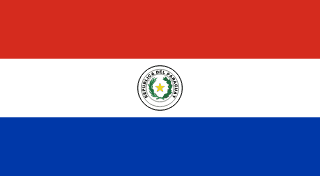
Inside Paraguay’s foreign policy.
Republic of Paraguay
Americas · UN voting record, treaty positions, and alliances — every claim primary-sourced.
In short
Paraguay is a conservative, landlocked presidential republic whose foreign policy is shaped less by ideology than by three hard constraints: dependence on neighbors for trade routes, dependence on hydropower for export earnings, and its unusual decision to maintain diplomatic relations with Taiwan rather than the…
Capital
AsunciónParaguay's government & politics
Leadership, governance, and democratic trajectory.

Paraguay's UN voting record
How Paraguay votes at the UN General Assembly — ideological trajectory, voting partners, topic patterns, and key recent roll calls.
Ideological trajectory
Top voting partners
Topic-level voting
Source: Erik Voeten, “United Nations General Assembly Voting Data”, Harvard Dataverse (CC0). Aggregated by Model Diplomat. Last refresh tracked in profile freshness.
Paraguay's foreign policy
Bilateral posture, key relationships, and live diplomatic statements.
Foreign Policy
Paraguay’s foreign policy is conservative, trade-focused, and unusually defined by one diplomatic exception: it is the only South American state that recognizes Taiwan rather than the People’s Republic of China, a choice President Santiago Peña has reaffirmed in office while linking it to democratic values and long-term partnership with Taipei Presidency of Paraguay, Ministry of Foreign Affairs of Paraguay, Reuters. Peña took office on 15 August 2023 after winning the April 2023 election, and foreign policy remains strongly presidential, with the foreign ministry implementing rather than independently setting grand strategy Tribunal Superior de Justicia Electoral, Presidency of Paraguay, Ministry of Foreign Affairs of Paraguay. The ruling Colorado Party’s long dominance matters because continuity, not ideological experimentation, is the default external posture; Paraguay prioritizes regime stability, export access, and room to maneuver between larger neighbors Brazil and Argentina BBC, International Crisis Group.
Its core interests sit in a clear hierarchy. Survival and state security are less about interstate war than about border control, organized crime, and sovereignty over strategic infrastructure, especially the Itaipú and Yacyretá hydroelectric arrangements with Brazil and Argentina Ministry of Foreign Affairs of Paraguay, Itaipu Binacional, U.S. Department of State. Economic interest comes next and is immediate: Paraguay depends heavily on agricultural exports, hydropower, river logistics, and access to Mercosur markets, while seeking investment without conceding political autonomy World Bank, IMF, Mercosur. Status concerns are more modest but real. As a small landlocked state, Paraguay uses legalism, multilateral participation, and its Taiwan relationship to raise its diplomatic profile beyond what its material weight would normally allow United Nations Digital Library, Ministry of Foreign Affairs of Paraguay.
Brazil and Argentina are the indispensable bilateral relationships because geography leaves Paraguay economically and physically tied to both. Brazil is central through Itaipú, trade, and security cooperation, while Argentina matters through the Paraná-Paraguay waterway, Yacyretá, and Mercosur politics Itaipu Binacional, Entidad Binacional Yacyretá, Mercosur. The United States has become a higher-value partner on anti-corruption, sanctions, security assistance, and investment signaling, especially after Washington imposed sanctions and corruption designations on powerful Paraguayan political actors in recent years U.S. Department of State, U.S. Treasury. Taiwan remains Paraguay’s most distinctive political partner, providing development finance, scholarships, and technology cooperation, but the relationship carries a visible economic tradeoff because Paraguayan producers and business groups periodically push for access to the Chinese market Reuters, The China-Global South Project, The Straits Times.
Regionally, Paraguay is a member of Mercosur, CELAC, the OAS, and the UN, and it usually behaves like a procedural multilateralist rather than a bloc entrepreneur Mercosur, CELAC, OAS, United Nations. In the UN, it generally aligns with Latin American majorities on sovereignty, development, and international law, but it breaks sharply from much of South America on China-Taiwan questions and often takes more pro-Israel and more U.S.-compatible positions than left-led governments in the region UN Digital Library, UN Voting Data, Ministry of Foreign Affairs of Paraguay. That divergence is analytically more important than its routine Mercosur behavior. On paper Paraguay belongs to a South American grouping where nearly every government recognizes Beijing; in practice it uses Taiwan recognition as a signal of ideological reliability to Washington and Taipei and as proof that it will not automatically follow regional consensus when regime identity and elite networks point elsewhere Reuters, The China-Global South Project.
The break from its bloc is therefore not rhetorical but structural. Mercosur’s larger members have deep commercial ties to China and often frame foreign policy around strategic autonomy, while Paraguay accepts foregone opportunities with Beijing to preserve a diplomatic relationship no neighbor shares Mercosur, Reuters. That choice also shapes its behavior on wider issues: Paraguay is more comfortable with U.S. security cooperation, more skeptical of anti-Western alignment language, and more likely to define democracy in explicitly ideological terms than some regional partners U.S. Department of State, OAS, Ministry of Foreign Affairs of Paraguay. The main vulnerability is that this foreign policy rests on a narrow domestic coalition. If export interests


Paraguay's treaties & memberships
UN multilateral treaty positions and IGO memberships.
International Organizations
Society & economy
Macro-economic snapshot and demographic context.
GDP (nominal)
$44.5B
#100/250GDP per capita
$6,416.097
#122/250Currency
—
HDI
0.72
#107/250GDP (nominal USD)
GDP per capita (USD)
Top trading partners


In the news
Stories surfacing across Paraguay’s authoritative outlets, plus headline events and the diplomatic calendar.
Headlines
China’s Push in Paraguay Meets Taiwan’s Tech Diplomacy - The China-Global South Project
Summary: - The Paraguay–Taiwan relationship remains strong, with Paraguayan President Santiago Peña’s May visit to Taipei signaling continued strategic and technological cooperation rather than a shift toward Beijing. - The visit resulted in three memoranda of understanding focused on artificial intelligence, cybersecurity, and judicial/criminal cooperation, highlighting a pivot toward tech-driven diplomacy. - Despite some ambiguous signals about engagement with China, Peña r
How China is wooing Paraguay’s political class away from longtime ally Taiwan | The Straits Times
China is intensifying its push to redraw Paraguay’s foreign-policy orientation, aiming to shift Paraguay’s recognition from Taiwan to Beijing. Key points: - Paraguay is Taiwan’s last diplomatic ally in South America; Beijing’s outreach targets Paraguayan lawmakers and officials with economic, healthcare, and infrastructure incentives. - Chinese officials emphasize the long-term economic and strategic benefits of switching recognition, countering Taiwan’s assistance (parliame
Paraguay and South America’s moment in a fractured world - UPI.com
Paraguay is presented as a standout among South American economies for investors, not because of size, but because of stability, low costs, and regional access. Key points: - Economic and policy foundation: Prudent macro management, moderate inflation, competitive tax policy, and investment-grade ratings (Moody’s and S&P; Fitch just below) build credibility for international investors. - Regional integration: Strong linkage to MERCOSUR (Brazil and Argentina) with added relev
Diplomatic calendar
Upcoming key dates
- Jan 1, 2028Electionin 1y
next Paraguayan general election
Explore Paraguay in depth
Frequently asked questions about Paraguay
Quick answers to the most common questions about Paraguay.
What type of government does Paraguay have?
Paraguay is governed as a unitary presidential constitutional republic, with its capital at Asunción.
Who is the head of state of Paraguay?
Santiago Peña Palacios is the head of state of Paraguay, in office since 2023-04-30.
What is the population of Paraguay?
Paraguay has a population of approximately 6.9 million people, making it the 108th most populous country.
What is the economy of Paraguay like?
Paraguay has a nominal GDP of about $44 billion, or roughly $6,416 per capita.
What languages are spoken in Paraguay?
The official languages of Paraguay are Guaraní and Spanish.
When did Paraguay join the United Nations?
Paraguay has been a member of the United Nations since 1945.
Who are Paraguay's closest allies?
Paraguay's key allies include Brazil, Argentina, and Uruguay.
More about Paraguay
Paraguay is a conservative, landlocked presidential republic whose foreign policy is shaped less by ideology than by three hard constraints: dependence on neighbors for trade routes, dependence on hydropower for export earnings, and its unusual decision to maintain diplomatic relations with Taiwan rather than the People’s Republic of China [Constitution of Paraguay](https://www.bacn.gov.py/leyes-paraguayas/958/constitucion-nacional), [Presidency of Paraguay](https://www.presidencia.gov.py/), [Ministry of Foreign Affairs of Paraguay](https://www.mre.gov.py/). President Santiago Peña, inaugurated in August 2023, governs with the long-dominant Colorado Party, which also holds strong institutional reach across Congress, subnational politics, and the state apparatus, giving the executive broad room to set external policy even as business lobbies and party factions matter in practice [Tribunal Superior de Justicia Electoral](https://tsje.gov.py/), [Presidency of Paraguay](https://www.presidencia.gov.py/), [Freedom House – Paraguay](https://freedomhouse.org/country/paraguay/freedom-world/2024). The political system is a unitary presidential constitutional republic in which the president is both head of state and head of government, elected separately from the legislature, with foreign policy formally run by the executive through the foreign ministry but heavily conditioned by the presidency and by congressional politics around treaties, energy, and trade [Constitution of Paraguay](https://www.bacn.gov.py/leyes-paraguayas/958/constitucion-nacional), [Chamber of Senators of Paraguay](https://www.senado.gov.py/), [Ministry of Foreign Affairs of Paraguay](https://www.mre.gov.py/). Peña’s government presents itself as pro-market, fiscally orthodox, and open to foreign investment; that line is backed by continued engagement with the IMF under a Policy Coordination Instrument and Resilience and Sustainability Facility review completed in 2026 [IMF](https://www.imf.org/en/Publications/CR/Issues/2026/06/03/Paraguay-Sixth-Review-Under-the-Policy-Coordination-Instrument-and-Fourth-Review-Under-570000). The ruling Asociación Nacional Republicana–Partido Colorado remains the decisive governing machine, and the opposition is competitive but fragmented, which lowers the immediate risk of a foreign-policy break despite periodic domestic controversy over corruption and patronage [Tribunal Superior de Justicia Electoral](https://tsje.gov.py/), [Freedom House – Paraguay](https://freedomhouse.org/country/paraguay/freedom-world/2024). In the world today, Paraguay matters more than its size suggests because it sits at the junction of South American trade corridors, co-owns the Itaipu and Yacyretá dams with Brazil and Argentina, and occupies a strategic outlier position in cross-Strait diplomacy as South America’s only state that recognizes Taiwan [Itaipu Binacional](https://www.itaipu.gov.py/), [Yacyretá](https://www.eby.gov.py/), [Ministry of Foreign Affairs of Paraguay](https://www.mre.gov.py/). That choice gives Asunción access to Taiwanese aid, investment, and political visibility, but it also imposes opportunity costs in trade with China and has become one of the clearest tests of Paraguay’s external alignment as Beijing increases pressure through commercial and political channels [Ministry of Foreign Affairs of Taiwan](https://en.mofa.gov.tw/), [Reuters](https://www.reuters.com/), [The China-Global South Project](https://chinaglobalsouth.com/). Paraguay still works comfortably inside Mercosur and the OAS, but its diplomacy is unusually transactional: it wants market access, infrastructure, and security cooperation without surrendering autonomy on Taiwan or on energy bargaining with Brazil and Argentina [Mercosur](https://www.mercosur.int/), [Organization of American States](https://www.oas.org/), [Ministry of Foreign Affairs of Paraguay](https://www.mre.gov.py/). Economically, Paraguay is small but stable by regional standards, with output driven by agriculture, livestock, electricity exports, commerce, and light manufacturing linked to regional value chains [World Bank](https://data.worldbank.org/country/paraguay), [IMF](https://www.imf.org/en/Countries/PRY), [Banco Central del Paraguay](https://www.bcp.gov.py/). Soybeans, beef, and electricity are central external earners, while the country’s hydropower surplus gives it a structural advantage few peers have, even if that advantage depends on bilateral treaty management rather than simple market power [Banco Central del Paraguay](https://www.bcp.gov.py/), [Itaipu Binacional](https://www.itaipu.gov.py/), [USDA Foreign Agricultural Service](https://www.fas.usda.gov/). The core economic model is export-oriented and relatively orthodox on macro policy, but it is vulnerable to commodity cycles, climate shocks affecting river transport and agriculture, and the costs of being landlocked, which make relations with Brazil and Argentina an economic necessity, not a preference [World Bank](https://www.worldbank.org/en/country/paraguay), [IMF](https://www.imf.org/en/Countries/PRY), [ECLAC](https://www.cepal.org/en/countries/paraguay). Three issues define Paraguay’s current trajectory. First is the Taiwan-China question: Peña has publicly defended ties with Taipei, but exporters and some political actors continue pressing for access to the Chinese market, making recognition policy a live strategic debate rather than settled doctrine [Presidency of Paraguay](https://www.presidencia.gov.py/), [Ministry of Foreign Affairs of Paraguay](https://www.mre.gov.py/), [The Straits Times](https://www.straitstimes.com/). Second is energy sovereignty, especially the management of Itaipu revenues and terms with Brazil, because hydropower is both an economic asset and a symbol of national leverage [Itaipu Binacional](https://www.itaipu.gov.py/), [Government of Brazil](https://www.gov.br/), [Reuters](https://www.reuters.com/). Third is security and state capacity: Paraguay is not a major military power, but it faces persistent concerns over smuggling, organized crime, and border governance in the Tri-Border Area, which is pushing Asunción toward closer security cooperation with the United States and regional partners while keeping a strong emphasis on internal order [U.S. Department of State](https://www.state.gov/), [InSight Crime](https://insightcrime.org/), [Ministry of Interior of Paraguay](https://www.mdi.gov.py