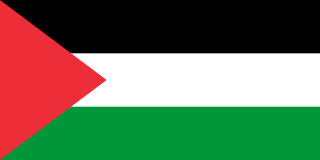
Inside Palestine’s foreign policy.
State of Palestine
Asia · UN voting record, treaty positions, and alliances — every claim primary-sourced.
In short
Palestine is diplomatically influential but institutionally fragmented: the State of Palestine is recognized by a large majority of UN member states and holds UN non-member observer state status, yet it does not control all the territory it claims and its politics remain split between the Palestinian Authority in the…
Capital
RamallahPalestine's government & politics
Leadership, governance, and democratic trajectory.


Palestine's UN voting record
How Palestine votes at the UN General Assembly — ideological trajectory, voting partners, topic patterns, and key recent roll calls.
Source: Erik Voeten, “United Nations General Assembly Voting Data”, Harvard Dataverse (CC0). Aggregated by Model Diplomat. Last refresh tracked in profile freshness.
Palestine's foreign policy
Bilateral posture, key relationships, and live diplomatic statements.
Foreign Policy
Palestinian foreign policy is built around one priority: preserving the international claim to Palestinian statehood while trying to convert diplomatic recognition into pressure on Israel to end the occupation and accept a two-state settlement on the 1967 lines with East Jerusalem as the capital Palestinian Basic Law via Palestinian Legislative Council archive Ministry of Foreign Affairs and Expatriates of the State of Palestine UN General Assembly Resolution 67/19. The formal line is multilateralist and legalist: Palestine seeks UN membership, wider bilateral recognition, and accountability through the International Court of Justice and International Criminal Court rather than military balancing, in part because the Palestinian Authority does not control borders, airspace, or a conventional army UN General Assembly Resolution 67/19 International Criminal Court, State of Palestine ICJ, Legal Consequences arising from the Policies and Practices of Israel in the Occupied Palestinian Territory, including East Jerusalem. Decision-making is fragmented: President Mahmoud Abbas remains chairman of the PLO Executive Committee and president of the State of Palestine, while Prime Minister Mohammad Mustafa heads the Palestinian Authority government formed in March 2024, but the PLO and presidency still dominate the external file Palestinian News & Info Agency (WAFA), decree on formation of government PLO Executive Committee.
Its interests pyramid is unusually clear. Survival means preventing permanent territorial fragmentation of the West Bank and Gaza and resisting any diplomatic formula that treats Gaza separately from the rest of the occupied Palestinian territory UN Office for the Coordination of Humanitarian Affairs, Occupied Palestinian Territory State of Palestine MFAE. Regime security comes next: the Ramallah-based leadership needs continued external recognition of the PLO/PA as the legitimate representative of the Palestinian people, especially as Hamas contests authority domestically and regionally International Crisis Group, The Israeli-Palestinian Conflict in 2024 PLO. Economic interests are largely defensive because the Palestinian economy is structurally constrained by occupation, clearance revenue dependence, and donor financing; the World Bank reported GDP collapsed sharply in Gaza after October 2023 and the PA’s fiscal position remained under severe stress from reduced revenues and rising arrears World Bank, Economic Monitoring Report to the Ad Hoc Liaison Committee IMF, West Bank and Gaza Staff Report. Status matters because symbolic upgrades generate real legal tools: UNESCO membership in 2011 and UN non-member observer state status in 2012 expanded Palestine’s treaty access and courtroom options UNESCO, Palestine UN General Assembly Resolution 67/19.
Its most important bilateral relationships are unequal and functional. Jordan and Egypt matter because each controls a critical geographic and political gateway: Jordan is the custodian of Muslim and Christian holy sites in Jerusalem under its peace treaty arrangements and remains a key diplomatic partner on Jerusalem and refugees, while Egypt mediates Gaza ceasefires, hostage and prisoner talks, and Palestinian reconciliation efforts Jordan Ministry of Foreign Affairs Egypt State Information Service. Saudi Arabia, Qatar, Türkiye, and the UAE all back Palestinian statehood but with different instruments: Qatar has financed humanitarian and civil-salary support in Gaza, Saudi diplomacy has tied normalization with Israel to a credible path to Palestinian statehood, and Türkiye frames support in highly visible political terms Qatar Fund for Development Saudi Ministry of Foreign Affairs Republic of Türkiye Ministry of Foreign Affairs. Europe is crucial because the EU is the largest provider of external assistance to the Palestinians, even though member states remain divided on recognition and sanctions policy European Commission, Palestine*. The United States is the essential adversarial-interlocutor: Palestinian leaders oppose U.S. protection of Israel in the Security Council, but they still need Washington involved in any end-state diplomacy because no other actor can extract Israeli concessions at scale U.S. Department of State, Office of Palestinian Affairs UN Security Council meeting records.
Multilaterally, Palestine has compensated for weak hard power with dense forum participation. It is a non-member observer state at the UN, a full member of UNESCO, the League of Arab States, the Organization of Islamic Cooperation, and the Group of 77 and China, and it has acceded to major treaties and organizations including the ICC UN General Assembly Resolution 67/19 League of Arab States Organisation of Islamic Cooperation Group of 77 ICC, State of Palestine. In the UN system, Palestine aligns strongly with Arab, Islamic, and Global South blocs on self-determination, decolonization, refugee rights, and opposition to Israeli settlements and annexation, and it consistently backs resolutions invoking international humanitarian law in the occupied Palestinian territory UN Digital Library, State of Palestine voting and resolutions record UN General Assembly emergency special session records on Palestine. Its diplomacy also leans heavily on advisory and contentious proceedings: Palestine welcomed the ICJ’s advisory process on the legal consequences of Israeli policies*
Society & economy
Macro-economic snapshot and demographic context.
GDP (nominal)
$13.7B
#146/250GDP per capita
$2,592.306
#161/250Currency
—
HDI
—
GDP (nominal USD)
GDP per capita (USD)
In the news
Stories surfacing across Palestine’s authoritative outlets, plus headline events and the diplomatic calendar.
Headlines
Gaza Factions Reach Weapons Formula
Palestinian factions in Cairo agree on a formula to restrict weapons, rejecting Israel's demands for phased disarmament, complicating peace efforts.
Gaza Ceasefire Talks Stall as Israel Expands
Ceasefire negotiations in Cairo fail as Israel increases control in Gaza, complicating disarmament discussions with Hamas.
Gaza Disarmament Talks in Cairo Reach a Dead
Palestinian factions reject full disarmament in Cairo talks; Israel expands military control in Gaza.
Explore Palestine in depth
Frequently asked questions about Palestine
Quick answers to the most common questions about Palestine.
What type of government does Palestine have?
Palestine is governed as a non-member observer state at the united nations, with its capital at Ramallah.
Who is the head of state of Palestine?
Mahmoud Abbas is the head of state of Palestine, in office since 2005-01-15.
Who leads the government of Palestine?
Mohammad Mustafa serves as the head of government of Palestine.
What is the population of Palestine?
Palestine has a population of approximately 5.3 million people, making it the 123rd most populous country.
What is the economy of Palestine like?
Palestine has a nominal GDP of about $14 billion, or roughly $2,592 per capita.
What languages are spoken in Palestine?
The official language of Palestine is Arabic.
More about Palestine
Palestine is diplomatically influential but institutionally fragmented: the State of Palestine is recognized by a large majority of UN member states and holds UN non-member observer state status, yet it does not control all the territory it claims and its politics remain split between the Palestinian Authority in the West Bank and Hamas in Gaza despite repeated unity efforts [United Nations](https://www.un.org/unispal/about-the-question-of-palestine-and-the-united-nations/) [CIA World Factbook](https://www.cia.gov/the-world-factbook/countries/gaza-strip/) [CIA World Factbook](https://www.cia.gov/the-world-factbook/countries/west-bank/). Formally, it operates under the Palestinian Basic Law with a semi-presidential design, but in practice power is concentrated in the presidency and in the Palestinian Authority’s security and administrative institutions because national elections have not been held since 2006 for the legislature and 2005 for the presidency [The Palestinian Basic Law](https://www.elections.ps/Portals/0/pdf/The%20Palestinian%20Basic%20Law%20amended%202005_EN.pdf) [International IDEA](https://www.idea.int/data-tools/country-view/254/40). Mahmoud Abbas remains President of the State of Palestine and President of the Palestinian Authority, while Mohammad Mustafa was appointed prime minister in March 2024 to head a technocratic government tasked with reform, reconstruction planning, and external coordination [Palestinian Presidency](http://president.ps/eng/) [Reuters](https://www.reuters.com/world/middle-east/palestinian-president-abbas-appoints-mohammad-mustafa-new-prime-minister-2024-03-14/) [Prime Minister's Office - State of Palestine](https://www.palestinecabinet.gov.ps/website/). Fatah is still the dominant force inside the Palestinian Authority and the Palestine Liberation Organization, which remains the internationally recognized representative of the Palestinian people, but it governs without a fresh electoral mandate and in constant rivalry with Hamas, which won the 2006 legislative election and retains armed and political influence centered in Gaza [PLO](https://www.plo.ps/en/Article/17290/Palestine-Liberation-Organization-PLO) [Election Commission Palestine](https://www.elections.ps/tabid/210/language/en-US/Default.aspx) [Council on Foreign Relations](https://www.cfr.org/backgrounder/what-hamas). Palestine’s place in the world is defined by asymmetry. It has joined major international bodies and treaties, including UNESCO and the International Criminal Court, and in May 2024 the UN General Assembly adopted a resolution recognizing that Palestine is qualified for membership and recommending the Security Council reconsider the matter, though full UN membership still requires Council approval that the United States has blocked [UNESCO](https://www.unesco.org/en/member-states/palestine) [International Criminal Court](https://www.icc-cpi.int/palestine) [UN General Assembly Resolution ES-10/23](https://digitallibrary.un.org/record/4047178?ln=en) [UN News](https://news.un.org/en/story/2024/04/1148876). That combination gives Palestine real diplomatic reach in multilateral forums, especially on legal accountability and humanitarian questions, but limited coercive power on the ground because borders, airspace, movement, tax clearance, and much of security are shaped by Israel’s control and by donor leverage over the Palestinian Authority’s finances [World Bank](https://www.worldbank.org/en/country/westbankandgaza/publication/economic-monitoring-report-to-the-ad-hoc-liaison-committee) [UN OCHA](https://www.ochaopt.org/). Economically, Palestine is small, aid-dependent, and structurally constrained. GDP was about $17.4 billion in 2023 for the West Bank and Gaza together according to the World Bank, while unemployment, poverty, and fiscal crisis worsened sharply after the Gaza war and related restrictions, with the Palestinian Authority also squeezed by Israel’s withholding or partial transfer of clearance revenues that normally make up the majority of its public income [World Bank Data](https://data.worldbank.org/indicator/NY.GDP.MKTP.CD?locations=PS) [World Bank](https://www.worldbank.org/en/country/westbankandgaza/publication/economic-monitoring-report-to-the-ad-hoc-liaison-committee) [IMF](https://www.imf.org/en/News/Articles/2024/09/11/pr24328-west-bank-and-gaza-imf-staff-concluding-statement). Services dominate output, public employment is politically important, and trade, labor access, electricity, fuel, and telecommunications all depend heavily on external permissions and infrastructure links that Palestinians do not fully control [UNCTAD](https://unctad.org/publication/report-unctad-assistance-palestinian-people-developments-economy-occupied-palestinian) [World Bank](https://www.worldbank.org/en/country/westbankandgaza). For delegates, the key point is that economic policy in Palestine is inseparable from occupation, movement restrictions, war damage, and the survival of the PA itself. Three issues define Palestine’s current trajectory. The first is governance legitimacy: Abbas is still in office years beyond his original electoral term, institutions are divided, and any succession or reform process will shape whether the PA can remain the accepted Palestinian interlocutor internationally [International IDEA](https://www.idea.int/data-tools/country-view/254/40) [Carnegie Middle East Center](https://carnegieendowment.org/middle-east/diwan/2024/03/what-the-new-palestinian-government-can-and-cannot-do?lang=en). The second is Gaza’s postwar future, including who governs it, whether Hamas retains arms or political authority, and whether reconstruction can proceed under a credible Palestinian and international framework [Reuters](https://www.reuters.com/world/middle-east/) [UN OCHA](https://www.ochaopt.org/) [International Crisis Group](https://www.crisisgroup.org/middle-east-north-africa/east-mediterranean-mena/israelpalestine). The third is statehood strategy: Palestine is gaining diplomatic support in the UN and other forums, but the gap between symbolic recognition and sovereign control remains the central fact shaping its foreign policy, economy, and internal politics [United Nations](https://www.un.org/unispal/about-the-question-of-palestine-and-the-united-nations/) [ICJ](https://www.icj-cij.org/case/186) [UN News](https://news.un.org/en/story