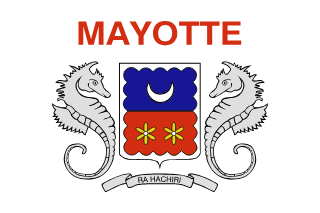
Inside Mayotte’s foreign policy.
Department of Mayotte
Africa · UN voting record, treaty positions, and alliances — every claim primary-sourced.
In short
Mayotte is not a sovereign state but a French overseas department and region, and its external posture is therefore set in Paris while its local politics are dominated by security, migration, and public-service breakdown.
Research Mayotte on your topic
Start a Quick answer framed for your committee — official statements, UN votes, and bloc context.
Mayotte's government & politics
Leadership, governance, and democratic trajectory.
Mayotte's UN voting record
How Mayotte votes at the UN General Assembly — ideological trajectory, voting partners, topic patterns, and key recent roll calls.
Source: Erik Voeten, “United Nations General Assembly Voting Data”, Harvard Dataverse (CC0). Aggregated by Model Diplomat. Last refresh tracked in profile freshness.
Mayotte's foreign policy
Bilateral posture, key relationships, and live diplomatic statements.
Foreign Policy
Mayotte has no independent foreign policy: Paris holds the file, and every external position on Mayotte is first a French sovereignty position, then a local governance issue under France’s overseas-department framework Vie publique French Ministry for Europe and Foreign Affairs Prefecture of Mayotte. Since the 2009 referendum and the island’s conversion into France’s 101st department in 2011, France’s stated line has been that Mayotte’s status reflects self-determination by its population, while the Union of the Comoros continues to claim the island as part of its national territory French Ministry for Europe and Foreign Affairs UN General Assembly Resolution 31/4 INSEE. That makes Mayotte’s core external interest hierarchy unusually clear: survival and public order come first through French border control in the Mozambique Channel; regime security means preserving French constitutional status; economic interests are tied overwhelmingly to transfers from metropolitan France and EU law; status means defending recognition of Mahoran votes against African and Comorian diplomatic pressure French Ministry of the Interior European Commission.
The real bilateral relationship is therefore not Mayotte–Comoros but France–Comoros over Mayotte, migration, and maritime legitimacy. Comoros rejects French sovereignty over Mayotte and has repeatedly relied on UN and African resolutions that affirm Comorian unity and territorial integrity, while France treats the issue as settled by local referendums and constitutional law UN General Assembly Resolution 31/4 African Union Peace and Security Council Communiqué, 984th meeting French Ministry for Europe and Foreign Affairs. Security policy follows that dispute. France has framed irregular migration from the neighboring Comorian island of Anjouan as a public-order and humanitarian emergency in Mayotte and has deployed police and border operations accordingly, including Operation Wuambushu in 2023 French Ministry of the Interior Human Rights Watch. The other consequential bilateral ties are with Madagascar, Mozambique, and other southwest Indian Ocean partners on fisheries, maritime surveillance, disaster response, and migration routes, but those are mediated through French diplomacy and defense policy rather than any Mahoran diplomatic apparatus FAO Southwest Indian Ocean Fisheries Commission French Ministry of Armed Forces.
Mayotte itself is not a UN member and does not vote at the UN; it is represented entirely by France, a UN founding member and permanent member of the Security Council United Nations Member States. In multilateral law, Mayotte’s most important external embedding is European rather than universal: since 1 January 2014 it has been an outermost region of the European Union, meaning EU law applies subject to the special adaptations available under Article 349 TFEU Council Decision 2012/419/EU Treaty on the Functioning of the European Union, Article 349. That gives Mayotte access to EU structural support and places it inside the EU’s external-border regime, which sharpens the migration dispute with Comoros European Commission European Commission. Regionally, the island’s status remains contested enough that it is excluded from straightforward integration into African and Indian Ocean political bodies where Comoros is a member and presses its claim, including the African Union, which continues to back Comorian sovereignty over Mayotte African Union African Union Peace and Security Council Communiqué, 984th meeting.
The sharpest divergence is that Mayotte is geographically in the Comoros archipelago and the African southwest Indian Ocean, but institutionally it sits inside France and the EU, against the position of much of its immediate region Council Decision 2012/419/EU African Union Peace and Security Council Communiqué, 984th meeting. That divergence matters more than rhetoric about decolonization because it drives operational behavior: Paris treats Mayotte as an external EU border to be secured, while many African states and Comoros treat it as unresolved decolonization territory European Commission UN General Assembly Resolution 31/4.
Society & economy
Macro-economic snapshot and demographic context.
In the news
Coverage from Mayotte’s authoritative outlets and headline events from the last 30 days.
Explore Mayotte in depth
Frequently asked questions about Mayotte
Quick answers to the most common questions about Mayotte.
What type of government does Mayotte have?
Mayotte is governed as a overseas department and region of france, with its capital at Mamoudzou.
What is the population of Mayotte?
Mayotte has a population of approximately 321 thousand people, making it the 183rd most populous country.
What languages are spoken in Mayotte?
The official language of Mayotte is French.
More about Mayotte
Mayotte is not a sovereign state but a French overseas department and region, and its external posture is therefore set in Paris while its local politics are dominated by security, migration, and public-service breakdown. It has been both a department and a region of France since 2011 and an EU outermost region since 2014, even though the African Union and Comoros continue to reject French sovereignty over the island Vie publique, European Commission, African Union. The local executive is the Departmental Council, chaired by Ben Issa Ousseni since 2021, while national authority on the island runs through the French state’s prefect; at the national level, Mayotte’s governing framework is set by the French Republic under President Emmanuel Macron and Prime Minister François Bayrou, whose government took office in December 2024 Conseil départemental de Mayotte, Préfecture de Mayotte, Élysée, Gouvernement.fr. There is no separate Mayotte “ruling party” in the sovereign sense; local politics are fragmented among departmental council coalitions and French party networks rather than a self-standing national government Conseil départemental de Mayotte.
In practice, Mayotte’s strategic importance far exceeds its size because it anchors France’s presence in the northern Mozambique Channel and extends France’s exclusive economic zone and military footprint in the southwest Indian Ocean Ministère des Armées, Vie publique. That same importance makes it diplomatically contentious. Comoros continues to claim Mayotte in the UN framework, and the UN General Assembly has repeatedly adopted resolutions affirming the Comorian territorial claim, even though France administers the territory de facto and treats the issue as settled by local referendums and constitutional law United Nations Digital Library, Ministère de l’Europe et des Affaires étrangères. The result is a territory that is internally French, externally disputed in parts of Africa and the Indian Ocean diplomatic space, and increasingly discussed in Indo-Pacific strategy because of sea lanes, maritime surveillance, and regional competition IFRI, Ministère de l’Europe et des Affaires étrangères.
Economically, Mayotte is one of the poorest territories under French administration and is structurally dependent on French public spending, transfers, and imports. INSEE reports a population of 321,000 in 2024, with exceptionally strong demographic pressure and widespread poverty relative to metropolitan France and other French territories INSEE, INSEE. The economy is dominated by the public sector, construction, retail, and basic services rather than export-led industry, while labor-market informality, housing shortages, and infrastructure gaps constrain growth IEDOM, AFD. GDP figures are reported through French and territorial statistical systems rather than as a separate sovereign economy, but the consistent picture across official sources is one of low per-capita income, rapid population growth, and heavy fiscal dependence on the French state INSEE, IEDOM.
Three issues define Mayotte’s current trajectory. The first is migration and border enforcement: French authorities treat irregular arrivals from the Comoros and wider region as the central security question, and operations such as Wuambushu were explicitly designed to dismantle informal settlements and increase removals, though courts and rights groups challenged parts of that approach Ministère de l’Intérieur, Human Rights Watch. The second is state capacity: water shortages, school overcrowding, weak healthcare access, and inadequate housing have turned governance failure into the island’s main domestic political fact Sénat, Mediapart. The third is sovereignty and regional diplomacy: every French effort to make Mayotte a normal part of its Indo-Pacific strategy runs into the unresolved Comoros dispute and periodic friction in African and Indian Ocean forums IFRI, Africa Intelligence