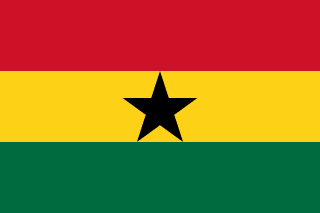
Inside Ghana’s foreign policy.
Republic of Ghana
Africa · UN voting record, treaty positions, and alliances — every claim primary-sourced.
In short
Ghana is a competitive presidential republic that still markets itself as one of West Africa’s most stable democracies, but its foreign-policy bandwidth is now dominated by economic recovery, regional insecurity spilling south from the Sahel, and a deliberate insistence on non-alignment rather than bloc politics…
Capital
AccraGhana's government & politics
Leadership, governance, and democratic trajectory.


Ghana's UN voting record
How Ghana votes at the UN General Assembly — ideological trajectory, voting partners, topic patterns, and key recent roll calls.
Ideological trajectory
Top voting partners
Topic-level voting
Source: Erik Voeten, “United Nations General Assembly Voting Data”, Harvard Dataverse (CC0). Aggregated by Model Diplomat. Last refresh tracked in profile freshness.
Ghana's foreign policy
Bilateral posture, key relationships, and live diplomatic statements.
Foreign Policy
Ghana’s foreign policy is pragmatic non-alignment backed by strong multilateralism, not bloc politics. The Ministry of Foreign Affairs states that Ghana’s external policy is anchored in independence, sovereignty, territorial integrity, non-alignment, Pan-Africanism, good-neighbourliness, and respect for international law, while Article 40 of the 1992 Constitution directs the state to promote international cooperation, African unity, and settlement of disputes by peaceful means Ministry of Foreign Affairs and Regional Integration, Constitution of the Republic of Ghana, 1992. In practice, the decision structure is presidential, but executed through the foreign ministry; President John Dramani Mahama was sworn in on 7 January 2025 after winning the December 2024 election, and Samuel Okudzeto Ablakwa was approved as Foreign Affairs Minister in January 2025, giving the current administration direct control over tone and tactics in external affairs Electoral Commission of Ghana, Presidency of the Republic of Ghana, Parliament of Ghana. The hierarchy of interests is clear: survival means preventing spillover from Sahel jihadist violence into northern Ghana; regime and state security mean preserving domestic stability and constitutional order; economic policy means attracting investment, securing debt relief and export access; status means preserving Ghana’s image as a democratic broker in West Africa Presidency of the Republic of Ghana, IMF Ghana page, ECOWAS.
That security-first logic explains Ghana’s regional posture. Ghana is a member of the African Union, ECOWAS, the United Nations, the Commonwealth, and the Non-Aligned Movement, and it uses ECOWAS as its primary regional security platform because instability in Burkina Faso, Mali, and Niger directly affects Ghana’s northern frontier and trade corridors African Union, ECOWAS, United Nations Digital Library, Commonwealth. Ghana has repeatedly supported diplomatic and collective regional responses to unconstitutional changes of government, but it has also avoided the most escalatory rhetoric seen elsewhere in ECOWAS, reflecting a preference for mediation over coercion when military options could worsen spillover risks for Ghana itself ECOWAS, Institute for Security Studies. Mahama’s June 2026 remarks on terror attacks in the sub-region fit that line: the threat is treated less as an abstract counterterrorism issue than as a direct national-security concern tied to border management, intelligence cooperation, and regional stabilization Presidency of the Republic of Ghana.
Ghana’s key bilateral relationships are diversified on purpose. The United States remains a major security and commercial partner; the two countries maintain defense cooperation under a formal bilateral framework, and Washington has consistently treated Ghana as one of its most reliable democratic partners in West Africa U.S. Department of State, U.S. Embassy in Ghana. The United Kingdom remains important through trade, education, finance, and Commonwealth ties, while Germany and other European partners matter for development finance, renewable energy, and industrial investment UK Government, Federal Foreign Office of Germany. Nigeria is indispensable because of ECOWAS politics, energy interdependence, and regional market size, even when commercial frictions emerge ECOWAS. China is also central in behavior if not always in rhetoric: Beijing is a major financier and trade partner, which means Ghana’s non-alignment is not a neutral distance from all powers but an active strategy of keeping multiple external channels open at once China’s Ministry of Foreign Affairs, World Bank country overview: Ghana.
At the UN, Ghana usually aligns with the African Group and the broader Global South on decolonization, development finance, and sovereignty questions, but its voting and diplomatic style are less ideological than those of some peers. Ghana’s term on the UN Security Council for 2022–2023 showed this pattern clearly: it emphasized peacekeeping, maritime security, Women, Peace and Security, and terrorism in Africa, while presenting itself as a bridge between African positions and wider council consensus Ghana Mission to the United Nations, UN Security Council, Members 2022. Ghana has also maintained one of the more stable pro-UN and rules-based voices in West Africa, consistent with its constitutional commitment to peaceful settlement and legal process Constitution of the Republic of Ghana, 1992, Ministry of Foreign Affairs and Regional Integration. Its UN behavior tends to favor broad consensus language over headline-grabbing dissent, which helps explain why Accra is frequently acceptable as a mediator but rarely the loudest actor in the room United Nations Digital Library, Security Council Report.
The most useful divergence is that Ghana often breaks from the harsher edge of its own regional bloc. In ECOWAS, where some members have backed sharper punitive pressure on coup-led Sahel governments, Ghana has usually kept closer to a constitutionalist line in principle while signaling caution on measures that could trigger wider conflict or


Ghana's treaties & memberships
UN multilateral treaty positions and IGO memberships.
International Organizations
Society & economy
Macro-economic snapshot and demographic context.
GDP (nominal)
$82.3B
#80/250GDP per capita
$2,390.772
#164/250Currency
—
HDI
0.60
#142/250GDP (nominal USD)
GDP per capita (USD)
Top trading partners


In the news
Stories surfacing across Ghana’s authoritative outlets, plus headline events and the diplomatic calendar.
Headlines
President Mahama speaks to recent terror attacks in West African sub-region
Summary: - Ghanaian President John Dramani Mahama argues that stabilising the Sahel requires a broader, Africa-inclusive approach beyond ECOWAS, specifically calling for Algeria and Mauritania to be part of the regional security framework. - Speaking at Chatham House on June 1, 2026, he traces West Africa’s instability to external interventions in North Africa (notably Libya’s collapse) that enabled jihadist networks from Syria/Iraq to move south, exploiting local grievances
Ghana woos US investors as Trade Mission Summit opens in Accra - Graphic Online
Summary: - Ghana hosts a US–Ghana Chamber of Commerce Trade and Investment Mission in Accra, signaling intensified efforts to attract American investment and deepen economic cooperation. - Government officials (including Deputy Minister Sampson Ahi) frame the mission as a milestone to translate longstanding diplomatic ties into a robust commercial partnership that boosts growth, investment, and employment. - Priority sectors identified for opportunities include agriculture/a
Ghana Exits IMF Bailout, Pivots to Growth
Ghana exits IMF program, with inflation dropping significantly and a focus on job creation under a new policy framework.
Explore Ghana in depth
Frequently asked questions about Ghana
Quick answers to the most common questions about Ghana.
What type of government does Ghana have?
Ghana is governed as a unitary presidential constitutional republic, with its capital at Accra.
Who is the head of state of Ghana?
John Mahama is the head of state of Ghana, in office since 2025-01-07.
Who leads the government of Ghana?
Nana Akufo-Addo serves as the head of government of Ghana, since 2017-01-01.
What is the population of Ghana?
Ghana has a population of approximately 34.4 million people, making it the 47th most populous country.
What is the economy of Ghana like?
Ghana has a nominal GDP of about $82 billion, or roughly $2,391 per capita.
What languages are spoken in Ghana?
The official language of Ghana is English.
When did Ghana join the United Nations?
Ghana has been a member of the United Nations since 1957.
Who are Ghana's closest allies?
Ghana's key allies include Nigeria, United Kingdom, United States, South Africa, and Germany.
More about Ghana
Ghana is a competitive presidential republic that still markets itself as one of West Africa’s most stable democracies, but its foreign-policy bandwidth is now dominated by economic recovery, regional insecurity spilling south from the Sahel, and a deliberate insistence on non-alignment rather than bloc politics [CIA World Factbook](https://www.cia.gov/the-world-factbook/countries/ghana/), [Graphic Online](https://www.graphic.com.gh/news/general-news/statements-on-global-issues-not-foreign-policy-shift-non-alignment-holds-sway-okudzeto-ablakwa.html). The current government is led by President John Dramani Mahama after the 2024 election, with the National Democratic Congress (NDC) back in power; the Foreign Ministry is headed by Samuel Okudzeto Ablakwa, whose public line has been that commentary on global issues does not amount to alignment with any great-power camp [Electoral Commission of Ghana](https://ec.gov.gh/), [Ministry of Foreign Affairs of Ghana](https://mfa.gov.gh/), [Graphic Online](https://www.graphic.com.gh/news/general-news/statements-on-global-issues-not-foreign-policy-shift-non-alignment-holds-sway-okudzeto-ablakwa.html). Ghana’s place in the world is larger than its military weight. It acts as a diplomatic middle power in Africa through the African Union and ECOWAS, has long contributed troops and police to UN peacekeeping, and presents itself as a rules-based, investment-friendly state that can talk to Washington, Brussels, Beijing, and its regional neighbors at the same time [United Nations Peacekeeping](https://peacekeeping.un.org/en/troop-and-police-contributors), [African Union](https://au.int/en/member_states/countryprofiles2), [ECOWAS](https://ecowas.int/member-states/). That posture has become more valuable as coups, jihadist violence, and anti-Western realignment reshape the Sahel. Mahama’s recent statements on terrorist attacks in the sub-region fit a clear priority: prevent northern insecurity in Burkina Faso and beyond from becoming a direct threat to Ghana’s territorial security and domestic stability [Graphic Online](https://www.graphic.com.gh/news/general-news/president-mahama-speaks-to-recent-terror-attacks-in-west-african-sub-region.html), [U.S. Department of State](https://www.state.gov/reports/country-reports-on-terrorism-2023/ghana/). Economically, Ghana is a mid-sized African economy with a narrow but important export base. The World Bank put GDP at about $76.4 billion in current US dollars in 2024, with gold, crude oil, and cocoa remaining central to export earnings and fiscal performance [World Bank Data](https://data.worldbank.org/country/ghana), [Bank of Ghana](https://www.bog.gov.gh/). That structure gives Accra real leverage as a commodity producer, but it also leaves the state exposed to price swings, debt stress, and foreign-exchange pressure. The recent official message that Ghana is exiting its IMF bailout and pivoting to growth reflects the government’s need to move from stabilization to jobs, investment, and restored market confidence without reopening the macroeconomic vulnerabilities that forced debt restructuring in the first place [IMF](https://www.imf.org/en/Countries/GHA), [Graphic Online](https://www.graphic.com.gh/business/business-news/ghana-exits-imf-bailout-pivots-to-growth.html). Three issues define Ghana’s current trajectory. First is economic repair: debt management, inflation control, and renewed foreign investment now sit above almost every other policy file because regime credibility depends on living costs and growth [IMF](https://www.imf.org/en/Countries/GHA), [Bank of Ghana](https://www.bog.gov.gh/). Second is security along the northern frontier, where Accra has to harden border districts and cooperate regionally without being dragged into the deeper political fractures of the Sahel crisis [U.S. Department of State](https://www.state.gov/reports/country-reports-on-terrorism-2023/ghana/), [Graphic Online](https://www.graphic.com.gh/news/general-news/president-mahama-speaks-to-recent-terror-attacks-in-west-african-sub-region.html). Third is strategic positioning: Ghana wants Western capital and security partnerships, but it is signaling that this will not come at the cost of formal alignment in great-power disputes, a stance meant to preserve room for maneuver with multiple partners [Graphic Online](https://www.graphic.com.gh/news/general-news/statements-on-global-issues-not-foreign-policy-shift-non-alignment-holds-sway-okudzeto-ablakwa.html), [Graphic Online](https://www.graphic.com.gh/business/business-news/ghana-woos-us-investors-as-trade-mission-summit-opens-in-accra.html). The practical read is that Ghana is not trying to be radical; it is trying to stay usable. Its comparative advantage is institutional credibility relative to its neighborhood, English-speaking access to global finance and diplomacy, and enough democratic legitimacy to remain a preferred partner for outside powers seeking a foothold in coastal West Africa [Commonwealth](https://thecommonwealth.org/our-member-countries/ghana), [U.S. Department of State](https://www.state.gov/u-s-relations-with-ghana/). Its weakness is that this model depends on economic competence at home. If growth disappoints or insecurity penetrates the north more deeply, Ghana’s room for diplomatic balancing narrows fast, because its external posture rests less on coercive power than on being seen as stable, solvent, and governable [World Bank Data](https://data.worldbank.org/country/ghana), [IMF](https://www.imf.org/en/Countries/GHA).