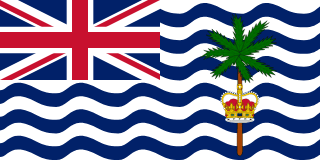
Inside British Indian Ocean Territory’s foreign policy.
Africa · UN voting record, treaty positions, and alliances — every claim primary-sourced.
In short
British Indian Ocean Territory is not a sovereign state but a UK-administered Overseas Territory whose importance comes from one asset: the joint UK-US military facility on Diego Garcia, which makes the territory strategically relevant far beyond its tiny resident civilian population [GOV. UK – British Indian Ocean Territory](https://www.
Capital
Diego Garcia
Government
British Overseas Terri…
British Indian Ocean Territory's government & politics
Leadership, governance, and democratic trajectory.
British Indian Ocean Territory's UN voting record
How British Indian Ocean Territory votes at the UN General Assembly — ideological trajectory, voting partners, topic patterns, and key recent roll calls.
Source: Erik Voeten, “United Nations General Assembly Voting Data”, Harvard Dataverse (CC0). Aggregated by Model Diplomat. Last refresh tracked in profile freshness.
British Indian Ocean Territory's foreign policy
Bilateral posture, key relationships, and live diplomatic statements.
Foreign Policy
The British Indian Ocean Territory has no autonomous foreign policy; London holds the file, and Diego Garcia’s strategic value makes BIOT a defense instrument before it is a territory administration British Indian Ocean Territory Administration, UK Government, British Indian Ocean Territory. In practice, BIOT’s external posture is set by the UK Foreign, Commonwealth and Development Office and the UK-US defense arrangements for Diego Garcia, while sovereignty over the Chagos Archipelago remains contested by Mauritius in the UN system and other international fora UK Government, British Indian Ocean Territory, UN General Assembly Resolution 73/295, International Court of Justice, Advisory Opinion on the Chagos Archipelago.
BIOT’s stated doctrine is narrow: defense, security, and environmental management. The territory administration describes BIOT as a UK Overseas Territory centered on the operation of the joint UK-US military facility on Diego Garcia and the protection of one of the world’s largest no-take marine protected areas, though that marine regime has itself been litigated and politicized in the sovereignty dispute British Indian Ocean Territory Administration, Permanent Court of Arbitration, Chagos Marine Protected Area Arbitration. Its core interests therefore sit in a clear hierarchy. Survival and regime-security interests are really UK interests expressed through BIOT: preserving uninterrupted military access, surveillance, and logistics capacity in the central Indian Ocean under the 1966 UK-US exchange of notes and later implementing arrangements UK Treaty Series, Exchange of Notes concerning the Availability for Defense Purposes of the British Indian Ocean Territory, U.S. Department of State, Treaties and Other International Acts Series on Diego Garcia arrangements. Economic interests are secondary because BIOT has no diversified civilian economy; status interests are bound up with London’s effort to retain or manage legal authority over the archipelago rather than any distinct territorial diplomacy UK Government, British Indian Ocean Territory, CIA World Factbook, British Indian Ocean Territory.
Its decisive bilateral relationship is with the United States. Diego Garcia is a major support hub for U.S. and UK operations across the Middle East, East Africa, and the Indo-Pacific, and U.S. official material continues to identify the island as a key military facility U.S. Navy Support Facility Diego Garcia, UK Government, British Indian Ocean Territory. The second crucial relationship is adversarial and legal-political rather than cooperative: Mauritius claims sovereignty, won a strong advisory opinion at the International Court of Justice in 2019, and then secured overwhelming backing in the UN General Assembly for a demand that the UK withdraw its colonial administration from the archipelago International Court of Justice, Advisory Opinion on the Chagos Archipelago, UN General Assembly Resolution 73/295. That dispute has pushed BIOT into wider Indian Ocean diplomacy despite not being a sovereign state or a member of regional organizations such as the African Union, Indian Ocean Rim Association, or the United Nations; where BIOT appears multilaterally, it does so through the UK, and the relevant alignments are therefore those of the UK versus the anti-colonial majority in the UN General Assembly United Nations Digital Library, A/RES/73/295, Indian Ocean Rim Association, Member States, African Union, Member States.
BIOT does not vote in the UN, so the meaningful voting analysis is the pattern around Chagos. The analytically important point is that the UK’s position on BIOT breaks from much of its usual Western and Commonwealth diplomatic environment. In the May 2019 General Assembly vote on implementing the ICJ advisory opinion, 116 states backed Mauritius, only 6 opposed, and 56 abstained; the UK was in a tiny minority alongside the United States, while many African, Asian, and Global South states treated the issue as a decolonization case rather than a strategic-basing question United Nations Digital Library, A/RES/73/295 vote record, UN Press, General Assembly Welcomes ICJ Opinion on Chagos Archipelago. That is BIOT’s clearest divergence from the bloc it would be assumed to sit in. On most security questions London aligns with NATO and close U.S. partners, but on Chagos the UK has been isolated not by adversaries alone but by a broad multilateral consensus that includes many states otherwise friendly to Britain UN Press, General Assembly Welcomes ICJ Opinion on Chagos Archipelago, International Court of Justice, Advisory Opinion on the Chagos Archipelago.
The likely trajectory is continued movement away from a classic sovereignty-defense posture and toward a negotiated settlement that protects base access while addressing the legal and political costs of the dispute. Recent UK reporting and parliamentary material show the issue is no longer framed only as territorial administration but as a treaty and international-law problem requiring settlement with Mauritius, while Chatham House argued in June 2026 that UK ratification of the Chagos treaty would not violate international law UK Parliament Hansard, British Indian Ocean Territory, UK Government, British Indian Ocean Territory, Chatham House, UK ratification of the Chagos Archipelago treaty will not violate international law [blocked]
Society & economy
Macro-economic snapshot and demographic context.
GDP (nominal)
—
GDP per capita
—
Currency
—
HDI
—
In the news
Stories surfacing across British Indian Ocean Territory’s authoritative outlets, plus headline events and the diplomatic calendar.
Headlines
UK ratification of the Chagos Archipelago treaty will not violate international law | Chatham House – International Affairs Think Tank
Summary: - The UK paused Lords debate on ratifying the 2025 UK–Mauritius Chagos Archipelago treaty, which would transfer sovereignty of the islands to Mauritius while granting the UK a 99-year lease over Diego Garcia to keep the US base operational. - The treaty aims to reconcile Mauritius’s self-determination and territorial unity with continued US-UK access to the base, a point of contention among critics concerned with geostrategic implications. - The article argues that t
British Indian Ocean Territory
Summary: - Status and sovereignty: The British Indian Ocean Territory (BIOT) is an administered British overseas territory with no permanent inhabitants; its legal framework mirrors the Constitution Order 2004 and English/Welsh law where no BIOT law exists. Real power rests with the Commissioner; criminal matters are often handled under U.S. military law due to the large U.S. military presence on Diego Garcia. - Foreign policy and diplomacy: BIOT’s international standing ce
What is the UK’s Chagos Islands deal and why has Starmer delayed it? | The Independent
Summary: - The UK government's plan to transfer sovereignty of the Chagos Islands to Mauritius, while keeping the UK–US military base on Diego Garcia, has been withdrawn from a Lords debate amid backlash and concerns it could breach a US treaty. - Labour (Sir Keir Starmer) had previously agreed a deal with Mauritius to hand over sovereignty, with the UK retaining control of the Diego Garcia base under a 99-year lease averaging about £101m per year (roughly £3.4bn total in cu
Explore British Indian Ocean Territory in depth
Frequently asked questions about British Indian Ocean Territory
Quick answers to the most common questions about British Indian Ocean Territory.
What type of government does British Indian Ocean Territory have?
British Indian Ocean Territory is governed as a british overseas territory, with its capital at Diego Garcia.
What languages are spoken in British Indian Ocean Territory?
The official language of British Indian Ocean Territory is English.