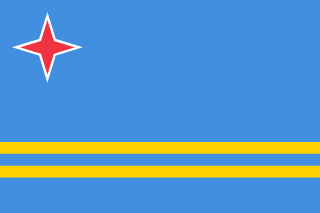
Inside Aruba’s foreign policy.
Americas · UN voting record, treaty positions, and alliances — every claim primary-sourced.
In short
Aruba is a self-governing constituent country within the Kingdom of the Netherlands, and that constitutional fact defines almost every major foreign-policy and fiscal choice it can make: Aruba runs its internal affairs through a parliamentary system, but defense, nationality, and much of its external representation…
Capital
OranjestadResearch Aruba on your topic
Start a Quick answer framed for your committee — official statements, UN votes, and bloc context.
Aruba's government & politics
Leadership, governance, and democratic trajectory.
Aruba's UN voting record
How Aruba votes at the UN General Assembly — ideological trajectory, voting partners, topic patterns, and key recent roll calls.
Source: Erik Voeten, “United Nations General Assembly Voting Data”, Harvard Dataverse (CC0). Aggregated by Model Diplomat. Last refresh tracked in profile freshness.
Aruba's foreign policy
Bilateral posture, key relationships, and live diplomatic statements.
Foreign Policy
Aruba does not run an autonomous sovereign foreign policy; its external relations are conducted within the Kingdom of the Netherlands, with the Kingdom government responsible for foreign affairs and defence under the Charter for the Kingdom of the Netherlands, while Aruba can pursue its own interests in matters that directly affect the island through consultation and Kingdom-level coordination Government of the Netherlands – Charter for the Kingdom of the Netherlands, Government of Aruba – Department of Foreign Affairs. That constitutional fact is Aruba’s doctrine in practice: maximize room for economic diplomacy, tourism, aviation, trade, and Caribbean cooperation without crossing the Kingdom framework that reserves sovereignty, treaty-making, and UN representation to The Hague Government of Aruba – Department of Foreign Affairs, Government of the Netherlands. Its core interests sit in a clear hierarchy. Survival and regime-security concerns are low compared with most states because defence is guaranteed at Kingdom level, but fiscal autonomy, border management, and resilience against economic shocks are high-priority political interests for Oranjestad, especially after repeated Kingdom-level disputes over financial supervision and reform conditions Government of the Netherlands – Charter for the Kingdom of the Netherlands, Centrale Bank van Aruba – Annual Statistical Digest. Economic interests dominate: tourism is the main growth engine, making air connectivity, stable relations with North American and European markets, and reputation for safety and regulatory reliability central to Aruba’s external behavior World Bank Data – Aruba, Centrale Bank van Aruba.
Aruba’s most important bilateral relationship is with the Netherlands because that relationship is simultaneously constitutional, financial, legal, and diplomatic Government of the Netherlands. When Aruba seeks international action, it usually does so through the Kingdom as a vehicle rather than through fully independent representation, which means Aruban preferences matter most when they can be framed as compatible with broader Kingdom policy or Caribbean regional stability Government of Aruba – Department of Foreign Affairs. The United States is Aruba’s most consequential non-Kingdom external partner in practice because of tourism flows, aviation links, security cooperation in the wider Caribbean basin, and proximity to Venezuela U.S. Department of State – U.S. Relations With the Netherlands, World Bank Data – Aruba. Venezuela matters less as a partner than as a security and migration variable: the crisis there has shaped Aruba’s border controls, humanitarian posture, and sensitivity to maritime security, even though formal foreign-policy handling still runs through Kingdom channels Kingdom of the Netherlands Government – Venezuela crisis information, UNHCR Caribbean Situation.
Regionally, Aruba participates most visibly through Caribbean and Dutch-Caribbean formats rather than as a sovereign state in the classic Latin American sense. Aruba is an associate member of the Caribbean Community, giving it a platform for functional cooperation without sovereign-state obligations identical to full members CARICOM – Members and Associate Members. It is also part of the Association of Caribbean States, which broadens its reach on tourism, disaster risk reduction, trade facilitation, and Caribbean Sea governance Association of Caribbean States – Members. Aruba is not a UN member state in its own right; the Kingdom of the Netherlands has held UN membership since 10 December 1945, and UN voting is cast by the Kingdom, not by Aruba separately United Nations Member States – Netherlands, Government of the Netherlands. That institutional arrangement matters more than symbolism: Aruba has diplomatic access through Kingdom embassies and treaty networks, but not an independent General Assembly vote Government of the Netherlands.
At the UN, Aruba therefore aligns with Dutch and wider Kingdom positions by design, which usually places it inside a European liberal-internationalist voting pattern on human rights, rule-of-law questions, and support for the UN-based international legal order United Nations Digital Library – Voting records for the Netherlands, Government of the Netherlands – Foreign policy. The analytically useful divergence is not that Aruba breaks from its bloc in recorded UN votes; it cannot. The real divergence appears one level below formal voting, where Aruba’s island-level interests can pull against metropolitan Dutch preferences on migration control, fiscal conditionality, and the pace of governance reforms tied to Kingdom support arrangements Government of the Netherlands – Charter for the Kingdom of the Netherlands, Centrale Bank van Aruba. In other words, Aruba’s foreign-policy friction point is vertical, inside the Kingdom, more than horizontal, between international blocs. For MUN purposes, that means Aruba should be read less like a microstate choosing sides between rival powers and more like a non-sovereign Caribbean actor trying to widen policy space inside a larger sovereign structure Government of Aruba – Department of Foreign Affairs, Government of the Netherlands.
That constraint also shapes Aruba’s issue positions. On trade and climate, Aruba’s incentives are highly pragmatic: protect tourism, secure transport links, improve energy resilience, and back Caribbean adaptation agendas because sea-level rise, extreme weather, and infrastructure vulnerability have direct economic effects on a small island economy World Bank Data –
Society & economy
Macro-economic snapshot and demographic context.
GDP (nominal)
$4.3B
#171/250GDP per capita
$39,499
#38/250GDP (nominal USD)
GDP per capita (USD)
In the news
Coverage from Aruba’s authoritative outlets and headline events from the last 30 days.
Explore Aruba in depth
Frequently asked questions about Aruba
Quick answers to the most common questions about Aruba.
What type of government does Aruba have?
Aruba is governed as a constituent country of the kingdom of the netherlands, with its capital at Oranjestad.
What is the population of Aruba?
Aruba has a population of approximately 108 thousand people, making it the 197th most populous country.
What is the economy of Aruba like?
Aruba has a nominal GDP of about $4 billion, or roughly $39,499 per capita.
What languages are spoken in Aruba?
The official languages of Aruba are Dutch and Papiamento.
More about Aruba
Aruba is a self-governing constituent country within the Kingdom of the Netherlands, and that constitutional fact defines almost every major foreign-policy and fiscal choice it can make: Aruba runs its internal affairs through a parliamentary system, but defense, nationality, and much of its external representation are handled at Kingdom level under the Charter for the Kingdom of the Netherlands Government of the Netherlands, Government of Aruba. Prime Minister Mike Eman took office in July 2024 after his party, the Aruban People’s Party (AVP), emerged as the largest force in the June 2024 parliamentary election and formed a coalition government with Futuro and Pueblo Prome y Respetuoso Government of Aruba, Parliament of Aruba. Governor Alfonso Boekhoudt remains the King’s representative in Aruba, reflecting the island’s hybrid status as both autonomous and constitutionally embedded in a larger state structure Cabinet of the Governor of Aruba.
In practical terms, Aruba’s international room for maneuver is narrow but not irrelevant. The Kingdom conducts foreign relations and defense, yet Aruba can pursue its own international contacts and agreements where these fit within Kingdom law and require coordination with The Hague, a model Aruban officials increasingly present as “international action” through the Kingdom rather than full sovereign diplomacy Government of the Netherlands, Government of Aruba. That makes Aruba less a classic small state than a semi-autonomous political economy whose external posture is filtered through Dutch institutions, Dutch credit credibility, and Kingdom oversight mechanisms. The current debate inside Aruba is therefore not whether it should be globally engaged, but how much policy space it truly has when financial supervision and Kingdom legal constraints tighten at moments of budget stress Government of Aruba, College Aruba financieel toezicht.
Aruba’s economy is small, service-heavy, and unusually exposed to tourism cycles. The World Bank estimated GDP at about $4.27 billion in current US dollars for 2023, while population is roughly 108,000, making Aruba one of the higher-income Caribbean economies on a per-capita basis despite its narrow production base World Bank Data. Tourism is the core engine: the Central Bank of Aruba identifies stay-over tourism, linked trade, transport, and hospitality as the main drivers of output, employment, and foreign exchange earnings Central Bank of Aruba. That structure gives Aruba strong access to North American demand, especially from the United States, but it also leaves public finances and household income highly sensitive to shocks in travel demand, energy prices, and import costs International Monetary Fund, Central Bank of Aruba.
Three issues define Aruba’s current trajectory. The first is fiscal sovereignty versus Kingdom supervision: Aruba’s politics in 2025–2026 have been dominated by disputes over the proposed Kingdom law on financial oversight and the extent to which The Hague can constrain Aruba’s parliament and budget choices, a fight that goes well beyond bookkeeping because it touches democratic authority inside the Kingdom Government of Aruba, College Aruba financieel toezicht. The second is economic resilience: Aruba needs to preserve tourism competitiveness while reducing overdependence on a single sector and containing debt and cost pressures, a challenge repeatedly flagged by the IMF and the Central Bank International Monetary Fund, Central Bank of Aruba. The third is energy and infrastructure transition, including the long-running push to diversify energy supply and improve sustainability on a resource-constrained island that imports much of what it consumes Government of Aruba, Central Bank of Aruba.
Politically, the AVP-led government is operating in a system where domestic electoral mandates do not fully settle the hardest policy disputes. Aruba’s cabinet can set priorities, negotiate budgets, and frame development strategy, but when questions touch Kingdom law, debt discipline, border control, or external commitments, Dutch and Kingdom institutions become decisive actors Government of the Netherlands, Cabinet of the Governor of Aruba. That is the key to reading Aruba today: it is stable, prosperous by regional standards, and politically active, but its future is being shaped by a constant negotiation between local democratic control and the constitutional ceiling imposed by the Kingdom framework Government of Aruba, Parliament of Aruba.