White House Gunfire Reports Test Trump’s Security Posture
Secret Service and FBI are still verifying what was heard near the White House Saturday night, but the report immediately exposed a security system already under pressure after last year’s assassination attempt on Trump.
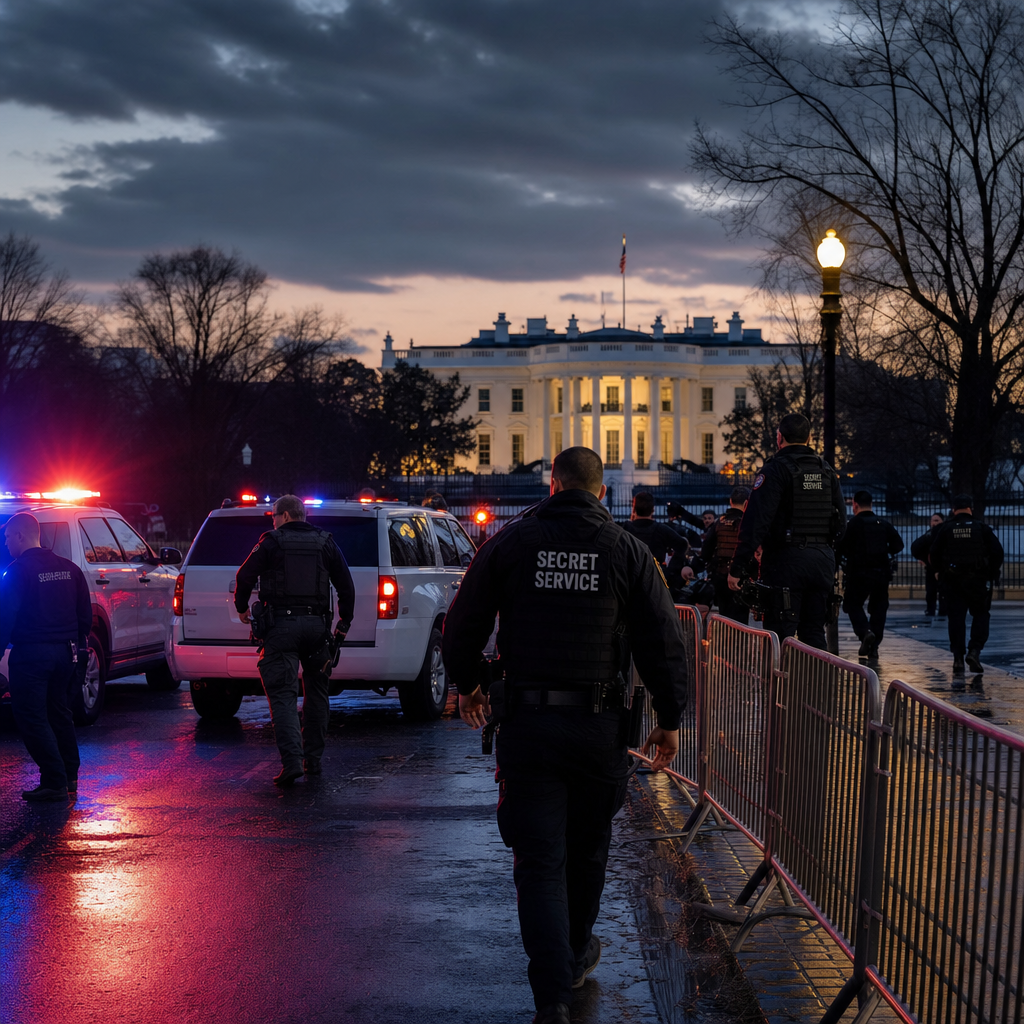
Reports of gunfire near the White House forced journalists onto the ground and into shelter Saturday night, with Axios saying multiple reporters on the premises heard shots and were told by the Secret Service to take cover ( Axios). The Secret Service later said it was aware of reports of shots fired near 17th Street and Pennsylvania Avenue NW and was working to corroborate them with personnel on the ground (
 Reuters). FBI Director Kash Patel said the bureau was on scene and supporting the response (
 The New York Times).
The power dynamic is clear: the Secret Service controls the narrative only after it controls the perimeter
This is a test of federal security credibility more than a test of political messaging. The White House can’t afford uncertainty about gunfire on its own grounds, but it also can’t confirm more than the agencies on scene have established. That leaves the Secret Service and FBI holding the leverage: they decide whether this becomes a verified shooting, a stray discharge, or something else entirely (Reuters; The New York Times).
That matters because the White House is not operating in a vacuum. The protection model around President Trump has already been under intense scrutiny since the 2024 Butler rally attack, which triggered a leadership shakeup at the Secret Service and renewed pressure to harden presidential security. Any new breach — even a temporary or unconfirmed one — feeds the argument for wider cordons, tighter press access, and more aggressive screening around presidential sites. For a broader US politics readout, see  US Politics.
Who benefits, who loses
The immediate beneficiaries are the security hawks inside the administration and law enforcement, who will now have stronger footing to argue for more perimeter control and fewer exceptions around the White House complex. The losers are the press corps, local residents, and anyone trying to keep presidential security visible but not sealed off; every incident like this pushes the system toward greater lockdown and less spontaneity.
Politically, the White House also absorbs the reputational risk. Axios reported Trump was at the White House when the apparent shots were heard and that the White House did not immediately comment (Axios). Even without a confirmed shooter or motive, the optics are damaging: the seat of executive power is supposed to project control, and a burst of gunfire nearby says the opposite. For geographic context on the institution under scrutiny, see United States.
What to watch next
The key decision point is whether the Secret Service and FBI confirm the origin of the shots, identify a suspect, or determine this was not a direct attack on the White House. Watch for three things: a law enforcement briefing, any release of surveillance or body-camera evidence, and whether the White House tightens access overnight or through Sunday. If officials elevate the incident from “reports” to a confirmed security event, the next move will be procedural: perimeter expansion, personnel changes, and a fresh round of questions about how close gunfire can get to the president before anyone knows what happened.