East Africa’s Mitumba Crackdown Runs Into Hard Limits
Kenya, Uganda and Rwanda are taxing used clothes, but cheap imports, consumer demand and US pressure keep a full ban out of reach.
East Africa is trying again to squeeze the flow of used clothes, and the power dynamic is unchanged: exporters and consumers still have more leverage than regional policymakers. The East African Community (EAC) wants to protect local textile manufacturing from mitumba — the second-hand garments imported mainly from the US, Europe and China — but every move toward restriction collides with price-sensitive buyers, informal traders and the risk of trade retaliation ( BBC News).
The region has tried this before — and lost
This is not a new industrial policy experiment. A decade ago, the EAC announced plans to impose very high tariffs and eventually ban used-clothing imports, only to back down after the US warned it could strip members of Agoa trade preferences (BBC News). Rwanda refused to fold, and Washington responded with 30% tariffs on Rwandan clothing exports, a reminder that even a small economy can pay a real price for defying the system it trades in (BBC News).
That history explains why the current push is arriving piecemeal rather than as a bloc-wide ban. Uganda has added a 30% tax on used-clothing imports, citing both industrial policy and environmental concerns (BBC News). Kenya, meanwhile, already levies a 30% customs duty on used clothing — plus 18% VAT — and still moved toward an additional environmental levy before dropping the proposal after a consumer backlash, according to a recent report on its Finance Bill debate (BBC News;  Ecofin Agency).
The politics are local, even when the problem is regional
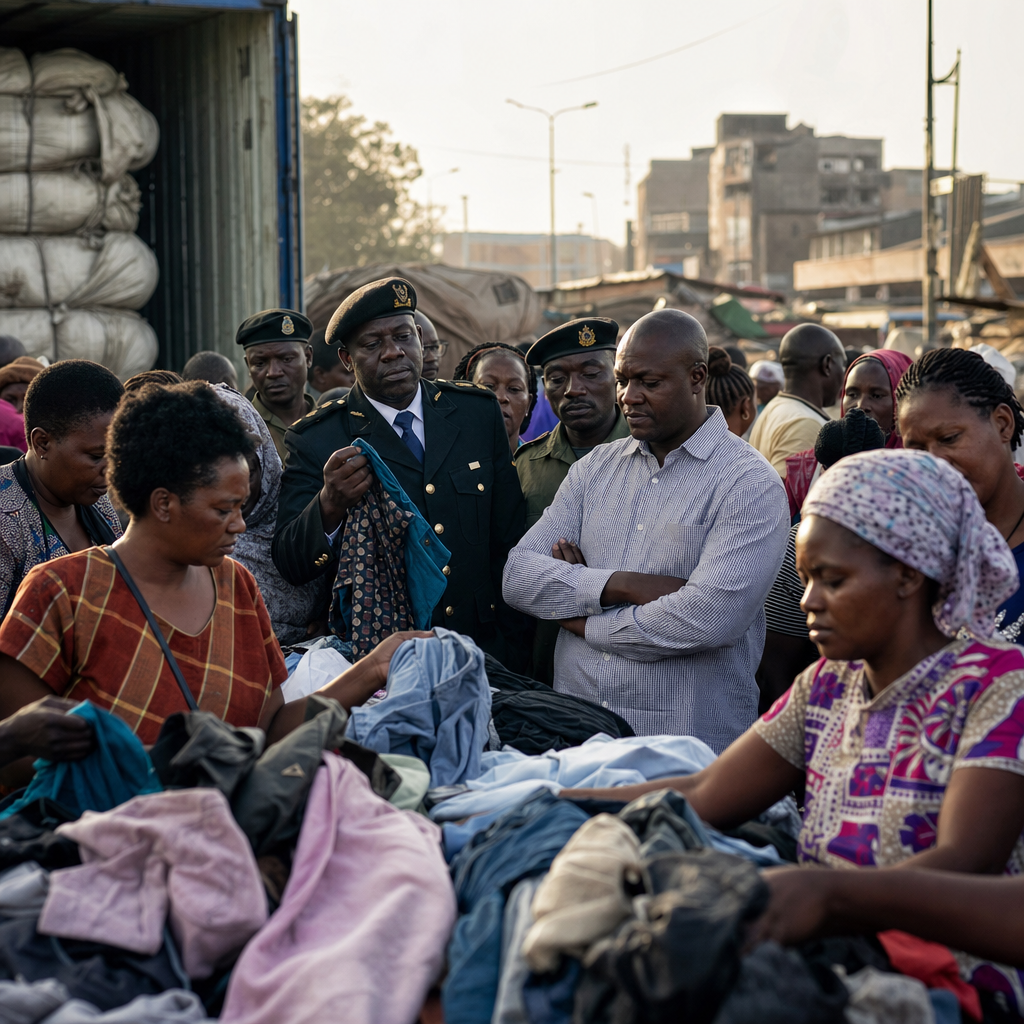
The core difficulty is that mitumba is not just an import category; it is a mass-market supply chain. Kenya imported almost 180,000 tonnes of used clothing in 2022, up 76% from 2013, according to UN trade data cited by the BBC, making it Africa’s biggest second-hand clothing market (BBC News). Ecofin says the sector serves about 20 million consumers and supports nearly 2 million livelihoods in Kenya alone, which helps explain why even a modest tax proposal can provoke immediate resistance (Ecofin Agency).
That consumer politics matters because the real competitive threat is broader than just used clothes. Traders and manufacturers interviewed by the BBC say cheap new garments from China are now the sharper threat, because they undercut both local production and mitumba retail margins (BBC News). That means a ban on used clothes, by itself, does not solve the structural problem; it can simply shift demand to another low-cost import stream.
The environmental argument is real, but it is not decisive on its own. The BBC cites a 2023 estimate from the Changing Markets Foundation that more than one in three used garments shipped to Kenya ends up straight in landfill (BBC News). Still, Rwanda’s own trade ministry later said it was delaying a total ban because of “current domestic gaps in the production of textiles and apparels,” which is the crux of the regional dilemma: you cannot close the import tap before there is an industry to absorb the shock (BBC News).
What to watch next
The next decision point is whether Kenya reintroduces a mitumba levy in its Finance Bill 2026, or whether political backlash forces another retreat (Ecofin Agency). More important is whether the EAC can move from symbolic restriction to a coordinated textile strategy that also addresses cheap new imports. If it cannot, the bloc will keep taxing mitumba in isolation while the market routes around it.